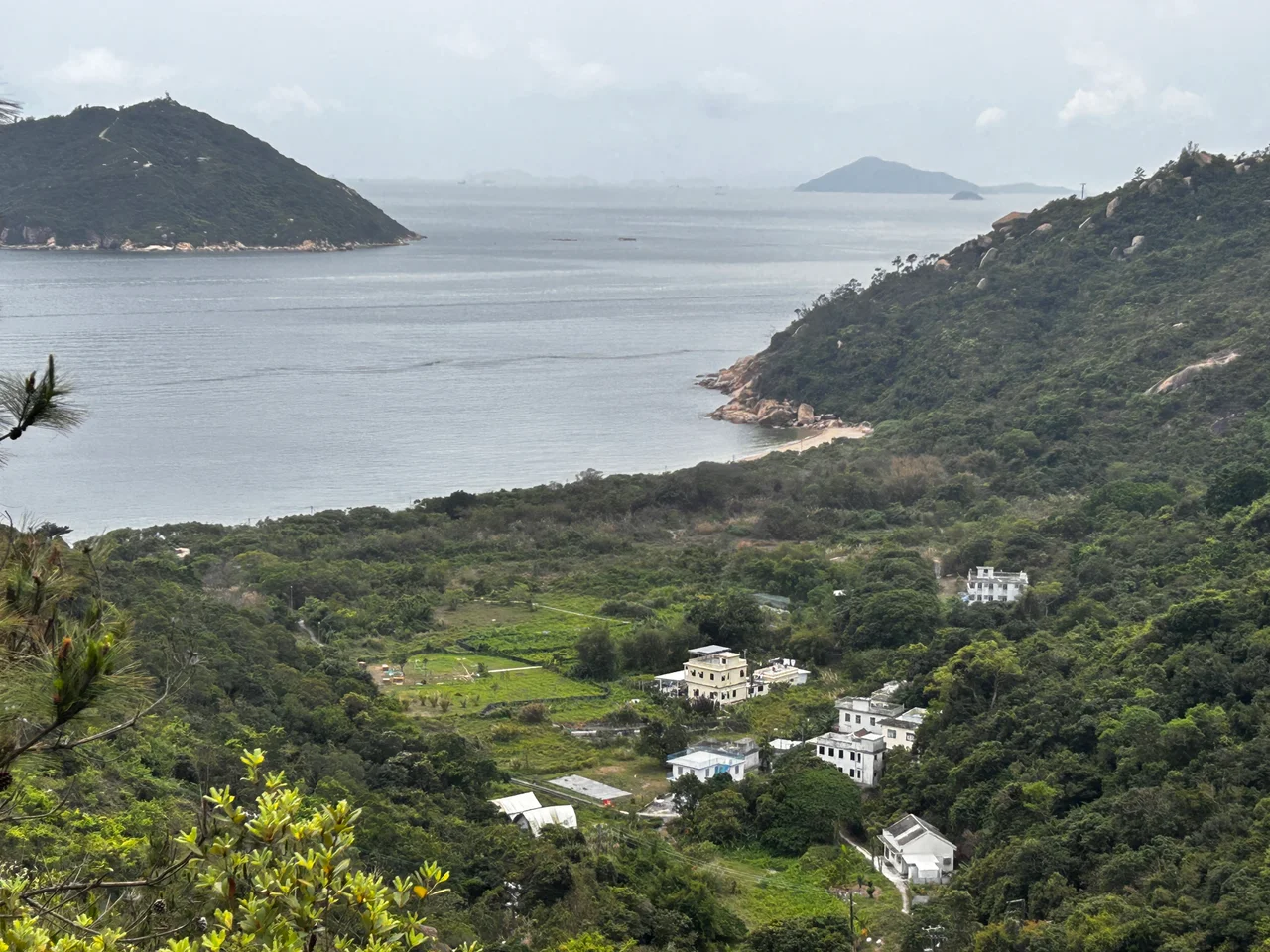

Shek Kwu Chau
The island's old name was Coffin Island. Whether the name came from the shape of the land, the stories of those who died nearby, or simply the bleakness of a barren rock in the middle of the Pearl River Delta approaches, the record does not say. What is certain is that Shek Kwu Chau — lying south of Lantau Island between Cheung Chau and the Soko Islands — was generally empty and uninhabited until 1962, when the Society for the Aid and Rehabilitation of Drug Abusers took it over and gave it a different kind of purpose.
An Island Put to Work
The Society for the Aid and Rehabilitation of Drug Abusers — known as SARDA — has operated the Shek Kwu Chau Treatment and Rehabilitation Centre on the island since 1962. The location is deliberate. Distance from the city is itself therapeutic, providing separation from supply networks and social pressures that make recovery so difficult in an urban environment. The island is a restricted area; visitors need a permit to land. That restriction is not a punishment but a protection — for the people who live and work there in the hard, unglamorous work of getting well.
The 20-minute ferry ride from Cheung Chau is a short crossing. But the distance it represents — from the dense, fast, relentless city to a quiet island focused on recovery — is something else entirely. SARDA also installed what was at one point Hong Kong's first wind and solar hybrid energy system on the island, a small signal that the place has its own self-sufficient logic.
The Detention Centre Years
Shek Kwu Chau carries another chapter that belongs to the history of the region. The island also served as the site of a Vietnamese boat people detention centre in the years following the fall of Saigon in 1975, when tens of thousands of people fled Vietnam by sea and landed in Hong Kong. The conditions in Hong Kong's detention centres during that period were difficult and often contested. People who had already survived extraordinary hardship — dangerous sea crossings, loss of homes and family members, the collapse of the world they had known — found themselves confined, uncertain about their futures, waiting.
That history sits alongside the rehabilitation centre's history on the same small island. Shek Kwu Chau has been, in different eras, a place where people were sent when the city didn't know what else to do with them. The difference between those eras is a difference in how the sending was framed — and what obligations came with it.
The Incinerator Question
In the early 2010s, Shek Kwu Chau entered a different kind of public conversation. The Hong Kong government announced plans to build Integrated Waste Management Facilities on a newly created artificial island just south of Shek Kwu Chau and west of Cheung Chau — a large incinerator capable of processing approximately 3,000 tonnes of waste per day. The site was chosen in part for its relatively short waste-transport routes and the lower impact on populated neighborhoods compared to an alternative site at Tsang Tsui in Tuen Mun.
A Cheung Chau resident, Leung Hon-wai, brought a legal challenge to stop construction. On 26 July 2013, the High Court rejected the bid. The facility, a significant piece of Hong Kong's waste management infrastructure, moved toward construction. The small island nearby — the old Coffin Island, the rehabilitation centre island — remained what it had been: a restricted place with a specific and unheralded purpose.
A Place Apart
Most of Hong Kong's islands have been drawn into the city's orbit over time — connected by ferry routes, developed for tourism or recreation, brought closer by the constant expansion of infrastructure. Shek Kwu Chau remains outside that process. You cannot visit without permission. There are no hotels, no hiking trails marketed in travel guides, no beach bars. The island exists at a remove, which is precisely the point.
That remove is not isolation for its own sake but purposeful distance — the kind that makes certain kinds of work possible. Recovery takes time and space and quiet. Shek Kwu Chau offers all three. An island that once had no name worth speaking aloud has spent the last sixty-plus years doing quiet, necessary work that few people ever see.
From the Air
Shek Kwu Chau lies at approximately 22.20°N, 113.99°E, south of Lantau Island and west of Cheung Chau in the outer Pearl River Delta approaches. From altitude, the island appears as a compact, relatively low landmass in open water. The larger Lantau Island — with its visible mountainous spine — lies to the north, while Cheung Chau's distinctive dumbbell-shaped outline is visible to the east. The Soko Islands lie further to the southwest. Nearest ICAO airport: VHHH (Hong Kong International Airport), approximately 15 km to the northeast on Lantau Island. Recommended viewing altitude: 4,000–7,000 feet to see the island in relationship to the surrounding archipelago.
Nearby Stories
- Lok Ma Chau Loop 2.3 km away
- Portas do Cerco 2.3 km away
- Kweilin Incident 17 km away
- Wanshan Archipelago Campaign 34 km away
- Nanxiong Formation 115 km away
- Battle of Nanpeng Island 148 km away
- Heyuan 169 km away
- Cape Maobitou 632 km away