
Shergar
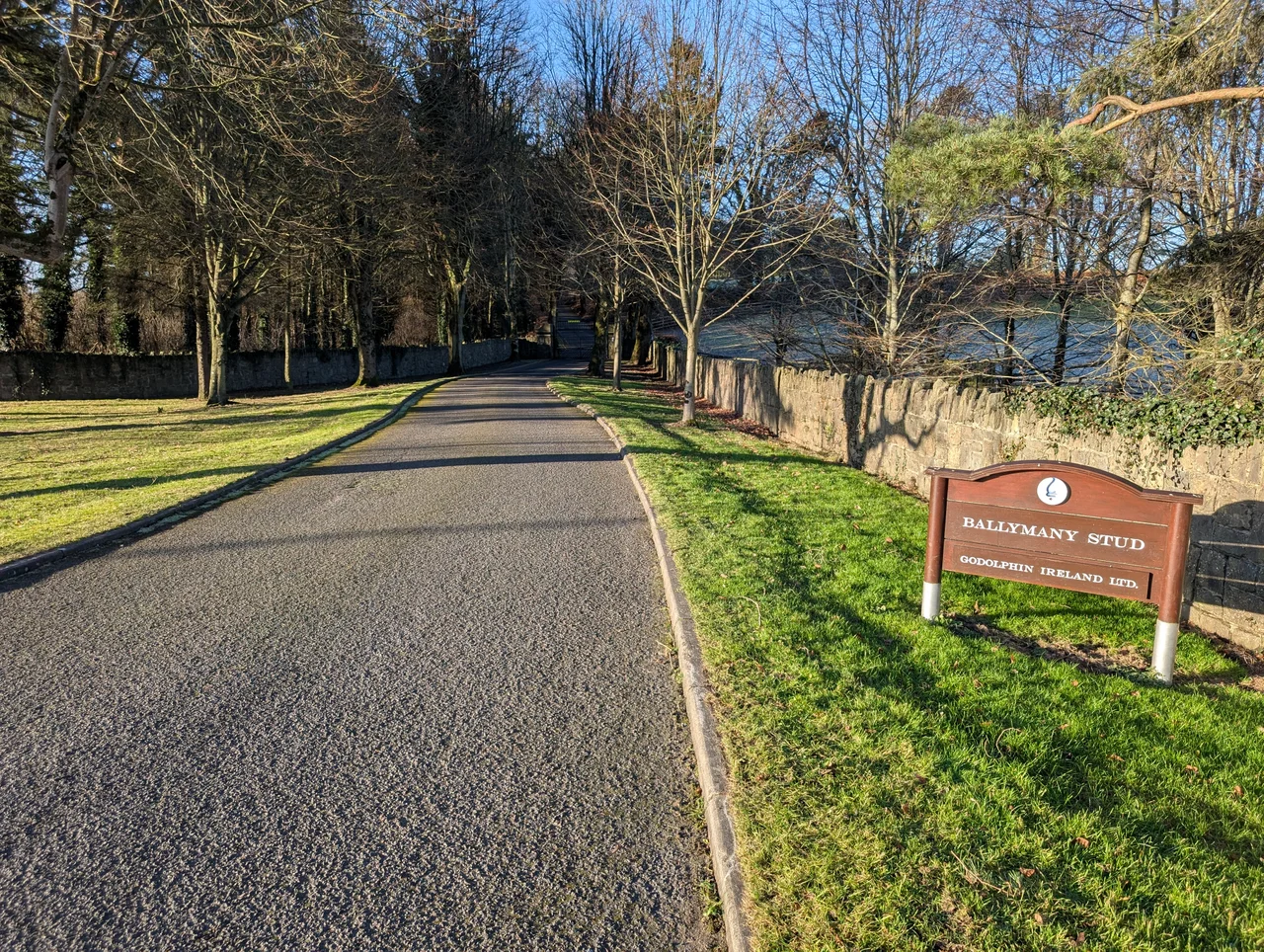
Three weeks after Shergar won the 1981 Epsom Derby, the commentator Peter Bromley shouted to listeners, 'There is only one horse in it - you need a telescope to see the rest!' Shergar had crossed the line ten lengths ahead - the largest winning margin in the 202-year history of the race. The jockey of the second-placed horse, John Matthias, said afterwards he thought he had achieved his life's ambition. 'Only then,' he said, 'did I discover there was another horse on the horizon.' Less than two years later, on the evening of 8 February 1983, three masked men entered the home of Jim Fitzgerald, the head groom at the Aga Khan's Ballymany Stud near Newbridge in County Kildare, and told him they had come for the horse.
Foaled at Sheshoon
Shergar was foaled on 3 March 1978 at Sheshoon - the Aga Khan's private stud near the Curragh Racecourse in County Kildare. He was a Thoroughbred bay colt with a white blaze, four white socks, and a wall-blue eye. His sire was the British stallion Great Nephew; his dam, Sharmeen, was a seventh-generation descendant of Mumtaz Mahal, one of the most important broodmares of the 20th century. The Aga Khan sent the yearling to England for training with Michael Stoute at Newmarket, and Shergar made his racing debut on 19 September 1980 at Newbury, ridden by Lester Piggott. He won by two and a half lengths in his first race; finished second in his second; and then, the following year, ran in six races and won five.
The Derby Run
On 3 June 1981, Shergar ran in the 202nd Epsom Derby. Jockey Walter Swinburn was on his back. At Tattenham Corner - the final bend of the course - Shergar took the lead and opened up a gap that did not close. Swinburn eased off in the final two furlongs. The horse still won by ten lengths. It was an astonishing performance even for the people who had been watching him work in training. Three weeks later he won the Irish Sweeps Derby at the Curragh by four lengths. A month after that he won the King George VI and Queen Elizabeth Stakes at Ascot, also by four lengths. After his Epsom win, the Aga Khan turned down an offer of forty million US dollars to syndicate the horse in America and instead created an owners' syndicate worth ten million pounds, retaining six of the forty shares for himself. His final race was the St Leger at Doncaster on 12 September 1981, where he finished fourth on uncharacteristically soft ground. The Aga Khan retired him to stud rather than risk him further. In 1982, his first breeding season, he covered 44 mares and produced 36 foals.
Eight Thirty in the Evening
On the evening of 8 February 1983, around half past eight, three armed and masked men entered Jim Fitzgerald's house at Ballymany. One was very aggressive; the others were not rough. They told Fitzgerald they had come for Shergar and wanted two million pounds. Fitzgerald's family were locked in a room while he was taken at gunpoint to the stable and forced to load the horse into a horsebox. The men drove the box away, then drove Fitzgerald around for four hours in a separate van with a coat over his face before releasing him near the village of Kilcock, twenty miles from Ballymany. They told him not to contact the Gardai or his family would be killed. They gave him the codephrase 'King Neptune' which the gang would use in future communications. By the time the Gardai were finally contacted, eight hours after the theft, the trail was cold.
The Negotiations That Failed
The Aga Khan was only one of thirty-five members of the syndicate that owned Shergar. The other shareholders were divided on whether to pay. Some thought paying would set a precedent that would put every high-value horse in Ireland at risk; others thought a life - even a horse's life - had to come first. The negotiations went through Control Risks, the security consultancy, from the Aga Khan's Paris office. The kidnappers demanded ransom payments in physically impossible forms - hundred-pound sterling notes that did not exist. They required deliveries to Paris within hours of phone calls placed after banks had closed. Proof of life was demanded; what arrived at the Rosnaree Hotel were Polaroid photographs showing only the horse's head next to a copy of The Irish News. On the evening of 12 February, the gang made a final phone call and ended communications. Shergar was almost certainly already dead. Investigators have since concluded the horse was probably killed within hours of the theft, after panicking and injuring his leg in the horsebox.
Never Recovered
Sean O'Callaghan, a former member of the Provisional IRA working as an informer for the Gardai since 1980, claimed in his 1999 memoir that the theft was an IRA operation conceived by Kevin Mallon while serving time in Portlaoise Prison. According to O'Callaghan and a separate 2008 Sunday Telegraph investigation, the horse panicked early, damaged its leg, and was shot - possibly with a machine gun, four days after the kidnap. No arrests have ever been made. The IRA has never acknowledged any role. Mallon denies involvement. Shergar's body has never been recovered or identified, though it is believed to be buried near Aughnasheelin, in County Leitrim. The horse remains, in the writer Milton Toby's words, 'a national hero in Ireland' - one of the most recognisable sports personalities in the country's history. The Shergar Cup, inaugurated in 1999, is run at Ascot in his memory each August. His story has produced two films, several books, and an enduring, unanswerable mystery.
From the Air
Ballymany Stud sits near 53.165N, 6.845W, just outside Newbridge and adjacent to the Curragh - the centre of Ireland's horse racing industry. Cruise 2,000-3,000 ft to take in the flat Curragh plain, the racecourse, and the M7 motorway running east-west to the north. Nearest international airport is Dublin (EIDW), about 50 km northeast. Casement Aerodrome (EIME) is closer to the east.
Nearby Stories
- River Liffey 3.3 km away
- Swords 7.6 km away
- Avoca, County Wicklow 10 km away
- Clonard Abbey 10 km away
- County Westmeath 10 km away
- County Offaly 12 km away
- Templemore 19 km away
- Kilcooly Abbey 30 km away