
Shiwa Ngandu
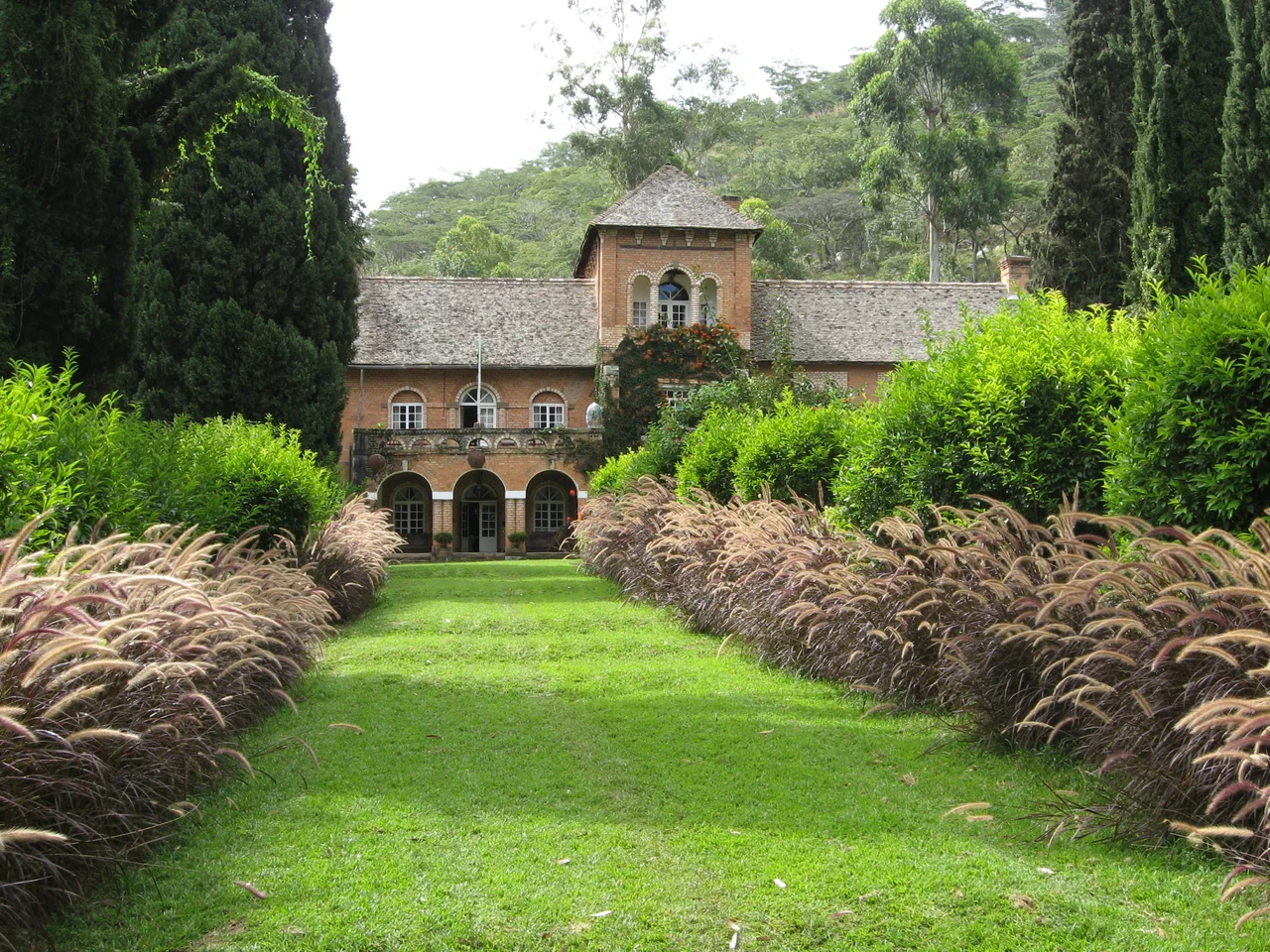
The Bemba called Sir Stewart Gore-Browne Chipembere, which means rhinoceros - an affectionate nickname for the six-and-a-half-foot Englishman who arrived at Lake Shiwa Ngandu in April 1914 with servants and porters and a plan to build an English country house in the middle of what was then Northern Rhodesia. The name of the lake means 'lake of the royal crocodile' in Bemba. The house he built on its shore was 400 miles from the nearest railhead, a journey of days through rivers and swamps. Hundreds of Bemba laborers worked to bring it into being - making bricks on site, hauling stone panels of two and a half kilograms each up onto the roof one by one, building access roads where none had existed. The estate they created together across four decades is one of the most peculiar places in southern Africa: a model village, an obsession, a colonial idyll, and eventually a crime scene.
Chipembere's Dream
Gore-Browne's template was his aunt's estate - Dame Ethel Locke King's place at Weybridge in Surrey, which enchanted him as a boy. England's landed gentry was an expensive club he could not afford to join at home. Northern Rhodesia was cheaper. While serving on the Anglo-Belgian Boundary Commission mapping the line between British and Belgian territory, he had come to admire the Bemba workers he met. When World War I interrupted his plans, he came back more determined. The construction that began in 1920 would continue into the late 1950s: a main house, a gatehouse, a tower, colonnaded porticoes, courtyards, nursery gardens, tennis courts, a walled ladies' garden. At 12,500 hectares, the estate contained its own schools, hospitals, shops, playing fields, and post office. Bemba workers lived in brick-built cottages. Gore-Browne ran the estate, in his own phrase, as a 'benevolent autocracy' - a 19th-century utopian model village, like Saltaire or Port Sunlight in England, transplanted to the Zambian bush.
Whose Labor, Whose House
It is easy to make this story about Gore-Browne. The Wikipedia article and the popular biographies largely do. But the house was built by Bemba hands. Hundreds of laborers mixed and fired the bricks, felled the timber, dug the foundations, carted stone. They built roads and bridges across terrain that had no roads and bridges - often for the colonial authorities as well as the estate. Oxen hauled materials. Families lived in the workers' cottages. And while the estate was better funded than most colonial enterprises and its schools and clinics served real needs, the relationship was deeply unequal. Gore-Browne's affection for his workers was real; so was the paternalism that made him nickname himself their patrician. Pay was low. Authority was absolute. The workers who made the estate possible received what Gore-Browne thought they should have - which, by the standards of the 1920s and 1930s, was more than most white settlers gave, and by any modern measure, was far less than they earned.
An Unusual Colonial
What made Gore-Browne genuinely different from other white settlers in the region was his politics. Shiwa Ngandu's remoteness isolated him from the settler society of southern Northern Rhodesia and Southern Rhodesia (now Zimbabwe), and that isolation gave him space to think. He concluded that Northern Rhodesia should develop in a more collaborative direction than segregationist Southern Rhodesia or apartheid South Africa, and he pursued that conviction in the legislative council and through his political influence. The estate itself was always unprofitable. Soil too acidic for most crops, citrus blight in 1958 destroying one of its few stable revenue streams, essential-oil production that thrived only during World War II when European supplies were cut off. Dame Ethel Locke King - the aunt whose estate he had emulated, with whom he maintained an obsessive correspondence from his childhood until her death - subsidized the project heavily. Gore-Browne died in Kasama in 1967, seven years into Zambian independence, and received a state funeral with the eulogy delivered by then-President Kenneth Kaunda. He remains the only white man in Zambian history to be so honored.
The Murders and the Restoration
In 1991, Michael Palin and the BBC visited Shiwa Ngandu for the travelogue series Pole to Pole. The estate was then being run by Gore-Browne's daughter Lorna and her husband John Harvey, who lived there with their four children. Six months after the broadcast, in 1992, the Harveys were murdered at the estate by three African National Congress members living in exile in Zambia. Some property was stolen; the ANC disavowed any prior knowledge and condemned the killings; motives remain speculative. The house fell into disrepair in the years that followed. Partial restoration has since reopened five rooms to paying guests under the name Shiwa Ngandu Manor House, and an airstrip has been built for charter flights. Tours of the estate are free for Zambian citizens - a small but meaningful gesture toward the fact that the country the house sits in has changed more in a century than the house itself has. The descendants of the Bemba workers still live nearby. The lake still holds its crocodiles. Chipembere's dream still stands, complicated, contested, worth the journey.
From the Air
Located at 11.20 degrees south, 31.73 degrees east in Muchinga Province, Zambia, about 12 km west of the Great North Road between Mpika and Chinsali. An airstrip serves the estate. From altitude, look for the distinctive estate complex with the main house, outbuildings, and cultivated gardens clustered on the shore of Lake Ishiba Ng'andu, surrounded by miombo woodland.
Nearby Stories
- Chambeshi Monument 35 km away
- North Luangwa National Park 67 km away
- Mwela Rock Paintings 77 km away
- Ntawere Formation 83 km away
- Chama (Zambia) 88 km away
- Muchinga Province 102 km away
- Lavushi Manda National Park 104 km away
- Lundazi 132 km away