
Siege of Lincoln
Heavy rain in early May 1644 nearly saved Lincoln for the Royalists. The Earl of Manchester's Parliamentary army had stormed into the lower town on the third of May, pushed the defenders back up the limestone scarp to the upper city, and was preparing to assault the walls when the weather closed in. The slopes around Lincoln Castle turned to mud. The attack was suspended for a day. By the morning of the sixth, the rain had eased enough that Manchester's men could try again — and on the night of 6 May, despite scaling ladders that proved too short for the castle walls, the Parliamentarians scrambled over, the Royalists asked for quarter, and Lincoln changed hands for what was neither the first nor the last time in its history.
How Lincoln became a prize
The First English Civil War was in its second year and Lincolnshire had become a contested middle ground. In March 1644, Prince Rupert relieved the Royalist garrison of Newark-on-Trent twenty miles to the west, and Royalist horse promptly rode east to occupy Lincoln — finding 2,000 muskets in the city which they happily requisitioned. Rupert decided the gains were not defensible and withdrew to the West Midlands, leaving a garrison of about 2,000 under Sir Francis Fane to hold the city. Meanwhile the Earl of Manchester, commanding the Parliamentary army of the Eastern Association, was at Stamford in late April. He sent his cavalry — under a rising officer called Oliver Cromwell — to clear marauding Royalist parties out of Lincolnshire. Cromwell did so. Manchester then marched on the city itself, arriving on 3 May 1644 with about 6,000 infantry and cavalry.
Up the hill, under fire
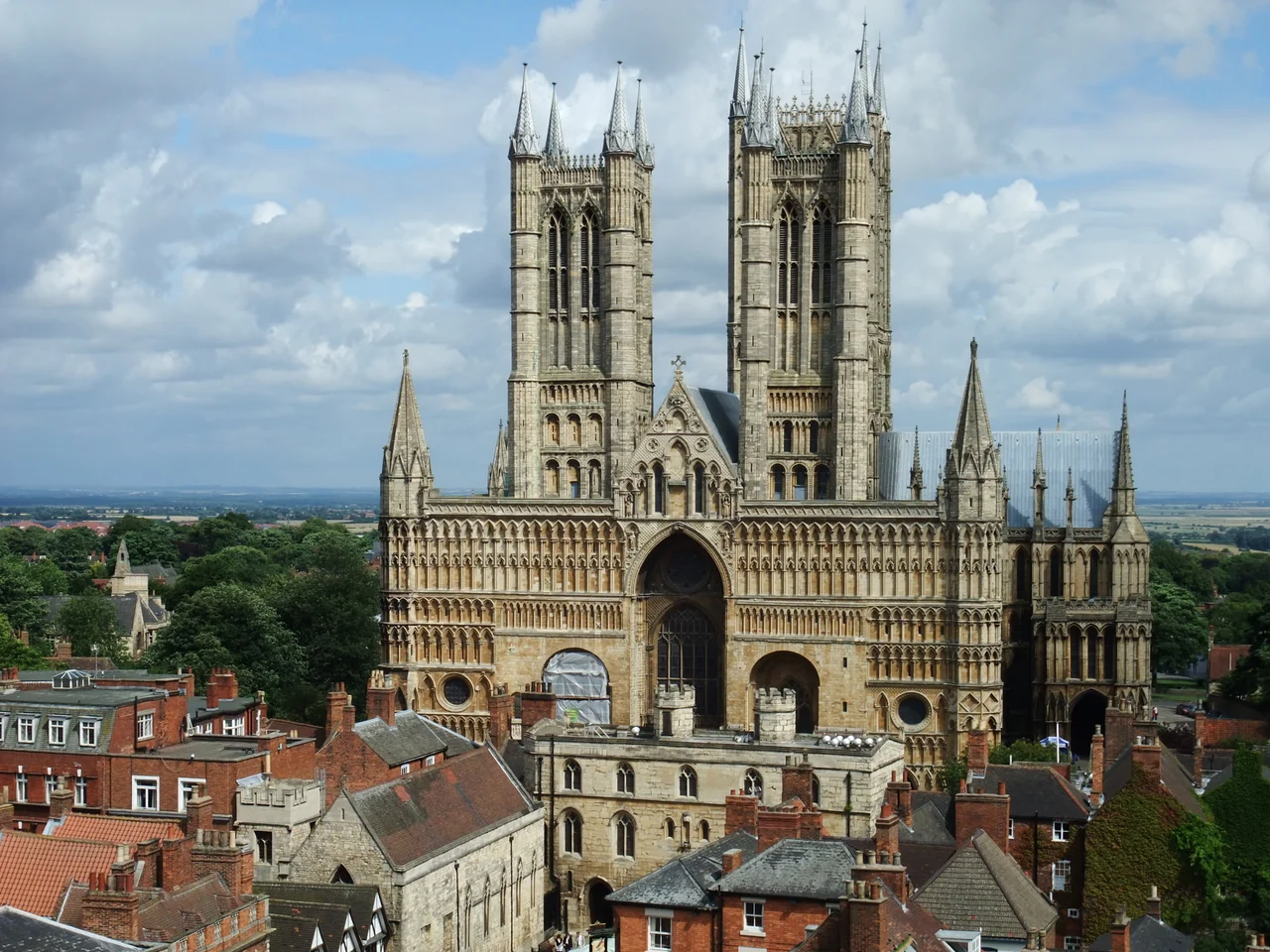
The defenders did not try to hold the lower town. They withdrew to the upper city, the medieval walled enclosure that contained both Lincoln Castle and Lincoln Cathedral on the high limestone ridge — a defensive position that had held against assault before. Manchester's infantry took the lower streets on 3 May. Then the rain came. For most of 4 May the attackers sat and watered, the ground too slippery for an assault up a slope as steep as Steep Hill. Cromwell deployed his horse south of the city to screen against Lord Goring, who was reported to be moving up from Newark to relieve the siege. When Goring crossed the Trent on 5 May, Cromwell's troopers were drawn up in just over an hour. Goring, finding the outposts alert, fell back. A contemporary Royalist account claims the Parliamentarians tried to storm Lincoln Close that night and were repulsed with about sixty killed.
The night assault
On the night of 6 May the Parliamentarians went over the walls. The scaling ladders proved too short for the castle ramparts — they were always slightly too short, in seventeenth-century sieges — but Manchester's men climbed anyway, finding handholds, hauling each other up. The Royalists on the parapets gave way and asked for quarter. It was granted. By the end of that night Parliamentary losses came to eight killed and about forty wounded. The Royalist garrison lost about fifty dead, with one hundred officers and somewhere between 650 and 800 soldiers taken prisoner — including Sir Charles Dallison, the former Recorder of Lincoln, and the governor Sir Francis Fane. Eight cannon and a substantial supply of munitions changed hands with them. The victorious troops then pillaged the upper town. The cathedral, which had already taken damage in earlier civil wars and would suffer more, was further despoiled — windows broken, fittings looted, monuments defaced. This was the damage that Dean Michael Honywood would spend the next decade and a half repairing after the Restoration.
What it meant
Lincoln was strategically modest in itself, but the siege fitted into a larger campaign. Manchester used the captured city as a base, sent Cromwell across the Trent with 3,000 horse to harass Lord Goring's force, then began preparations to move north and join the Parliamentary-Scottish armies besieging York. He linked up with them on 3 June. A month later, on 2 July 1644, the combined Allied force met Prince Rupert at the Battle of Marston Moor — the largest battle ever fought on English soil, and the engagement that broke Royalist power in the north of England. The siege of Lincoln was one of the steps that made Marston Moor possible. The damage to the cathedral, the castle, and the bishop's palace, on the other hand, would shape what visitors to Lincoln see four centuries later. The medieval bishop's palace was effectively finished as a working residence. The cathedral's stained glass was largely gone. Lincoln's Civil War scars are still visible in its ecclesiastical buildings — the cost of a single rainy week in 1644.
From the Air
The action centred on the ridge between Lincoln Castle (53.235°N, 0.541°W) and Lincoln Cathedral (53.234°N, 0.536°W). The lower town that fell first lay along the Witham valley around High Bridge (53.227°N, 0.541°W). The hill that the Parliamentarians had to climb is still there and still steep — the modern street is literally called Steep Hill. Nearest active airfield is RAF Waddington (EGXW), 5 miles south. Best viewed in oblique light, when the limestone ridge that defined the siege geography stands out sharply against the lower Witham valley to the south.
Nearby Stories
- Louth Navigation 2.9 km away
- Major Oak 3.6 km away
- Grantham Rail Accident 8 km away
- South Yorkshire Aircraft Museum 9.3 km away
- Gotham, Nottinghamshire 11 km away
- Alford Windmill 16 km away
- RAF Binbrook 21 km away
- Wisbech 29 km away