
Siege of Newcastle
On 3 February 1644, a Scottish army appeared at the walls of Newcastle upon Tyne and asked the city to surrender. The city declined. What followed was nine months of intermittent siege - cold weather, broken promises of relief, mines tunneling under the medieval walls, and at the end, the citizens who had bet on King Charles I watching the Castle Keep go silent. The men who held out behind those walls were not strangers passing through a battlefield; they were Newcastle merchants, their apprentices, their servants. Their governor Sir John Marlay had been one of their aldermen. When the city fell on 19 October 1644, the people who had to start rebuilding it were the same ones who had stood on the walls.
A Northern Quarrel
The English Civil War had divided the country roughly along social and religious lines. The North, the West, and Catholic Ireland leaned Royalist; the South East and Presbyterian Scotland leaned Parliamentarian. Newcastle was a Royalist stronghold - and crucially, the source of the coal that warmed London. Hold Newcastle, and you held the Crown's economic lifeline. Lose Newcastle, and Parliament could control prices in the capital. The Scots Covenanters, allied with Parliament under the Solemn League and Covenant, had already occupied the city briefly during the Second Bishops' War in 1640. They knew the ground. In January 1644, Lord General Alexander Leslie, 1st Earl of Leven, crossed the border at the head of a Scottish army and marched south.
Eight Months of Waiting
Leven left six regiments under Lieutenant General James Livingstone, 1st Earl of Callander, to invest Newcastle while the main army pressed on. The siege was not a continuous strangulation. Callander diverted forces to take Newburn and other towns along the Tyne; the city was sometimes blockaded, sometimes only watched. Sir John Marlay used the gaps to strengthen the walls and to send men south to join the main Royalist field army. Then, on 2 July 1644, the Royalists were shattered at Marston Moor. Prince Rupert's army was broken; the North was effectively lost. After Marston Moor, no relief column would be coming for Newcastle. The defenders on the walls knew it. They held on anyway.
Mines and Surrender
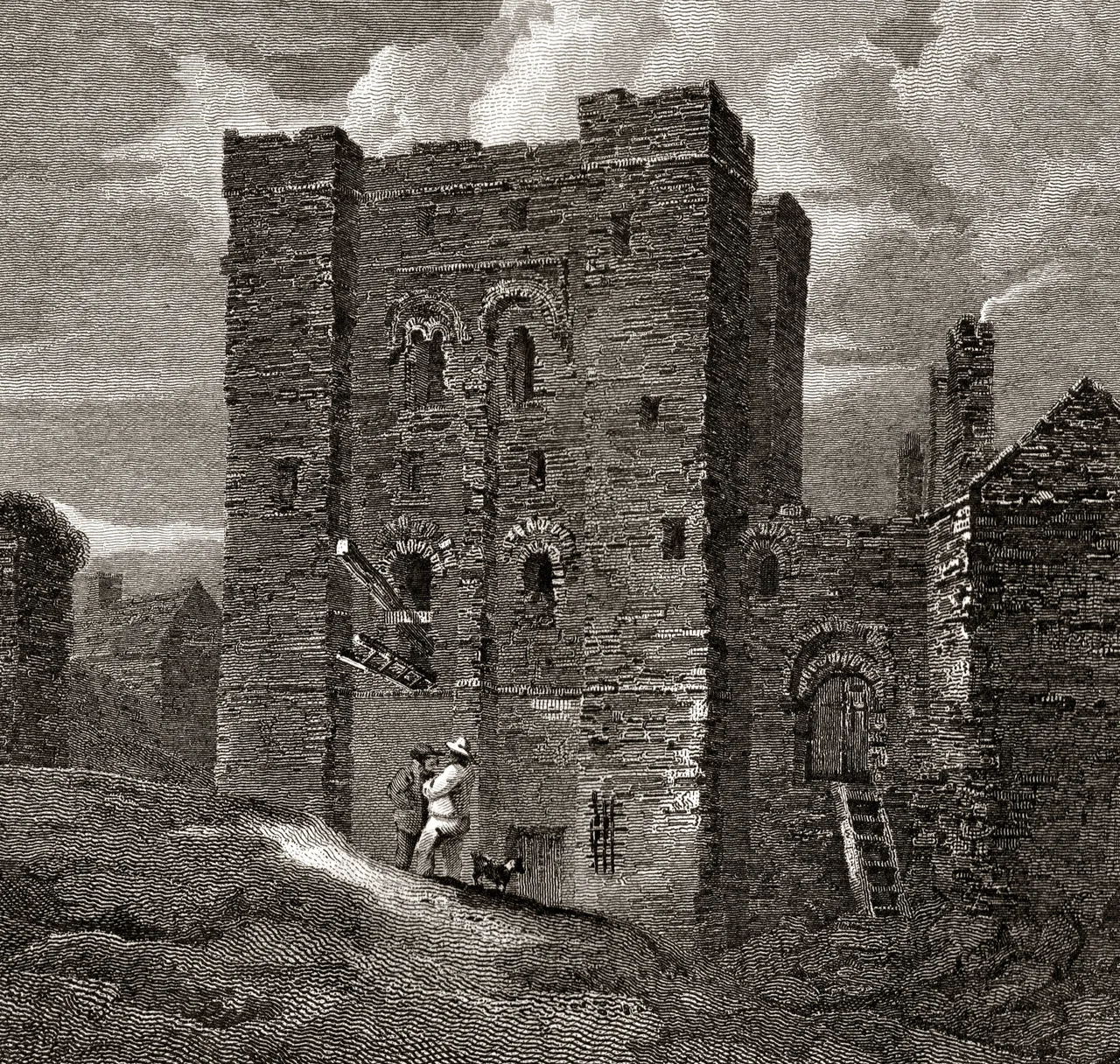
On 15 August 1644, with Leven's main army now joining Callander, the serious bombardment began. Scots gunners pounded the medieval walls; engineers tunneled mines beneath the fortifications and blew sections of stone into the streets. The western half of the wall fell on 19 October. Marlay and the remaining loyalists pulled back into the Norman Castle Keep that still stands at the heart of the city. There was no relief, no hope of resupply, no honourable strategy left except a negotiated surrender. On 27 October 1644, Marlay accepted Leven's terms. The terms were generous by the standards of the war - the garrison was spared, the city largely intact - but Marlay himself was imprisoned, and several leading Royalists were banished from England.
The Coal Trade Changes Hands
The Covenanters took control of the Tyneside coal trade for the second time, holding it until 30 January 1647 when the Solemn League and Covenant unraveled and the Scots withdrew. Tynemouth had fallen the same day as Newcastle. The English Parliament, oddly, was less delighted than the Scots; the price of having a foreign ally hold the coal supply was being made to wait, and pay, on Scottish terms. The walls Marlay had defended were eventually repaired, but the Civil War had broken something more durable than masonry. Newcastle's Royalist mercantile class lost influence in the new England; the apprentices who had marched on the walls grew up under a different settlement. The Castle Keep, where the last defenders held out, still rises over Newcastle's railway tracks - a reminder of the autumn the city ran out of options.
From the Air
The Siege of Newcastle centered on the old walled city at 54.978 degrees N, 1.613 degrees W. From the air, the Castle Keep is visible as a dark Norman tower just south of the river, dwarfed now by the Tyne Bridge and the railway viaduct that runs over the medieval castle precinct. Newcastle International (EGNT) is 5 nautical miles north-west. Fragments of the medieval town wall survive along West Walls and Stowell Street - look for the irregular line of older masonry threading through the modern street grid. Best viewed at 1,500-2,500 feet AGL in clear weather.
Nearby Stories
- Cresswell Lifeboat Station 5.2 km away
- Auckland Castle 5.7 km away
- Battle of Otterburn 7.1 km away
- Saltburn Pier 11 km away
- Hadrian's Wall Path 11 km away
- Battle of Stainmore 18 km away
- Saltburn-by-the-Sea 39 km away
- Alexander L. Kielland (Platform) 296 km away