
Siege of Stirling Castle (1746)
On the morning of 30 January 1746, the French engineer Mirabel de Gordon finally opened fire on Stirling Castle from a battery he had built atop Gowan Hill. He had three of his six heavy guns in position. Inside the castle, the experienced Irish veteran William Blakeney was waiting for him. Blakeney's counter-battery fire was immediate and devastatingly accurate. In less than half an hour, the Jacobite battery was abandoned. One of de Gordon's cannons was found afterward to have been struck nine times by government shot, the gouges, as one observer recorded, 'of surprising depth.' The siege of Stirling Castle was effectively over within twenty-eight minutes of its only serious shot. Two days later, the Jacobites were marching for Inverness.
The Strongest Place in Scotland
Stirling Castle was always going to be the hardest target of the 1745 Rising. It controlled the narrow waist of Scotland where the Forth could be crossed and the Highlands could be reached, a position of such strategic value that whoever held it effectively held the country. Its modern fortifications had been built up through decades of garrison engineering, and by January 1746 the defences enclosed a garrison of between 600 and 700 men under William Blakeney, an Irish soldier in his late sixties who had been waiting all his life for a command that mattered. Back in October he had written to the Prime Minister, Henry Pelham, expressing his quiet confidence that the castle would hold. Charles Edward Stuart's Jacobite army, returning from its long march to Derby and back, took the town easily on 8 January. The castle was a different matter.
An Army Without Siege Guns
The fundamental Jacobite problem was that they had never been equipped to take a fortress. They had failed at Edinburgh Castle despite holding the city for almost two months. Carlisle, a decaying medieval relic defended by 80 elderly army pensioners, had surrendered only when the besiegers were on the verge of giving up. Stirling was something else entirely. Colonel James Grant, a Scots officer in French service, commanded the field artillery, but his guns were too few and too light to do anything to the castle walls. The promised heavy siege train, two 18-pounders included, had been landed at Montrose in November and was being slowly dragged across Scotland. It did not arrive at Stirling until 14 January. The man supposed to supervise the siege, Mirabel de Gordon, was a French engineer of Scots descent whose competence was disputed at every stage. Senior Jacobites including James Johnstone considered the whole attempt futile.
Falkirk, Then Stalemate
On 17 January, a relief force under Henry Hawley marched up from Edinburgh and was defeated by Lord George Murray at Falkirk Muir, a confused battle in falling light and heavy snow. It was a Jacobite victory but a hollow one; Hawley's army re-formed in Edinburgh and the strategic position barely shifted. Lord Elcho recorded that the clan chiefs thought the better course would have been to pursue Hawley and isolate Stirling, but most modern historians doubt it would have changed the outcome. Back at the siege, James Grant proposed emplacing the heavy guns near the town cemetery, where they would be level with the castle's fortifications. Charles overruled him on de Gordon's advice and chose Gowan Hill instead. The shallow bedrock there meant the gun positions had to be built up from sacks of earth and wool, hauled into place under continuous mortar fire from the castle. The work was slow, exposed, and lethal. Jacobite opinion was divided as to whether de Gordon was merely incompetent or had been bribed.
The St Ninians Explosion
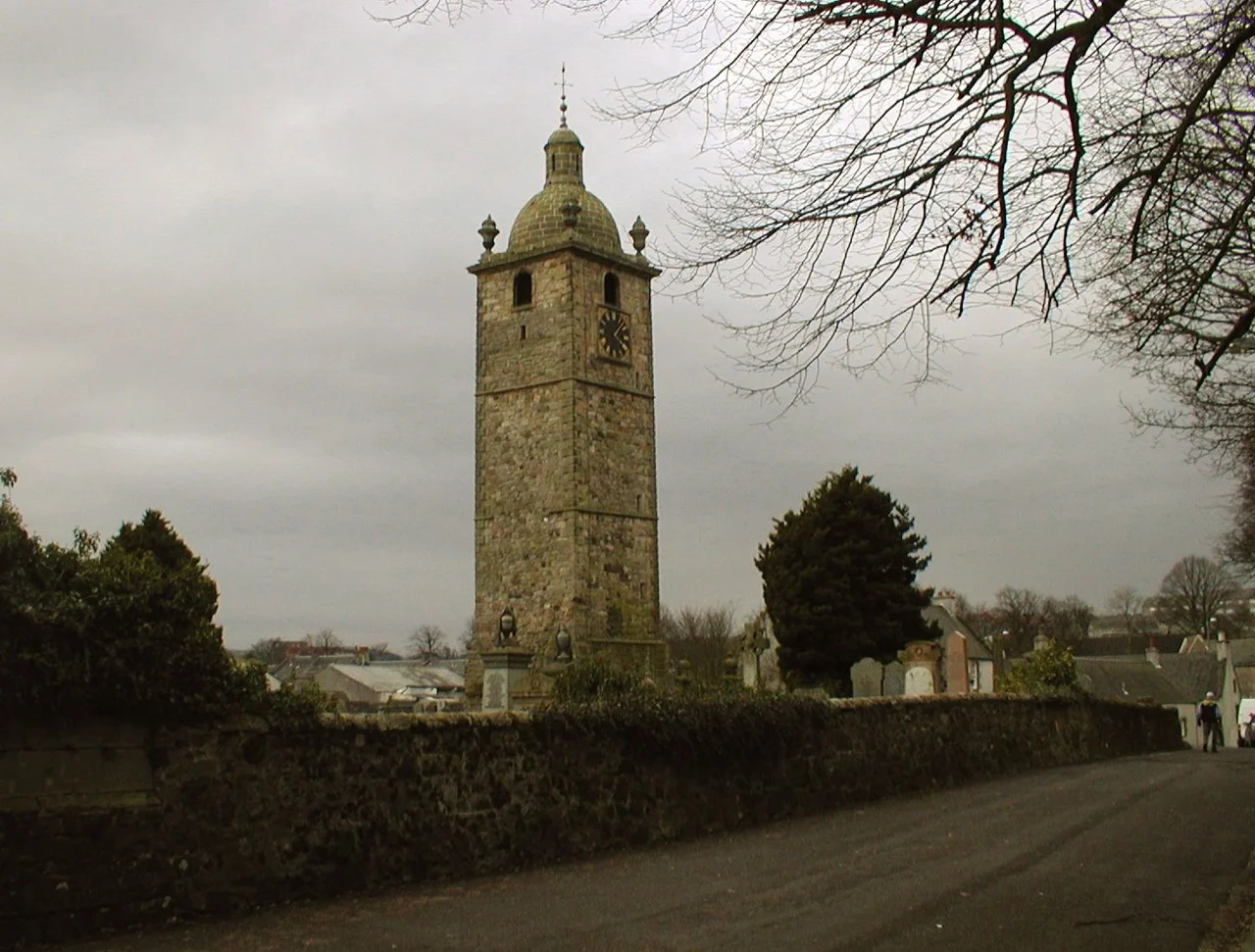
When de Gordon's guns were silenced on 30 January, news arrived that Cumberland was advancing north from Edinburgh. Charles saw a chance for a decisive battle and asked Lord George Murray to prepare a plan. The clan chiefs replied that large numbers of Highlanders had drifted home for the winter and the army was in no fit state to fight. They advised retreat to Inverness. Charles reluctantly agreed, but what little trust remained between the prince and his Scottish officers was now finished. On 1 February 1746 the siege was abandoned and the Jacobite army withdrew. The Jacobites had been storing their munitions in the nearby church of St Ninians. During the retreat, the church blew up. Whether the explosion was deliberate or accidental was disputed at the time; the careless handling of stored powder seems more likely than sabotage. John Cameron, minister to Lochiel's regiment, was passing the church in a carriage with the wife of John Murray of Broughton when it detonated; she was thrown clear and concussed. Nine townspeople and a number of Jacobites died in the rubble. Only the church's steeple was left standing, and it stands there still, a single isolated tower in the modern village, marking what happened that afternoon.
After the Withdrawal
Cumberland's army advanced along the coast, supplied by sea, and reached Aberdeen on 27 February. The Battle of Culloden followed on 16 April and lasted less than an hour. About 1,500 survivors gathered at Ruthven Barracks, where Charles ordered them to disperse, promising to return with French support. He was picked up by a French ship in September and never came back. William Blakeney, who had taken decades to rise in peacetime promotions, was rewarded handsomely for his defence: promotion to Lieutenant-General and appointment as Lieutenant-Governor of British Menorca. Ten years later, in June 1756, the French captured Menorca while Blakeney commanded the garrison there. That defeat led to the court-martial and execution of Admiral John Byng, shot on his own quarterdeck *pour encourager les autres*, as Voltaire put it. Blakeney survived all of it. He had won at Stirling and lost at Mahon, and the only difference, as he himself perhaps understood, was who had been sent to relieve him.
From the Air
The siege site is the area around Stirling Castle at 56.117N, 3.937W, with the key Jacobite battery position on Gowan Hill immediately north of the castle. The ruined steeple of the old St Ninians church survives just south of the modern city centre. From altitude the volcanic crag of Stirling Castle is unmistakable, with the Forth meandering in tight loops to the east. Best viewed at 3,000 to 5,000 feet on a clear day. Nearest airports: Edinburgh (EGPH) 30 nm east-southeast, Glasgow (EGPF) 25 nm south-southwest. Watch for low cloud against the Ochil Hills.
Nearby Stories
- Murder of Alesha MacPhail 3.1 km away
- Ben Lomond 5 km away
- Lochleven Castle 8.8 km away
- Battle of Dunsinane 15 km away
- Pentland Hills 16 km away
- Breadalbane Hydro-Electric Scheme 17 km away
- Beith 17 km away
- Rannoch Moor 24 km away