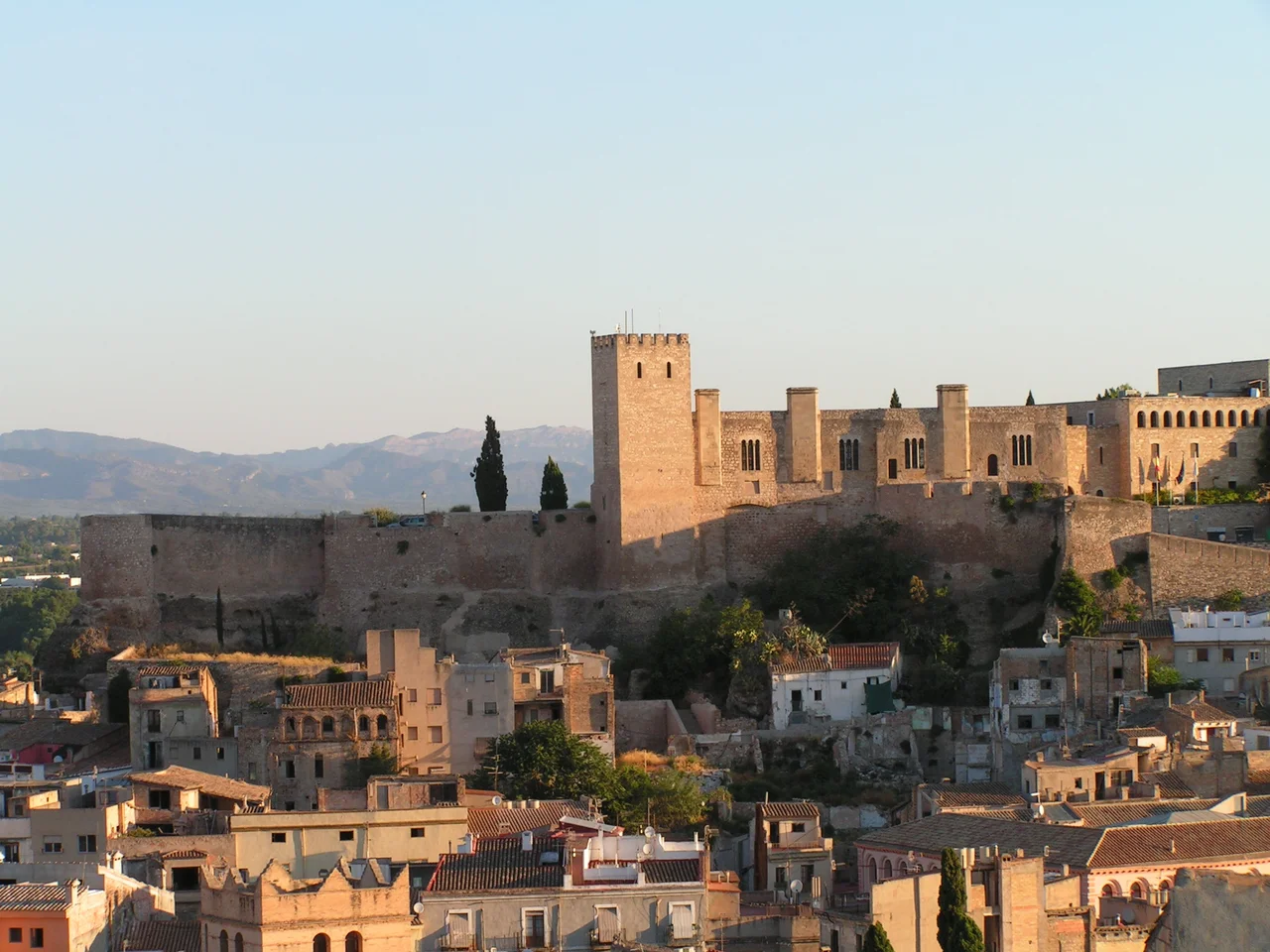

Siege of Tortosa (1148)
The men who laid siege to Tortosa in the summer of 1148 called themselves pilgrims. Some had set out to fight for Jerusalem and been rerouted to a Muslim city on a Spanish river; others were Genoese sailors, Occitan lords, Catalan knights, and Englishmen who had already stormed Lisbon on their way south. For six months they battered the walls of a place the Islamic world prized for its learning. When it was over, a charter would call Tortosa "the key of the Christians, the glory of the people, an ornament of the whole world." Getting the key cost far more than anyone had expected.
A Crusade That Turned West
The campaign was born of commerce as much as faith. In 1146 the maritime republic of Genoa struck a deal with Count Raymond Berengar IV of Barcelona: Genoese ships and men would help him take Tortosa in exchange for a third of the city and freedom from tariffs across his lands. Rome then folded the venture into the Second Crusade, granting its fighters the same spiritual rewards as those bound for the Holy Land and calling them peregrini—pilgrims. The army that gathered was strikingly international. Alongside Raymond Berengar's Aragonese, Catalans, and Occitans came the Genoese fleet and contingents of Englishmen, Flemings, and Normans, many of them veterans of the recent siege of Lisbon. Templars, Hospitallers, and Knights of the Holy Sepulchre rode among them. It was, in miniature, a crusade—only its Jerusalem was a fortress on the lower Ebro.
The Key of the River
Tortosa was worth all this trouble because of where it stood. The city lay about twelve miles up the Ebro from the Mediterranean, on the river's eastern bank beneath a ridge of hills—a busy seaport with extensive dockyards and an inner citadel the Arabs called the suda. Perhaps 12,000 people lived within its walls, and it carried a real reputation for culture in the Islamic world. Since 1081 it had been the seat of a small independent kingdom, the taifa of Ṭurṭūsha, and for that reason Christian rulers had coveted it for generations—Genoa and Pisa in 1092, the counts of Barcelona again and again. Whoever held Tortosa controlled the mouth of the Ebro and the approaches to Tarragona to the north. When Aragon and Barcelona were joined through Raymond Berengar's marriage, the count could at last draw on the combined resources to try in earnest.
Six Months of Stone
The fleet sailed from Barcelona and entered the Ebro on 1 July 1148. The army split into three camps around the city and set to work. The Genoese raised two siege towers and breached the outer wall from the southeast, then fought street by street toward the mosque. On the hill called Banyera, the Catalan and Occitan force faced a ravine some forty metres across and thirty deep, which had to be filled with wood and stone before a third tower—large enough for three hundred men—could be dragged against the citadel. The defenders answered with stone-throwers hurling 200-pound rocks; one shattered a corner of the tower, and Genoese engineers repaired it under fire, lashing it with rope against the barrage. Then the money ran out. With their pay in arrears, most of Raymond Berengar's men drifted away, leaving barely twenty knights and the Genoese to press on. They breached the suda at last, and on 20 November the garrison begged a forty-day armistice, handing over a hundred hostages. Their appeals to the other taifas for relief came to nothing—the Almohads were landing in Iberia, and no one could spare help. On 30 December, after six months, Tortosa surrendered.
A City Kept, Not Emptied
What followed was, by the standards of the age, remarkably restrained. There was no massacre and no sack—unlike the fall of Almería the year before—probably because the conquerors had already learned how hard a stripped city was to repopulate. The Muslim and Jewish inhabitants were allowed to remain. The Jews received a franchise and broad rights; the Muslims were resettled in a self-governing quarter, the aljama, outside the walls, given a year to surrender their houses in the city and left to keep their faith and their sharia courts in return for a tax to the count. The victors then carved the walled city into thirds: the citadel and its government to the seneschal Guillem Ramon, the port and dockyards to Genoa, and the rest to the count, who rewarded the Templars with a share of the revenues. English crusaders who had fallen in the fighting were laid in a special cemetery, later given to the Canons of the Holy Sepulchre—so that, in death, the pilgrims might fulfil their vow to reach Jerusalem. Within months, Raymond Berengar marched inland and took Lleida too.
From the Air
Medieval Tortosa stands at about 40.80°N, 0.52°E, roughly 20 km up the Ebro from the Mediterranean, on the river's east bank beneath a ridge of hills. From 4,000–6,000 ft AGL the Suda castle—the old Arab citadel, now a parador hotel—crowns the hill above the old town, with the Ebro curling past and the Els Ports massif filling the horizon to the southwest. Reus (LERS) lies about 65 km to the northeast and Barcelona (LEBL) up the coast, with Lleida-Alguaire (LEDA) inland to the north—up the river valley the crusaders' commander would march next. Clear, calm winter mornings give the best light on the river and the citadel.
Nearby Stories
- Los Alfaques Disaster 3.8 km away
- Reus 5.1 km away
- Cartoixa d'Escaladei 27 km away
- Morella 29 km away
- Roman Theatre (Tarraco) 32 km away
- Penyagolosa 52 km away
- Battle of Belchite (1937) 65 km away
- Banyalbufar 161 km away