
Sierra Leone National Museum
Some national museums announce themselves with marble and columns. Sierra Leone's announces itself with a railway station. Tucked into what was once the Cotton Tree terminus, at the busy junction of Siaka Stevens Street and Pademba Road in central Freetown, the country's national museum has occupied its "temporary" home for nearly seventy years. The building is modest. What it holds is not.
Riddles in Stone
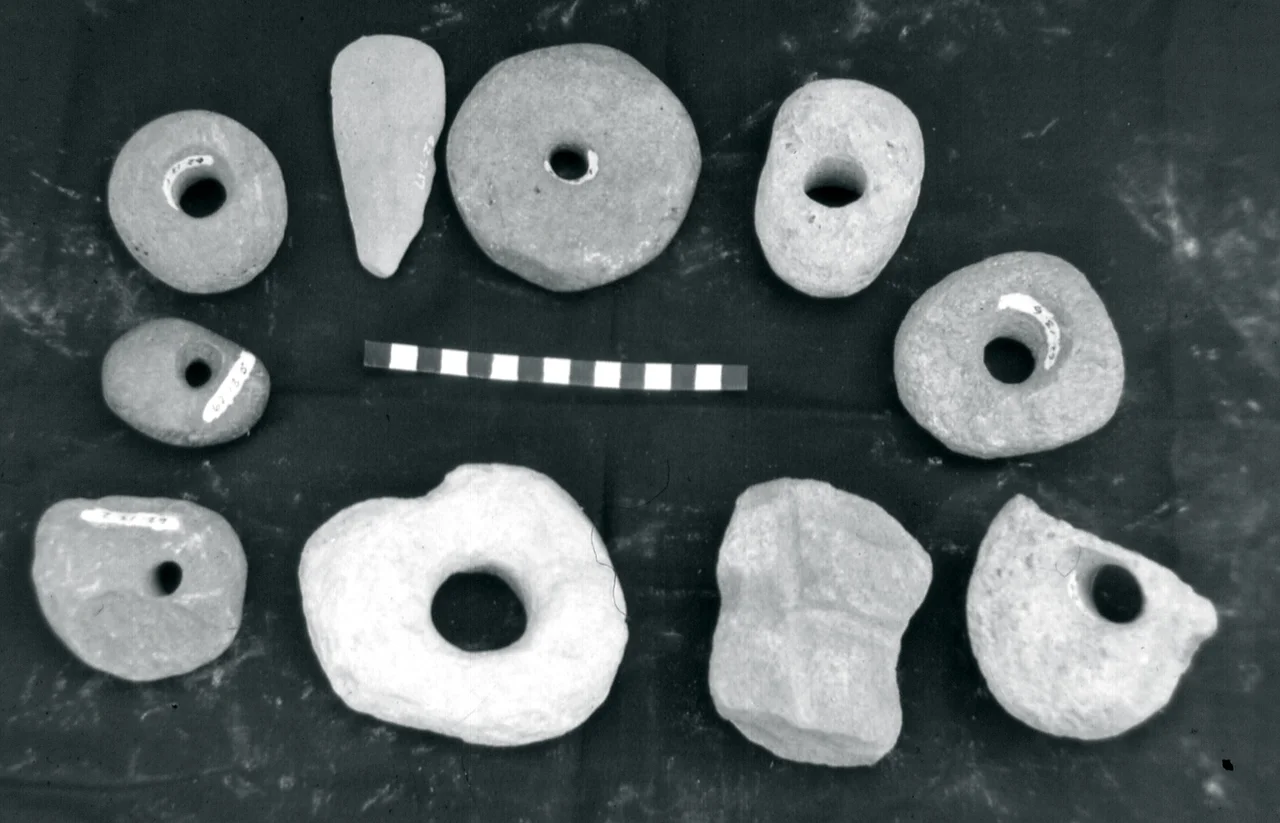
Among the museum's oldest treasures are the nomoli - small soapstone figures, weathered and enigmatic, carved by hands whose owners left no written record. Farmers across the south of Sierra Leone still turn them up in their fields, and for centuries no one has been entirely certain who made them, or why. Some are crouching figures; some have faces that seem to gaze inward. They are among the most haunting objects in West African art precisely because they refuse to fully explain themselves. To stand before a nomoli is to confront a civilization that speaks only in form, and to feel the depth of a past that stretches back long before any settler stepped ashore at Freetown.
The Warrior Who Said No
If the nomoli embody mystery, another part of the collection embodies defiance. The museum holds the relics of Bai Bureh, the Temne leader who in 1898 launched an uprising against British colonial rule after the imposition of a deeply resented tax on houses. His guerrilla fighters held off colonial forces for months in the war that bears the tax's name. Bai Bureh's drum, his sword, and a rare photograph of the man himself survive here, alongside a portrait of a figure who has become one of Sierra Leone's enduring national heroes. The British eventually captured and exiled him, but they never erased him. In the museum that bears his nation's name, he remains.
Keepers of Memory
The museum's roots reach back to before independence. A 1946 ordinance created a commission to protect the nation's monuments and relics, chaired by the retired Creole doctor M. C. F. Easmon, and in the 1950s the Sierra Leone Society gathered the collection together. The museum opened its doors on the tenth of December, 1957, dedicated by Sir Milton Margai, the chief minister who would soon lead the country to independence. In the decades since - through civil war and the Ebola epidemic - the institution has endured. A recent partnership with University College London digitised some two thousand of its objects, a quiet act of preservation ensuring that the nomoli and Bai Bureh's drum will outlast even the fragile building that shelters them.
From the Air
The Sierra Leone National Museum sits at approximately 8.49°N, 13.24°W in central Freetown, at the junction of Siaka Stevens Street and Pademba Road - close to the historic heart of the city and the former site of the Cotton Tree. From the air, look for the dense central wards of Freetown between the deep-water harbour to the east and the Lion Mountains to the southeast. The nearest airport is Freetown International (Lungi, ICAO GFLL), across the estuary to the north, reached by ferry or water taxi. Clearest viewing in the December-February dry season.
Nearby Stories
- Tombo, Sierra Leone 11 km away
- Mabilafu 50 km away
- Makeni 68 km away
- Îles de Los 75 km away
- Bonthe 83 km away
- Sandervalia National Museum 98 km away
- Loos Islands 106 km away
- Rocas Atoll 2605 km away