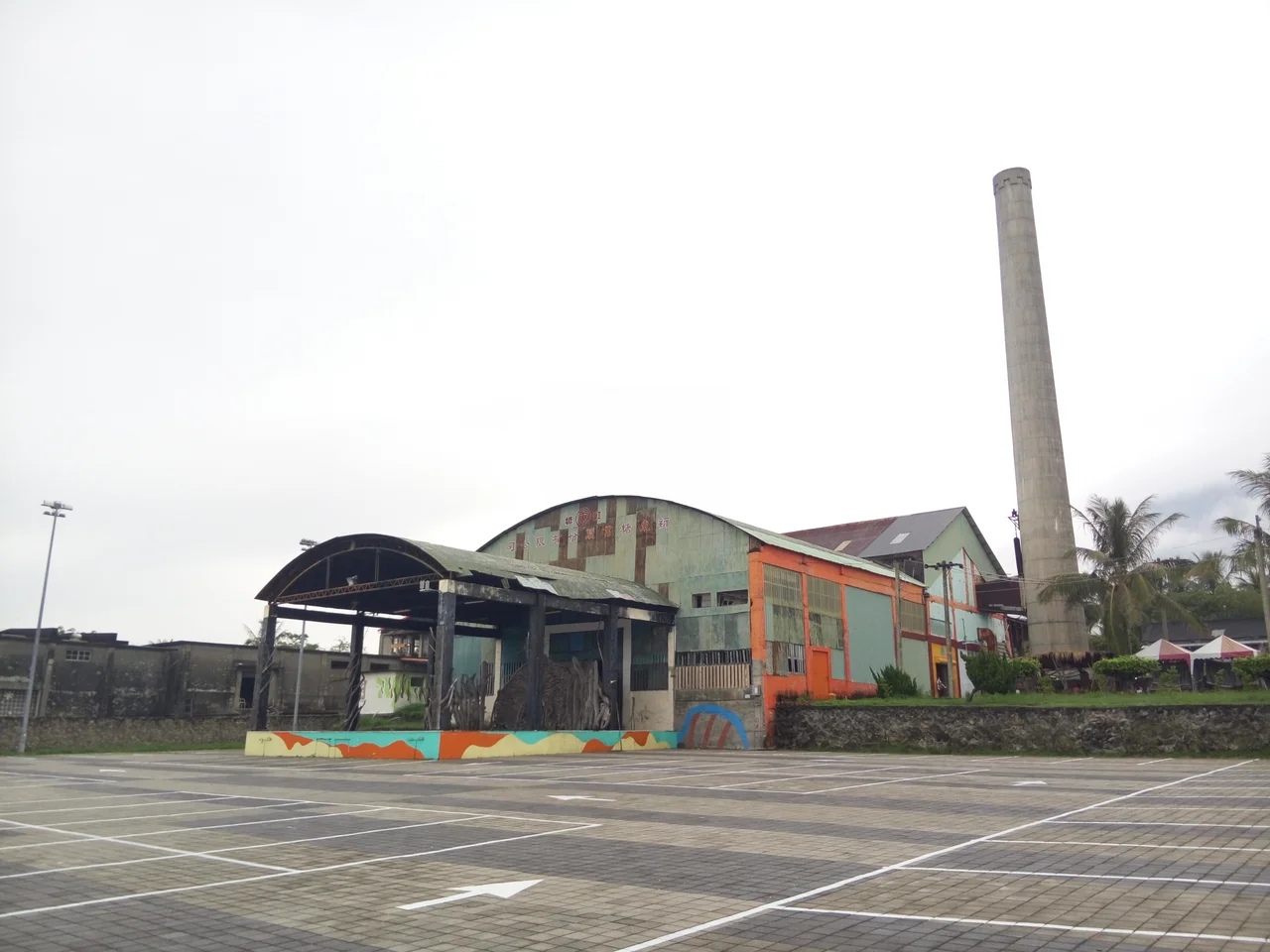

Sintung Sugar Factory Culture Park
Bombs fell on the Sintung sugar refinery during World War II, and the building never went back to making sugar. For decades the old plant stood in Dulan Village on Taiwan's Pacific coast — rusted, cavernous, quietly falling into itself. Then, in the years after the factory finally shut down in 1991, a loose coalition of artists and indigenous craftspeople discovered it. What they found were high industrial ceilings, thick walls built during Japanese colonial rule, and a location so beautiful — tucked between the Central Mountain Range and the crashing East Coast — that doing nothing with it seemed almost criminal. They moved in, and Dulan hasn't been quiet since.
Sugar, Smoke, and the Colonial Era
Taiwan's sugar industry was a pillar of the Japanese colonial economy, and the Sintung refinery was one node in a sprawling network of mills that processed cane grown across the island's fertile plains and valleys. Built during the Japanese rule of Taiwan, the factory processed harvests from the surrounding Donghe Township, shipping refined sugar northward to processing hubs and eventually to markets across the empire. The refinery was functional, purposeful, industrial — and then the war arrived. Allied bombing campaigns targeted infrastructure across Taiwan in the final years of World War II, and Sintung took hits that halted production. The factory limped along in some capacity after 1945, but the damage compounded over decades. By 1991, when operations finally ceased for good, the building had spent half a century in slow decline. The walls, though, remained. Thick, solid, and strangely beautiful.
Driftwood and Pebbles: An Unlikely Rebirth
Dulan Village sits in a coastal stretch of Donghe Township where the mountains drop almost directly into the Pacific. Driftwood arrives on the beaches with every strong swell. Smooth river pebbles are everywhere underfoot. When art workers moved into the Sintung ruins with backing from the Taitung County Government, they didn't truck in conventional building materials. Instead, they built with what Dulan offered: pebbles packed into walls, driftwood shaped into beams and sculptures, steel bars repurposed as structural bones rather than hidden beneath plaster. The result is a park that looks grown rather than constructed — organic shapes emerging from industrial bones. Studios and showrooms filled the old processing halls. A bed and breakfast appeared in what had been storage space. A coffee house settled into a corner that once smelled of raw cane. The overall effect is rambling and generous, the kind of place that takes time to properly read.
A Stage for Taiwan's East Coast Creative Scene
Dulan has long attracted painters, sculptors, and musicians drawn to its relative remoteness and the cultural richness of Taiwan's Aboriginal communities along the East Coast. The Sintung park amplified that energy, providing a formal gathering point for what had been a scattered scene. Live concerts fill the outdoor areas on weekends and during festivals, the music ranging from traditional indigenous rhythms to contemporary folk and experimental forms. Local craftspeople sell work in the handicraft shop — textiles, ceramics, and carvings that reflect both Aboriginal traditions and the improvisational spirit of the park itself. Dance performances animate the evenings. The events calendar shifts with the seasons, making no two visits quite alike. What the park offers, more than any single attraction, is an atmosphere: the feeling that creativity here is not curated for tourists but simply ongoing, the way the tide is ongoing.
Where the Mountains Meet the Pacific
The setting is not incidental to what makes Sintung work. Stand in the park's courtyard and look east: the Pacific stretches to the horizon, blue-green in clear weather, white-capped when the wind picks up off the open ocean. Turn west and the Central Mountain Range rises steeply, the ridgelines folding into each other at altitude. This stretch of Taiwan's East Coast has fewer roads and far fewer people than the western plains, which gives it a quality of spaciousness unusual for one of Asia's most densely populated islands. The park sits close to Highway 11, the coastal route that threads between sea cliffs and the mountains — a road cyclists come from across Asia to ride. Visitors to Sintung often combine the park with a few days of exploring this coast: the Aboriginal villages, the surf, and the long uninterrupted stretches where the road runs so close to the water you can smell the salt from your car window.
From the Air
Sintung Sugar Factory Culture Park lies at 22.872°N, 121.226°E in Dulan Village on Taiwan's Pacific coast. From the air at 3,000–5,000 feet, the old industrial structure is visible amid the coastal strip of Donghe Township, set against the dramatic green wall of the Central Mountain Range to the west and the Pacific to the east. The nearest airport is Taitung Airport (RCFN), approximately 30 km to the south. Highway 11 along the coast is a useful visual reference from altitude.
Nearby Stories
- Liudui Hakka Cultural Park 3.3 km away
- 2025 Tainan–Chiayi Earthquake 3.4 km away
- Meinong Hakka Culture Museum 4.3 km away
- Chiaming Lake 13 km away
- Taimali 13 km away
- 1951 East Rift Valley Earthquakes 78 km away
- 2021 Hualien Train Derailment 142 km away
- Mavulis Island 176 km away