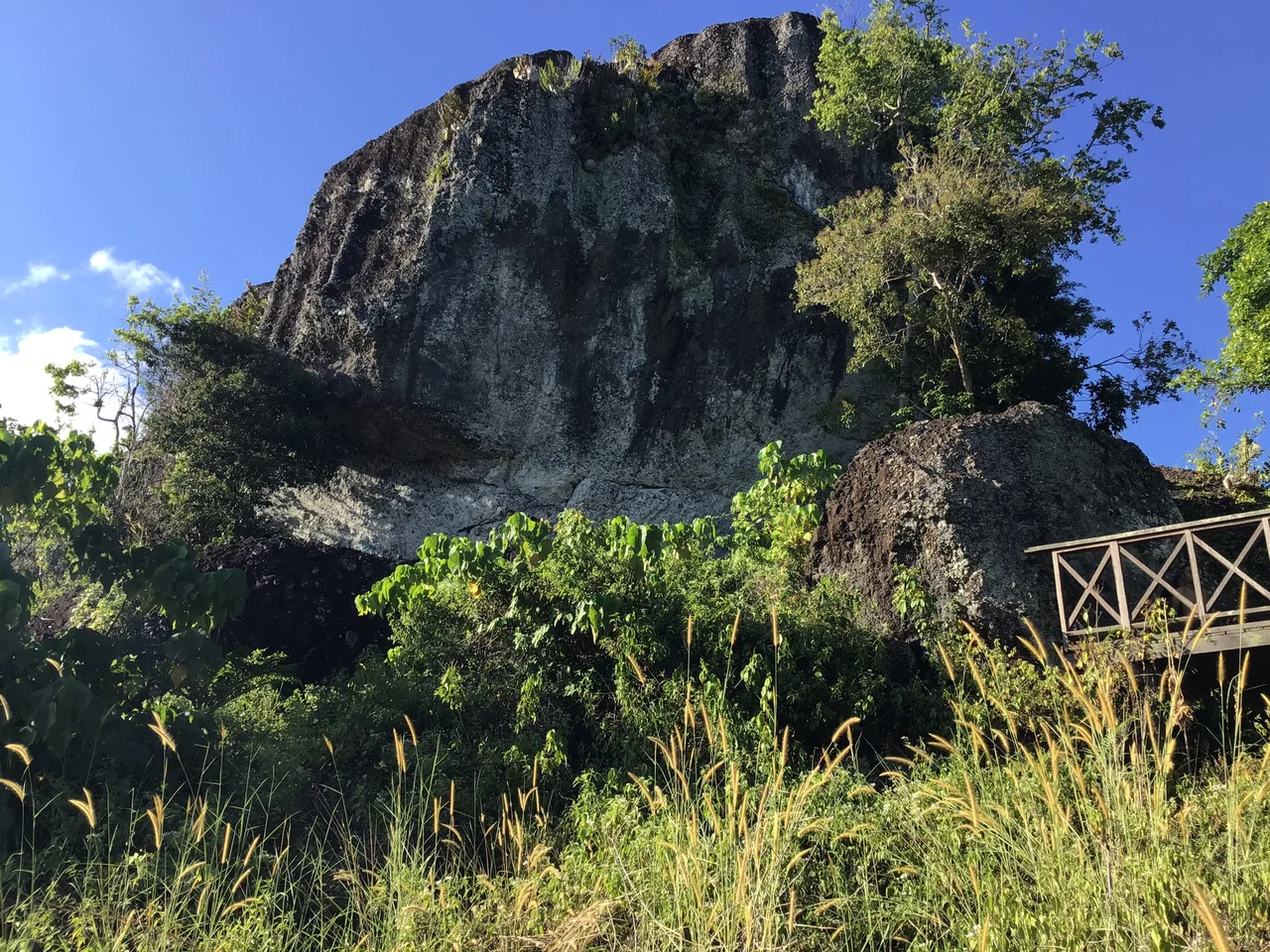

Skull Hill, Malaysia
Walk the slopes of Skull Hill and you will step on history. Pottery shards crunch underfoot -- thousands of them, decorated with patterns pressed into wet clay three millennia ago, then fired and traded across distances that challenge modern assumptions about prehistoric capabilities. Known locally as Bukit Tengkorak, this volcanic rock shelter 10 kilometers south of Semporna, Sabah, has been identified as the largest pottery manufacturing site in Southeast Asia during the Neolithic period. The fragments scattered across its hillside are not debris. They are the production floor of a factory that supplied traders reaching as far as the Andaman Sea, 3,000 years before anyone drew a map of the route.
Inside the Volcano's Mouth
Skull Hill is not merely a hill. It is part of the mouth of an extinct volcano, a crater rim roughly two kilometers in diameter, surrounded by numerous isolated hills and mountains that mark the locations of other dead volcanoes ranging from the Pliocene to the Quaternary in age. The geological setting matters because it provided the raw materials and the elevated, defensible position that made the site attractive to its Neolithic inhabitants. The volcanic rock shelters near the summit offered natural protection from weather and enemies alike, while the surrounding landscape of extinct volcanic peaks created a dramatic skyline that has changed little in the millennia since potters first climbed to these outcrops to work.
What the Excavations Revealed
Between 1994 and 1995, a joint team from the Centre for Archaeological Research of Malaysia and the Sabah Museum conducted two seasons of excavations at volcanic outcrops near the hill's summit. Over five weeks of careful digging through undisturbed cultural deposits, they recovered a remarkable range of artifacts: large quantities of potsherds in diverse decorative patterns, stone tools fashioned from chert, agate, and obsidian, polished stone adzes for woodworking, and a stone barkcloth beater -- evidence of textile production alongside the ceramics. Shell and bone artifacts rounded out the material culture. Abundant food remains told the story of diet: mostly marine molluscs and fish bones, with some terrestrial animal bones, painting a picture of people who lived primarily from the sea but hunted on land as well.
The Bajau Connection
Perhaps the most remarkable discovery at Skull Hill is not what lies buried but what lives on. An ethno-archaeological study found that pottery-making techniques virtually identical to those used at the site 3,000 years ago are still practiced by the Bajau community in Semporna today. The Bajau -- often called "sea nomads" for their historically maritime existence -- maintain ceramic traditions that link them directly to the Neolithic potters of Bukit Tengkorak. The continuity spans three millennia of unbroken cultural transmission, a living thread connecting modern artisans to their prehistoric predecessors on the same hillside. The obsidian stone tools found at the site provide further evidence of long-distance connections, since obsidian does not occur naturally in Sabah and must have been imported through trade networks extending across the region.
Three Thousand Years of Sea Roads
Skull Hill's pottery did not stay on the hill. The site provides evidence of prehistoric sea trade connecting communities in eastern Borneo to partners across maritime Southeast Asia and beyond, reaching as far as the Andaman Sea between Myanmar and Thailand. This represents one of the world's longest documented human trade movements dating back three millennia -- pottery and obsidian traveling hundreds of kilometers across open ocean in vessels whose design we can only guess at. The Semporna coast, sheltered by islands and reefs, would have provided a natural staging area for such voyages, and Skull Hill's position overlooking the sea gave its inhabitants a commanding view of approaching trade partners and potential threats alike. What the excavations reveal is not a primitive settlement scratching at subsistence but a sophisticated manufacturing center embedded in trade networks of genuinely global prehistoric scale.
From the Air
Located at 4.44N, 118.62E, approximately 10 km south of Semporna town on the east coast of Sabah, Malaysian Borneo. The hill is part of a volcanic crater rim roughly 2 km in diameter, surrounded by other extinct volcanic peaks. From altitude, the cluster of volcanic hills is visible against the coastal lowlands, with Semporna town and its offshore islands to the north. Nearest airport is Tawau (WBKW). The Semporna archipelago and its extensive reef systems provide good visual navigation references.
Nearby Stories
- Kapalai 3.4 km away
- Malaysia Airlines Flight 2133 21 km away
- USS S-36 27 km away
- Menara (tree) 37 km away
- Sebatik Island 38 km away
- Sheikh Karimul Makhdum Mosque 76 km away
- Indonesia-Malaysia Border 120 km away
- Tawi-Tawi 128 km away