
Skye Marble Railway
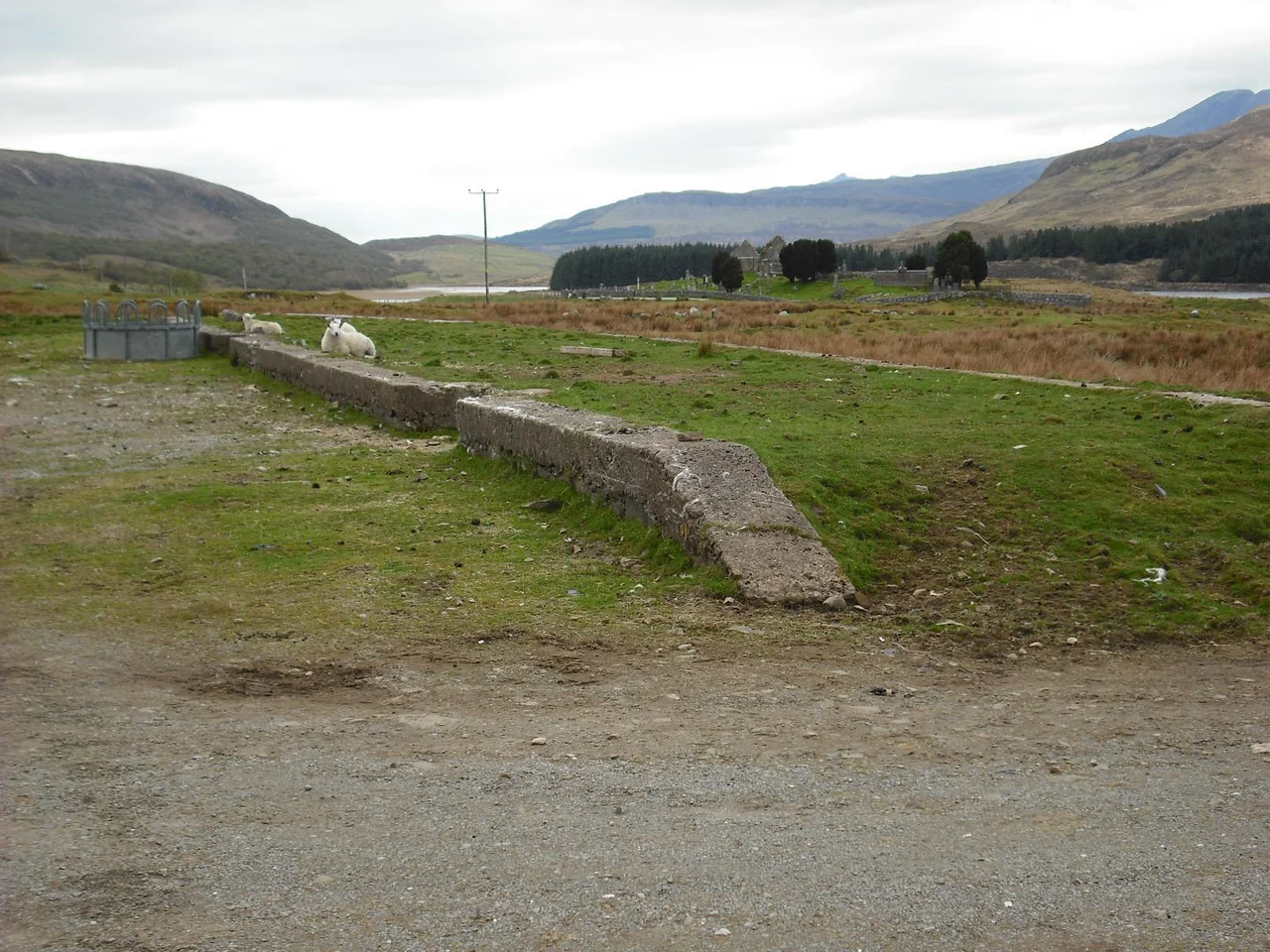
For two and a half years between 1910 and 1913, a small Hunslet locomotive named Skylark, brought across from Ireland second-hand, puffed up an incline three miles south-west of Broadford on Skye. She hauled wagons of cut white marble down to the pier, where the blocks were shipped to Antwerp to be turned into floors and mantelpieces for Edwardian Europe. Then the company went into liquidation, the rails were ripped up and sold by the ton, and Strath Suardal returned to silence. Today only a few stone platforms and the worn line of the trackbed remain, traceable through bracken on a quiet glen road.
The marble of Strath Suardal
Marble had been quarried in small amounts on Skye for centuries; Iona Abbey's altar is said to contain some. But the deposits near Kilchrist in Strath Suardal, identified around 1907, were more substantial and of a quality that Continental buyers wanted. A company was formed to work the quarry properly, with a polishing factory built nearby and a four-mile light railway planned from quarry to pier in Broadford. In January 1910 the company put the plans before the Skye District Committee, including a level crossing in the village. The committee approved them on condition that the company accept liability for any accident at the crossing. By August the work was reportedly going well. The track was 3-foot gauge, narrow enough to take tight curves through difficult ground; a branch line served the polishing factory. The whole thing was running by late 1910.
Lachlan Macleod
Late in October 1910, only a few weeks after the railway opened, a wagon got out of control on an incline. Lachlan Macleod, a young man from Raasay across the sound, was working a service train between Broadford and the quarry. He jumped from the runaway wagon and struck his head on the ground; the skull fracture proved fatal. He was the railway's first and as far as records show, only fatality, and the loss was reported in the Inverness Courier on 2 November 1910. He had come to Skye for the work like many young Hebridean men of his time, and he died on a narrow Highland railway that would itself outlast him by less than three years.
Antwerp and back
The cut and polished blocks went from Broadford pier by sea to Antwerp, then the trading center for European stone. From there the marble was redistributed across the continent, ending up in churches, banks, and the better-off townhouses of pre-war Europe. The journey from Strath Suardal to a Brussels staircase was several thousand miles, four modes of transport, and several markups. The economics were always strained. The deposit was smaller than first hoped, the quality variable, and the shipping costs eating into already thin margins. By early 1913 the company was in liquidation. The Inverness Courier of June that year carried the sale notice for the assets: one nine-and-a-half-inch four-wheeled locomotive (Skylark), 500 tons of flatbottomed rail in two weights, and 9,000 creosoted sleepers, six feet long.
What remains
The Great War broke out the year after the railway was lifted, and the polishing factory was eventually demolished. The quarry filled with water. The trackbed survives in places as a faint linear scar through the bog and bracken of Strath Suardal, traceable for stretches if you know what to look for. At Broadford there is a fragment of stone platform where the line met the pier. The road south to Torrin and Elgol follows roughly the route the line took, and a sharp eye on a quiet day can pick out the curve of an embankment, the corner of a cut, a sleeper rotting into peat. The Skye Marble Railway lasted thirty months. It killed one man, shipped a few hundred tons of stone, and left an outline you can still walk.
From the Air
Approximate trackbed runs from Broadford pier (57.24 N, 5.92 W) southwest about 4 miles to Kilchrist in Strath Suardal (57.218 N, 5.943 W). Nearest airport is Broadford airstrip on Skye, less than 2 nm from the old pier; Inverness (EGPE) is about 75 nm east. The Cuillin Hills loom 7 nm west, the Red Hills directly south. From low altitude, the line of the old trackbed can sometimes be picked out as a paler scar curving through the bog. Broadford's pale stone buildings and the curve of Broadford Bay are the clearest visual cues.
Nearby Stories
- Arisaig 5.3 km away
- Talisker distillery 9.7 km away
- Loch Torridon 11 km away
- Uig 12 km away
- Neptune's Staircase 16 km away
- Glen Affric 18 km away
- Corrieshalloch Gorge 34 km away
- Coll 39 km away