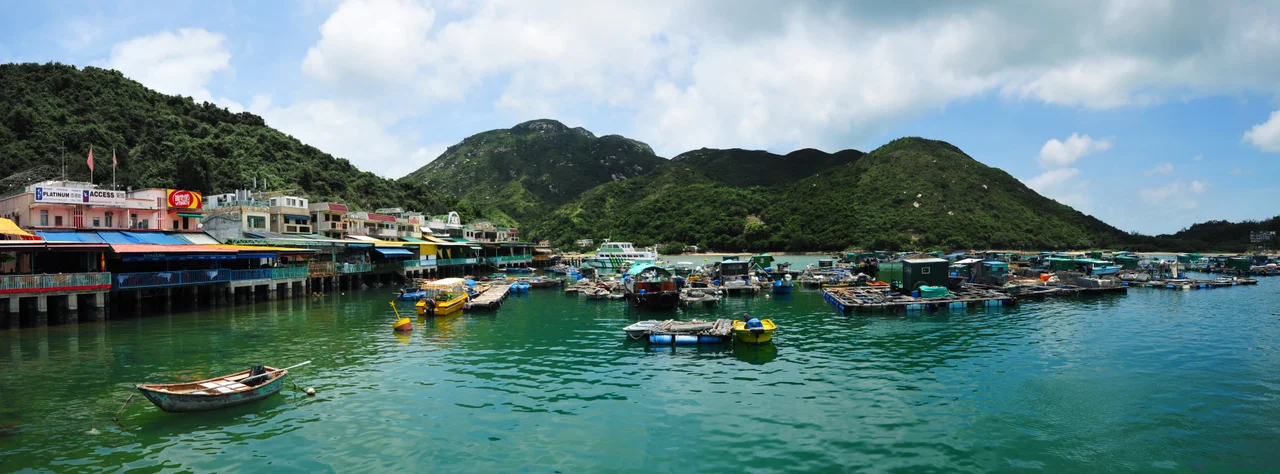

Sok Kwu Wan
When Japanese forces surrendered in September 1945, occupation troops left behind some peculiar souvenirs in Picnic Bay. Wooden motorboats about 25 feet long, painted green, packed with high explosives and still sitting on their launching trolleys — Shinyo suicide craft designed to destroy Allied shipping that never found their targets. The war ended before they could be used. Today the bay those boats haunted is called Sok Kwu Wan, and the only vessels you'll find at the pier are the ferries delivering day-trippers to a string of open-air seafood restaurants along the waterfront. The explosive legacy is long gone. What remains is a village that wears its layers lightly.
A Bay With Two Names
Sok Kwu Wan and Picnic Bay mean very different things, and the contrast captures the place well. The Cantonese name is practical, rooted in the everyday life of the fishing community that settled here. The English name suggests leisure — and that is exactly what colonists and visitors have always come for, rowing out from Hong Kong Island to spread blankets on the hillside above the calm water. Both names are still in use, and both are accurate. The bay sits on the east coast of Lamma Island, tucked between green hills that drop steeply toward the South China Sea. Ferries from the Outlying Ferry Pier No. 4 in Central make the crossing in 35 to 45 minutes; a shorter run from Aberdeen via Mo Tat takes about 30. Either way, you arrive at a village that feels deliberately unhurried — a different tempo from the metropolis visible across the water.
Shrine, Temple, and Fish Farm
Sok Kwu Wan is one of 28 designated marine fish culture zones in Hong Kong, and the floating cage structures visible across the bay are working infrastructure, not decoration. But the village is not purely industrial. A Tin Hau Temple stands here, its artifacts dating to the pre-Qing period — dedicated to the goddess of the sea, which makes perfect sense for a community that has always earned its living from the water. The temple's bells and offerings speak of generations of fishermen seeking safe passage. Directly across the bay, the Hong Kong YMCA maintains an outdoor education camp on forested land that has repeatedly been considered for protected status. Between the fish farms and the forest, between the working waterfront and the hiking trail, Sok Kwu Wan holds its contradictions in balance.
The Trail Between Villages
The Lamma Island Family Trail connects Sok Kwu Wan on the south to Yung Shue Wan on the north, running through the interior of the island past pagodas and information panels about the island's ecosystems. Along the way, signs point toward Luk Chau, Lamma Winds, Lo So Shing, and Tung O — a catalogue of island destinations that rewards those willing to walk. The trail is well-maintained and well-marked, winding through terrain that still feels genuinely remote despite the proximity of one of the world's most densely populated cities. To walk it is to understand what draws people to Lamma in the first place: the unusual combination of accessibility and quiet, city convenience and island pace.
Green Turtles and Contested Ground
Sham Wan, one of the beaches reached by paths from the village ferry pier, is a known breeding ground for endangered green sea turtles. Each year from June to October, an Agriculture, Fisheries and Conservation Department facility staffs the beach to prevent access during nesting season. The turtles are part of why South Lamma has repeatedly been proposed for conservation status. Development pressure tells a different story: a planned community centered on Sok Kwu Wan's abandoned quarry could house an additional 6,000 residents, adding 1,900 housing units and a 260-suite hotel to the island. Development plans were shelved, then revised toward environmental protection. Locals have consistently favored eco-tourism over high-rise density. The quarry sits empty, and for now, the turtles return.
What Dinner Means Here
The seafood restaurants along the Sok Kwu Wan waterfront are not a tourist gimmick; they are the village's main event. Tanks of live fish and shellfish line the restaurants, and the formula is simple: choose what you want, watch it cooked, eat it with a cold beer looking out at the bay where fish farms float in the middle distance. It is a tradition that draws Hong Kong families on weekends and visitors from far afield on weekdays. The village functions on a schedule set by the ferry timetable, bustling when boats arrive and quieting when they depart. By evening, after the last ferry back to Central, Sok Kwu Wan belongs to the people who actually live here — fishermen, village elders, the staff of the public library and the police post — and the bay settles into an older, slower rhythm.
From the Air
Sok Kwu Wan sits at 22.205°N, 114.132°E on the east coast of Lamma Island, southwest of Hong Kong Island. Best viewed from 2,000–4,000 feet, where the bay's fish culture cage structures are visible against the green hillsides. The village pier and seafood restaurant strip are identifiable along the waterfront. The nearest major airport is Hong Kong International (VHHH), approximately 20 nautical miles to the northwest on Lantau Island. Approach from the south over open water offers the clearest views of the bay's distinctive shape and the hillside that rises steeply behind the village.
Nearby Stories
- Lok Ma Chau Loop 2.3 km away
- Portas do Cerco 2.3 km away
- Kweilin Incident 17 km away
- Wanshan Archipelago Campaign 34 km away
- Nanxiong Formation 115 km away
- Battle of Nanpeng Island 148 km away
- Heyuan 169 km away
- Cape Maobitou 632 km away