.jpg)
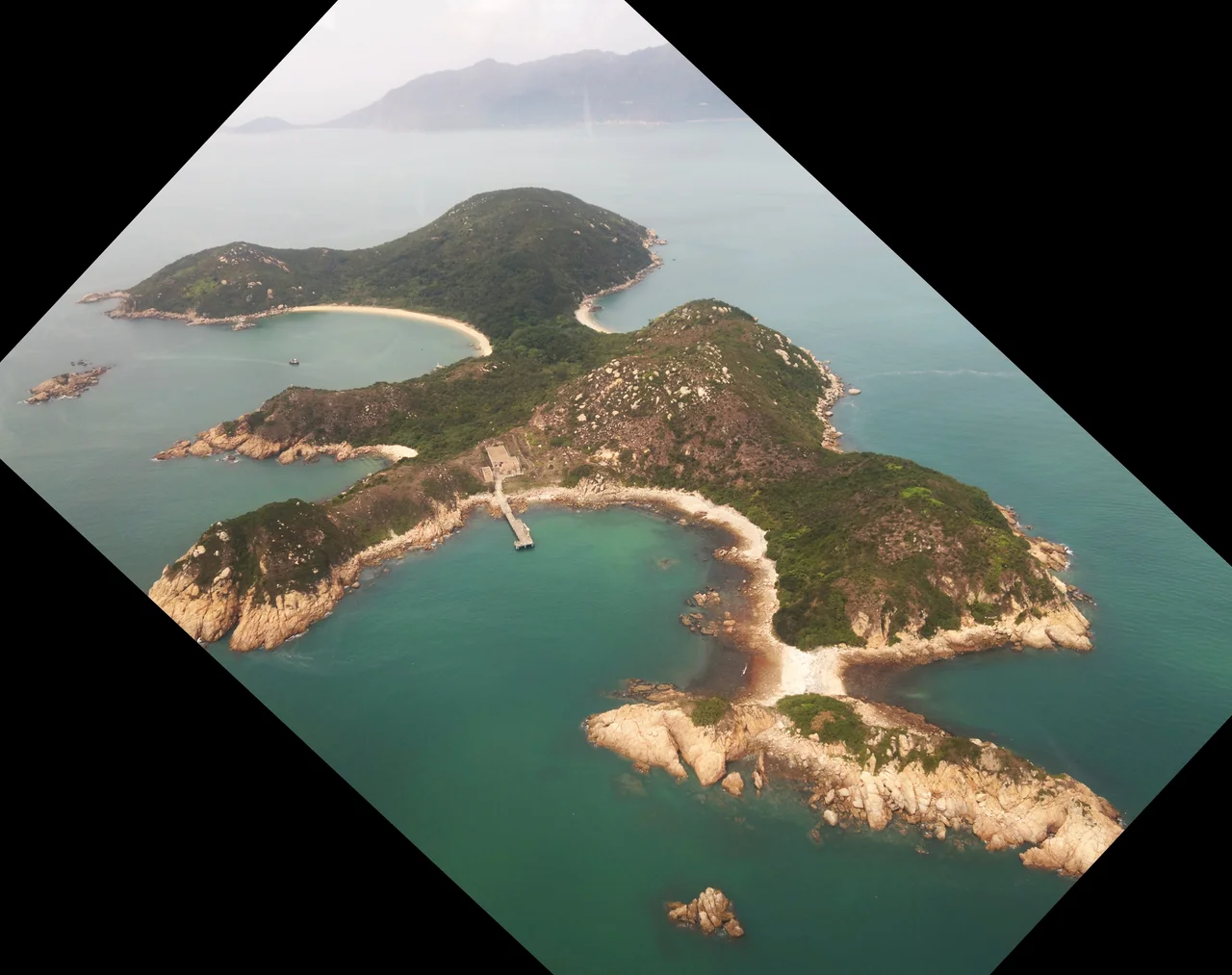
Soko Islands
The old Cantonese name for this cluster of islands was Sok Kwu Kwan To — Fishing Net Islands. People came here to cast nets in the Pearl River estuary, and for centuries, the name was enough. Then the islands became famous for something more unexpected: in 1982, archaeologists excavating Tai A Chau turned up stone drills, adzes, and pounders from the Neolithic period and Bronze Age, evidence of human presence stretching back to roughly 4500 BC. The Soko Islands, sitting at the southwesternmost edge of Hong Kong territory, had been inhabited far longer than anyone knew. Today they are uninhabited again — their last residents gone, their Tin Hau temples still standing, their surrounding waters now a designated marine park.
Stone Tools and Deep Time
Excavations on Tai A Chau in 1982 and again in 2005 produced artifacts spanning the Neolithic period through the Bronze Age — roughly 4500 to 221 BC. The tools found there are working implements: drills for boring through material, adzes for shaping wood, pounders for processing food. They are not ceremonial objects. Whoever left them behind was living on this island, not visiting it. The granite and rhyodacite that makes up the Socos provided a foundation solid enough to build on, and the brackish waters of the Pearl River estuary, mixing fresh and salt water as the river meets the South China Sea, offered a rich fishery. For thousands of years, the islands were worth settling.
Three Families, Two Temples
By the 1770s, documented settlement had begun. The evidence comes from an unusual source: inscribed bells inside the small Tin Hau temples on Tai A Chau and Siu A Chau, presented by devotees in 1828 and 1773 respectively. The bells record the names of people who lived here and felt the need to thank the goddess of the sea. In the late 1950s, the island population was around 65 people. Three families dominated: the Ng and Yeung families of Tai A Chau, and the Chow family of Siu A Chau. All traced their descent to the original Cantonese and Hakka settlers. They fished, farmed rice, raised pigs, made shrimp paste, and traded almost entirely with Cheung Chau, reaching it by motor or sailboat. Occasionally papayas were grown and sold. It was a complete, if modest, economy.
Pigs, Pineapples, and Radioactive Waste
The 1960s brought external intervention. The Kadoorie Experimental and Extension Farm donated 350 pigs to the Soko Islands to boost local pig-raising, and pineapple plantations were introduced as a new export crop. The islands were acquiring a reputation for self-sufficient rural industry. Then came something stranger: disused air raid tunnels on the islands were repurposed into a facility for managing Hong Kong's low-level radioactive waste. The complex — commissioned in 2006 and designed to operate for 100 years — includes a shielded waste storage vault, a laboratory, an automatic control room, and a wastewater management system. It is, by any measure, an unusual neighbor for a Tin Hau temple.
Dolphins, Dolphins, and a Marine Park
The islands are now uninhabited by people but not by wildlife. The waters around the Socos matter enormously to Chinese white dolphins, a species that has struggled as Pearl River estuary development has intensified. In 2016, CLP Power proposed siting a liquefied natural gas terminal near the islands; environmental groups opposed it specifically because of the dolphin habitat. In February 2020, OceansAsia researchers found 70 discarded face masks washed up on one beach — a snapshot of pandemic-era ocean pollution. The same beach yielded 54 more masks the following November. The soft-shore beaches of Siu A Chau attract green turtles as well. In April 2022, the South Lantau Marine Park was formally designated, encompassing the Soko Islands and the waters between Tai A Chau and Siu A Chau. The park's stated goal is to protect the Chinese white dolphins and finless porpoises that feed and travel through these waters.
At the Edge of Hong Kong
Geographically, the Socos are as far from Central as Hong Kong gets. Sitting southwest of Lantau Island in the outermost reach of the territory, they feel like a margin — which is partly why they have absorbed so many marginal uses over the centuries: prehistoric settlement, fishing community, pig farm, radioactive waste site, conservation area. Each era left something behind: stone tools, inscribed bells, a shielded vault, and the hope that dolphins and turtles will continue to find these waters worth inhabiting. The Tin Hau temples still stand on Tai A Chau and Siu A Chau, waiting for the devotees who no longer come.
From the Air
The Soko Islands lie at 22.174°N, 113.911°E, in the southwesternmost waters of Hong Kong territory, southwest of Lantau Island. Best viewed from 2,000–5,000 feet, where the granite outcrops and the distinct silhouettes of Tai A Chau and Siu A Chau are clearly visible. The Pearl River estuary opens to the west, and on clear days the coast of mainland China is visible beyond. The nearest major airport is Hong Kong International (VHHH), approximately 15 nautical miles to the northeast. The South Lantau Marine Park boundary encompasses the island group.
Nearby Stories
- Lok Ma Chau Loop 2.3 km away
- Portas do Cerco 2.3 km away
- Kweilin Incident 17 km away
- Wanshan Archipelago Campaign 34 km away
- Nanxiong Formation 115 km away
- Battle of Nanpeng Island 148 km away
- Heyuan 169 km away
- Cape Maobitou 632 km away