
Southern Virginia University
On June 11, 2020, three weeks after a Minneapolis police officer killed George Floyd, the trustees of Southern Virginia University voted to take a man's name off their main academic building. The building had been the Durham Academic Building since 1919, when Robert Lee Durham bought a half-interest in the school. The university statement called Durham's racial views indefensible. The building's name reverted to something simpler: the Academic Center. It would be renamed properly, the statement said, once a new name was chosen. As of this writing, the building is still the Academic Center.
That is the kind of place Southern Virginia is. A small Latter-day Saint-values college tucked into a Mexican-American War-named town in a Confederate-monument valley, trying to figure out which parts of its past it wants to keep.
From Bowling Green to Buena Vista
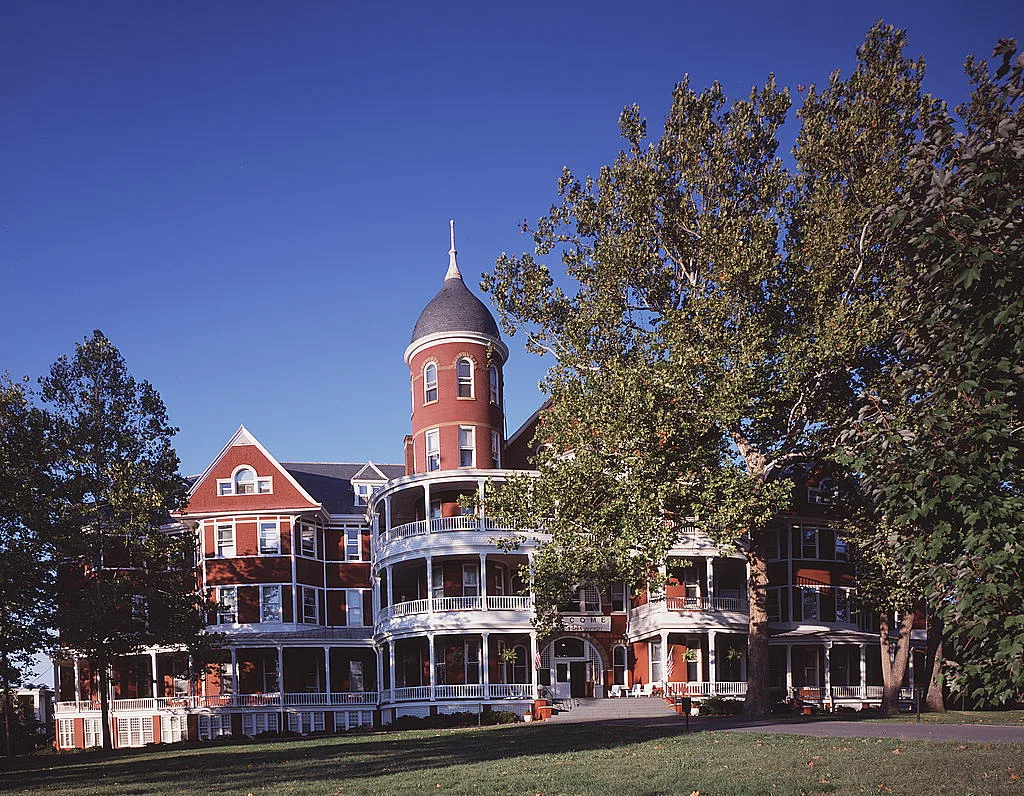
The school began in 1867, two years after Appomattox, when Alice Scott Chandler founded the Home School for Girls in Bowling Green, Virginia. It was a for-profit institution, which is what most schools were in the long economic afterward of Reconstruction. The name shifted to Bowling Green Female Seminary, then eventually moved to a building in Buena Vista that had been the Buena Vista Hotel, a grand 1890 brick pile built to house investors during the town's industrial boom. The hotel never quite filled with industrialists. It filled, instead, with girls learning art and home economics, then with junior college students in the 1920s, then with a four-year coed enrollment when the modern university took shape. Margaret Durham Robey, Robert Lee Durham's daughter, ran the place during its period of greatest growth in the 1940s. The campus today consists of twelve main buildings, most of which she or her father or her husband helped acquire.
The Religion That Isn't Official
Southern Virginia is not officially affiliated with the Church of Jesus Christ of Latter-day Saints. It embraces, in the careful phrasing of its own materials, LDS values. That distinction matters legally and doesn't really matter culturally. The campus operates an LDS Institute of Religion. Once a semester, classes are canceled for a service day to the Washington D.C. Temple, where students work on the grounds and participate in temple ordinances. Students are not required to enroll in religious classes. They are required, however, to sign the Code of Honor, which commits them to chastity, sobriety from alcohol and tobacco, modest dress, and respect for university grooming standards. An ecclesiastical endorsement, signed jointly with the applicant's local religious leader, is part of admission. The result is a small college whose social life looks more like Provo than Lynchburg.
Knights and Choirs
The athletic teams are the Knights, which competes in NCAA Division III as part of the USA South Athletic Conference, with men's volleyball in the Continental Volleyball Conference and men's wrestling in the Old Dominion Athletic Conference. In 2017, the university officially changed its school colors from green to crimson, the kind of identity decision a small college makes carefully and announces formally. Outside of athletics, the performing arts program is unusually robust for a school of this size. Chamber Singers, Bella Voce, Men's Chorus, the a cappella group Accolade, a Dance Company that performs jazz through Irish folk, an orchestra, a flute choir, and the Shenanigans improv troupe between them keep most of the student body singing or dancing or making people laugh.
Notable Names
Ed Mulitalo, who played in Super Bowl XXXV with the Baltimore Ravens, taught here as faculty. So did Orson Scott Card, whose novel Ender's Game has been on so many high school reading lists that a generation of students arrived having already read their professor. Jeff Benedict, the sports writer who co-authored LeBron James's biography, was also faculty. Among alumni: Beezie Madden, the Olympic show jumping medalist whose horses have made her one of the most decorated American equestrians of her generation, and Gustavo Ramos, the Brazilian-American fine artist whose figurative work has been exhibited internationally.
What the Hotel Sees
Main Hall, the most visible building on campus, was that 1890 Buena Vista Hotel before it was anything else. It still looks like a hotel, the kind built by men who thought a railroad town would be the next Lynchburg. The railroad town didn't quite become Lynchburg. The hotel became Main Hall. The girls' school became a junior college, became a four-year college, became a university. The Academic Center, formerly Durham Hall, sits waiting for a new name that hasn't arrived yet. A campus of twelve buildings in a town of 6,600, on the Maury River where it bends around Glen Maury Park, holding to a code of honor in a valley that has been trying to decide which honor it means.
From the Air
The campus sits in Buena Vista at 37.74 degrees north, 79.35 degrees west, in the Blue Ridge foothills along the Maury River. The visible landmark from altitude is Main Hall, the tall red-brick former hotel near the city center. Lynchburg Regional Airport (KLYH) is 30 nm east-southeast and Shenandoah Valley Regional (KSHD) is 40 nm north. Best viewed at 3,500 to 5,500 feet AGL, with afternoon light catching the brick facades.
Nearby Stories
- The Omni Homestead Resort 3.7 km away
- Appomattox-Buckingham State Forest 5.6 km away
- Randolph College 9.3 km away
- Hollins University 16 km away
- Albemarle County, Virginia 18 km away
- Alleghany County, Virginia 20 km away
- Elliott Knob 22 km away
- Murder of Hannah Graham 27 km away