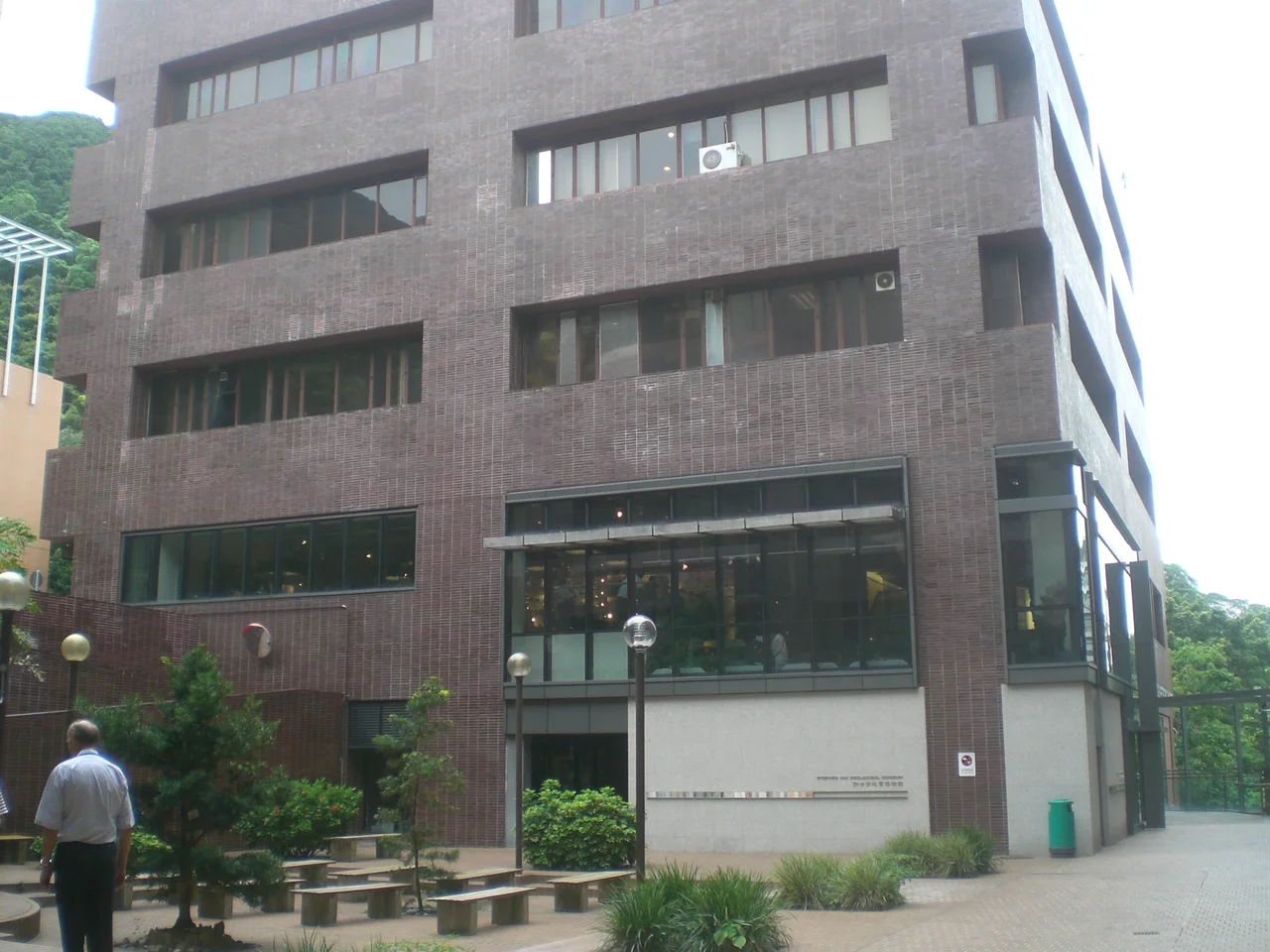

Stephen Hui Geological Museum
A student was browsing the shelves one afternoon in 2014 when she noticed something in a drawer that had apparently been sitting there for years, uncatalogued and overlooked. What she found was a fish fossil estimated to be about 147 million years old — the first dinosaur-era vertebrate ever identified from Hong Kong. It had been there all along, waiting. That is, in miniature, the story of the Stephen Hui Geological Museum: a place where the deep past sits quietly in labelled trays, and where looking closely enough can still turn up a revelation.
The Only Museum of Its Kind
Hong Kong is one of the most densely built cities on Earth, and its bedrock is older than almost anything standing above it. Yet until 2009, no institution had ever made that bedrock publicly visible. The Stephen Hui Geological Museum changed that. It opened on 16 January 2009 on the ground and first floors of the James Hsioung Lee Building on the University of Hong Kong's main campus, with the simple goal of making the university's rock collection available for public viewing. It remains the first and only geological museum in Hong Kong. The museum is housed within the Department of Earth Sciences, itself the only earth sciences department in the territory. The weight of those superlatives is easy to underestimate: in a city of seven million people and immense cultural richness, one institution holds the entire public record of the ground beneath everyone's feet.
Ten Thousand Windows into Deep Time
The collection holds around 10,000 catalogued specimens from locations across the world. Rocks and minerals, fossils, crystals — each piece a compressed chapter of geological time. Some specimens come from Hong Kong itself, reflecting the territory's surprisingly varied geology: ancient granites and volcanic tuffs that date back hundreds of millions of years, shaped by forces that predate any human presence in the region by an unimaginable margin. Others have traveled from far afield, donated by researchers, universities, and collectors over decades. The 2014 fish fossil discovery was particularly significant. The specimen was determined to be from the Jurassic period, making it the first dinosaur-era vertebrate identified from Hong Kong — a finding that extended the territory's known fossil record into an era most people would never associate with this corner of the South China Sea.
Private Collections, Public Treasure
In 2017, the museum took a different kind of plunge. It hosted what was described as the largest exhibition of private geological collections ever staged in Hong Kong — a gathering of specimens that had previously lived in the hands of individual collectors, unseen by the public. Private geological collecting has a long tradition, and significant pieces often spend entire lifetimes in storage, available only to their owners. Bringing those collections into a museum context, even temporarily, gave a broader audience access to material that might otherwise have remained invisible. The museum is open Monday through Friday, 1 PM to 6 PM, with mornings reserved for guided group tours. It is free to enter — a quiet invitation, tucked into a university campus, to step off the pavement and spend an afternoon thinking about what lies a hundred million years beneath it.
A Campus Corner Worth Seeking Out
The University of Hong Kong occupies a hillside above Pok Fu Lam Road in the western part of Hong Kong Island, a neighborhood of layered colonial and modern architecture overlooking Victoria Harbour. The museum itself is not large, and it does not announce itself loudly. Finding it requires some navigation through the campus, which is part of its charm. It sits within a functioning academic department, surrounded by researchers who study the same subjects on display — an arrangement that makes the museum feel less like a finished exhibit and more like an ongoing conversation about the territory's geology. For visitors willing to make the effort, it offers the rare experience of sitting with 10,000 objects and thinking about time in units of millions of years, in a city more accustomed to thinking in microseconds.
From the Air
The Stephen Hui Geological Museum sits at approximately 22.2826°N, 114.137°E on the University of Hong Kong campus in the Pok Fu Lam area of Hong Kong Island. Approaching from the northwest at 2,000–3,000 feet, the dense urban grid of western Hong Kong Island is clearly visible below, with Victoria Harbour opening to the north. The main campus buildings of HKU are visible as a cluster of older stone structures climbing the hillside. Hong Kong International Airport (VHHH) is approximately 25 nautical miles to the west-southwest on Lantau Island; Kai Tak (now a sports park) lies about 8 nautical miles to the northeast across the harbour. Victoria Peak rises to the south at 552 meters.
Nearby Stories
- Lok Ma Chau Loop 2.3 km away
- Portas do Cerco 2.3 km away
- Kweilin Incident 17 km away
- Wanshan Archipelago Campaign 34 km away
- Nanxiong Formation 115 km away
- Battle of Nanpeng Island 148 km away
- Heyuan 169 km away
- Cape Maobitou 632 km away