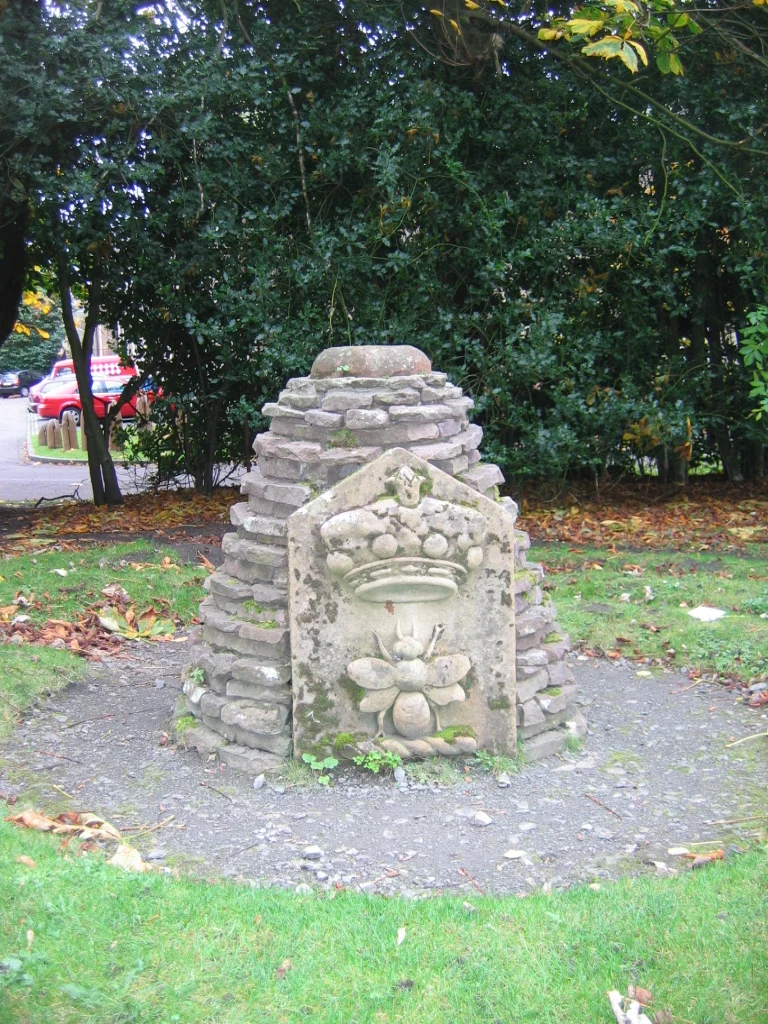

Stirling Smith Art Gallery and Museum
Thomas Stuart Smith signed the trust deed in November 1869. He had drawn the plans himself: a library, a museum, a reading room, an institute for Stirling that would house his own paintings and his collection of work from contemporaries he had met in Paris and London. The next month, while travelling, he died in Avignon. He never saw a single stone of the building laid. The Smith Institute, as it was first called, opened in 1874 and has been Stirling's art gallery and local-history museum ever since, run by trustees who had to interpret a vision its creator never had time to finalise. The Doric portico on Dumbarton Road still carries his bequest in carved letters; the wolf of Stirling and the castle still flank the tympanum; and inside, the Stirling Story exhibition tells the city's history in the largest gallery, exactly where the founder's oil paintings were meant to hang.
The Painter Who Made Good
Thomas Stuart Smith was a small-town Scot transformed by an inheritance. His uncle Alexander Smith funded his trip to Italy in 1840, where he learned to paint in earnest. By the end of the 1840s his work was being accepted by both the Salon des Beaux Arts in Paris and the Royal Academy in London, no small achievement for a self-taught artist with no formal academic backing. When Alexander Smith died in 1849, the second inheritance enabled Thomas to set up a proper studio at Fitzroy Square in London, surrounded by a collection of art that included his own work alongside pieces he had bought from the artists he knew. He decided his hometown of Stirling, which had no public gallery, would be his memorial. The trust was signed with James Barty, Provost of Stirling, and the fellow artist A W Cox as co-trustees. Twenty-eight days later, Smith was dead at Avignon, the building still imaginary.
The Building with the Idiosyncratic Roof
Smith had planned to supervise construction in person. The architect, John Lessels of Edinburgh, was instead left to interpret the trust deed from a distance. Corners were cut. The roof structure has been politely described as idiosyncratic by every subsequent generation of curators. Most of the stone came from Raploch Quarry on the northern side of the castle escarpment, where the Stirling fire station stands today. Additional sandstone was hauled from a quarry at Dunmore. The Dumbarton Road frontage carries a tetra-style Doric portico, four pillars carrying a pediment with the Stirling seal: the wolf on the left, the castle on the right. The Victoria Road frontage runs for 218 feet and is broken by two gables with three-light Venetian windows. The west wall is blank, in literal accordance with the trust deed's specification of *space on either side for contingent additions*. The contingent additions never came.
Five Rooms, Many Lives
When the Smith opened to the public in 1874, it had five distinct spaces. To the left of the entrance was the Reading Room and Library, fifty by twenty-eight feet, with an elaborate plaster ceiling featuring casts of the Stirling Heads in fifteen panels per section, the woodwork stained to look like oak, the walls in 'drab Etruscan' to harmonise with the colours above. To the right was a Small Museum displaying the original Stirling Heads themselves and other Scottish antiquities. The central watercolour gallery and the great oil gallery were top-lit, both painted dark maroon with green coves. The General Museum on the east side filled the rest. The plasterwork was all by John Craigie of Stirling. When dry rot was discovered in the 1970s, much of Craigie's ceiling was lost. The Library moved to a Carnegie building at the Corn Exchange in 1904. The natural history room replaced it, then became Gallery 1, then was renamed the Ballengeich Room, and is now used for temporary exhibitions and the Smith Cafe.
Lost Plasterwork, Found Audiences
The Smith never expanded onto its full two-acre site as Smith had imagined. The pressing need for storage and workshop space has eaten about a third of the original public area. Most of the fine-art collection now lives in storage; Gallery 3, conceived as the foundation oil gallery and the building's grandest space, currently houses the Stirling Story exhibition as a temporary measure. The Small Museum was fitted out as a Lecture Room in 1984 and is heavily used by community groups; in 2000, a great stained-glass window from Springbank House was installed there along with original plasters by Albert Hemstock Hodge for the Stirling Burns Monument. When the army requisitioned the building in 1914, the curator and his family kept living on site; the army cut a separate entrance through an enlarged window for them, and that opening serves as the staff entrance today. The Smith is free to enter for both tourists and residents. R S Shearer's 1895 guidebook listed it under *How to spend a few hours on a wet day*. It still serves admirably for that purpose, and for a great many more.
From the Air
The Stirling Smith Art Gallery and Museum sits at 56.119N, 3.945W on Dumbarton Road, just south of the old town and below Stirling Castle. From altitude the castle rock is the obvious landmark and the museum lies a short distance south. Best viewed at 2,000 to 4,000 feet for the layout of central Stirling. Nearest airports: Edinburgh (EGPH) 30 nm east-southeast, Glasgow (EGPF) 25 nm south-southwest. Watch for low ceiling against the Ochil Hills in northeasterly flows.
Nearby Stories
- Murder of Alesha MacPhail 3.1 km away
- Ben Lomond 5 km away
- Lochleven Castle 8.8 km away
- Battle of Dunsinane 15 km away
- Pentland Hills 16 km away
- Breadalbane Hydro-Electric Scheme 17 km away
- Beith 17 km away
- Rannoch Moor 24 km away