
Strahan
Strahan, which the locals say as "strawn," sits on a sheltered bay at the northern end of Macquarie Harbour, about 300 kilometres and a five-hour drive west of Hobart, in one of the most isolated and most beautiful corners of Australia. For most of the twentieth century it was the underdog, a working port smaller than the roaring mining towns of Queenstown and Zeehan that it served, shifting their copper and tin and timber out through Hell's Gates to the world. Then the mines faltered. Queenstown and Zeehan dwindled into shadows of their boom-time selves, and the quiet little harbour town outlasted them both, reinventing itself as the doorway to a wilderness that turned out to be worth more than any ore.
A Port for a Hard Country
Strahan grew up in the late 1870s as a foothold for explorers and miners pushing into the wild west, and in 1881 it took the name of Sir George Cumine Strahan, then governing the colony. It was never an easy place to reach. The only sea route ran through Hell's Gates, the notorious entrance to Macquarie Harbour, where a shallow bar and ferocious currents have always made arrival by water a gamble. Yet for decades this was the lifeline of the whole west coast, the harbour through which the mineral wealth of Mount Lyell and the surrounding ranges left Tasmania. Fishermen, convicts before them, and the rugged timber-cutters called piners all passed through here, and the town carried far more weight than its size suggested.
The Scent of Huon Pine
The piners gave Strahan a trade unlike any other. They went deep into the rainforest along the rivers feeding Macquarie Harbour to fell Huon pine, a slow-growing, honey-coloured timber so dense with oil that it resists rot for centuries and so prized that boatbuilders treasured every plank. It is one of the longest-lived trees on Earth, and cutting it was brutal, lonely work in some of the wettest country in Australia. That timber heritage still scents the town, where Huon pine is worked and sold, and it ties Strahan back through time to the convict shipwrights of nearby Sarah Island, who built ocean-going vessels from the same forests at the very bottom of the world.
The Railway That Came Back
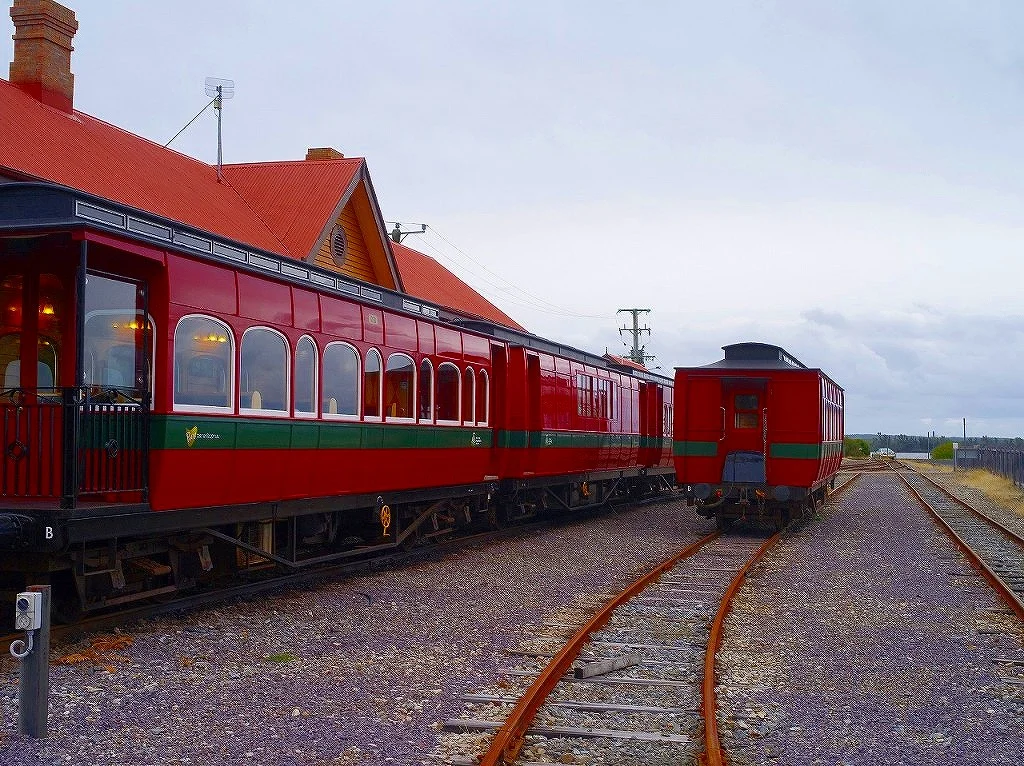
No engineering feat captures the old west coast like its railway. To haul copper from Queenstown down to the port, the Mount Lyell company drove a line through rainforest and gorge in the 1890s, using a toothed rack-and-pinion system to grip the steepest grades where ordinary wheels would simply spin. The mining railway closed in 1963 as roads took over, and the line fell silent. Then, in 2002, it returned. The West Coast Wilderness Railway now runs the 34 kilometres between Queenstown and Strahan not for ore but for travellers, climbing through dense forest and over the King River so visitors can see, from a warm carriage, the country the piners and miners once fought.
Gateway to the Wild
Today Strahan trades in wilderness instead of minerals. It is the launching point for almost everything on this coast: cruise boats that glide out to Hell's Gates and the haunting ruins of Sarah Island and up the mirror-calm lower Gordon River, jet boats, sea planes, and helicopters that lift over country no road will ever reach. A small ocean fishing fleet still works out of the harbour, and shops sell fresh crayfish to anyone who asks. Just west of town, Ocean Beach runs for kilometres against the full force of the Southern Ocean, where a storm rolling in off the water is, as one old account put it, a salient and sobering thing to witness. For a place that once measured its worth in tonnes of copper, Strahan has found a richer cargo in the wild it guards.
From the Air
Strahan lies at 42.15 degrees south, 145.32 degrees east, on the northern shore of Macquarie Harbour on Tasmania's west coast. From the air the town marks the junction of sheltered harbour and open ocean: the broad dark fjord of Macquarie Harbour stretches south and east, the narrow gap of Hell's Gates breaks the coast just to the northwest, and the long white line of Ocean Beach runs north-south against the Southern Ocean swell. Strahan Airport (ICAO YSRN) sits at the edge of town and handles charter and scenic flights only, with no scheduled passenger service; the nearest larger fields are Burnie/Wynyard (YWYY) about 70 nautical miles north and Hobart International (YMHB) roughly 130 nautical miles east. The west coast is notably wet and windy, so expect frequent low cloud, rain, and strong westerlies; on a clear day, a viewing altitude of 2,500 to 4,000 feet frames the town, the harbour, and the surf-battered coast together.
Nearby Stories
- Cradle Mountain-Lake St Clair National Park 2.2 km away
- Macquarie Harbour Penal Station 6.9 km away
- Mount Bischoff 48 km away
- Overland Track 52 km away
- Southwest National Park 56 km away
- Cape Grim Massacre 130 km away
- Cataraqui 244 km away
- Chatham Islands 3119 km away