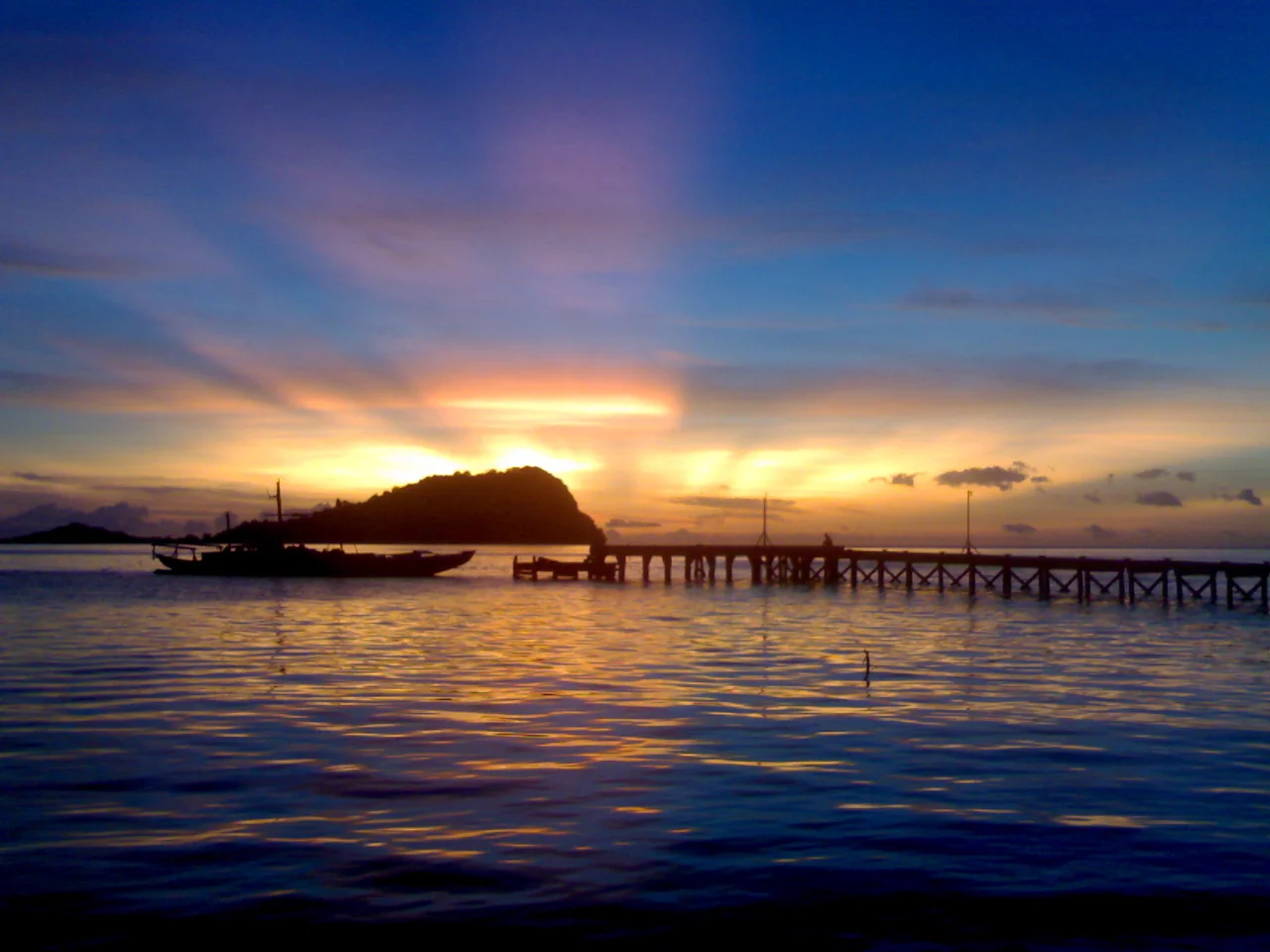

Sulu
In September 2024, the Supreme Court of the Philippines ruled that Sulu's inclusion in the Bangsamoro Autonomous Region was unconstitutional. The province had voted against joining in the 2019 plebiscite, and the court honored that decision. It was the latest turn in a centuries-long argument over who governs this chain of volcanic islands where the Sulu Sea meets the Celebes. Sulu has been a Hindu principality, an Islamic sultanate, a Spanish military target, an American territory, a Japanese-occupied province, and a Philippine battleground. Through all of it, the Tausug people who call it home have maintained a fierce attachment to self-determination.
Before the Sultans
Sulu's earliest inhabitants practiced animist religions, which eventually gave way to Hindu and Buddhist belief systems. The Kingdom of Lupah Sug, governed by rajahs, was established centuries before Islam arrived. The advent of Islam around 1138, carried by Arab and Persian merchants, began a slow transformation. Chinese Muslim traders participated in local commerce, and by the 14th century, trade connections with the Ming dynasty were well established. The Sulu Archipelago served as an entrepot linking southern China with the Malay world. The transition from Hindu principality to Islamic sultanate was neither sudden nor simple. It unfolded over generations, layering new political systems atop old ones, absorbing migrant peoples from Basilan, Sulawesi, Johor, and Mindanao.
The Royal Capital at Maimbung
Maimbung, on the southern coast of Jolo island, served as the royal capital of the Sultanate of Sulu. The capital is Jolo town today, but Maimbung retains its historical significance as the seat from which sultans directed a maritime state that stretched across the Sulu Sea to Borneo. The province was formally organized by the Americans in 1914 under the Department of Mindanao and Sulu, governed initially by Frank Carpenter. The Bates Agreement of 1899, signed between Sultan Jamalul Kiram II and Brigadier General John C. Bates, had begun the gradual erosion of sultanate authority that Spain's 1878 treaty had started. By 1915, the sultan had abdicated temporal power, though the cultural and spiritual authority of the sultanate endured.
Siege, Fire, and Aftermath
The most devastating chapter in Sulu's modern history began in the 1970s. The Muslim Separatist Rebellion, which erupted under the Marcos regime, made Jolo its principal battleground. In 1974, the Moro National Liberation Front attempted to take the town, and the ensuing military operations reduced much of Jolo to rubble. Bombardment and fire destroyed the Spanish-era fortifications that had survived centuries of colonial warfare. Thousands of civilians were displaced. The conflict between government forces and various Moro factions would continue for decades, with the Abu Sayyaf group later establishing strongholds in the province. The human cost was enormous: poverty, displacement, and a generation raised in the shadow of violence.
The Question of Belonging
Sulu's relationship with the rest of the Philippines has always been contested. The Moro National Liberation Front was granted leadership of the Autonomous Region in Muslim Mindanao in 1996, and the Bangsamoro Organic Law created a new autonomous framework in 2019. But when the plebiscite was held, Sulu voted no. The province rejected inclusion in the Bangsamoro region by a simple majority, a decision the Supreme Court ultimately upheld. The ruling effectively removed Sulu from BARMM, and discussions began about potentially placing the province under the Zamboanga Peninsula administrative region instead. For the Tausug, the question has never been whether to belong to someone else's vision of governance but how to preserve their own. That question, which predates the Spanish, the Americans, and the Philippine Republic, remains unanswered.
From the Air
Coordinates: 6.00°N, 121.00°E. Sulu province encompasses the central portion of the Sulu Archipelago, with Jolo island as its principal landmass. The province's islands are scattered across the Sulu Sea. Jolo Airport (RPMJ) is the main air connection. Zamboanga International Airport (RPMZ), roughly 150 km northeast, offers more frequent service. The volcanic peaks of Jolo, including Mount Tumatangas at 811m, are visible from cruising altitude. Military activity and potential airspace restrictions are common in the area.
Nearby Stories
- Japanese Destroyer Tanikaze 49 km away
- Basilan 51 km away
- Isabela, Basilan 79 km away
- Tawi-Tawi 87 km away
- 2018 Lamitan Bombing 115 km away
- Sheikh Karimul Makhdum Mosque 153 km away
- Tubbataha Reef 303 km away
- November 2023 Mindanao Earthquake 378 km away