
Sumidouro State Park
Peter Wilhelm Lund came from Denmark in the early nineteenth century to catalog the animals of Brazil. What he found beneath the limestone hills north of Belo Horizonte was stranger than zoology. In the caves of what is now Sumidouro State Park, Lund pulled human bones from the same sediment layers that held the bones of extinct megafauna - ground sloths the size of elephants, sabre-toothed cats, ancient horses. Humans and monsters together, in the same grave. The coexistence was cited by Charles Darwin in On the Origin of Species. The skulls Lund excavated were shipped to Copenhagen, where some remain today.
A Sinkhole Gives the Park Its Name
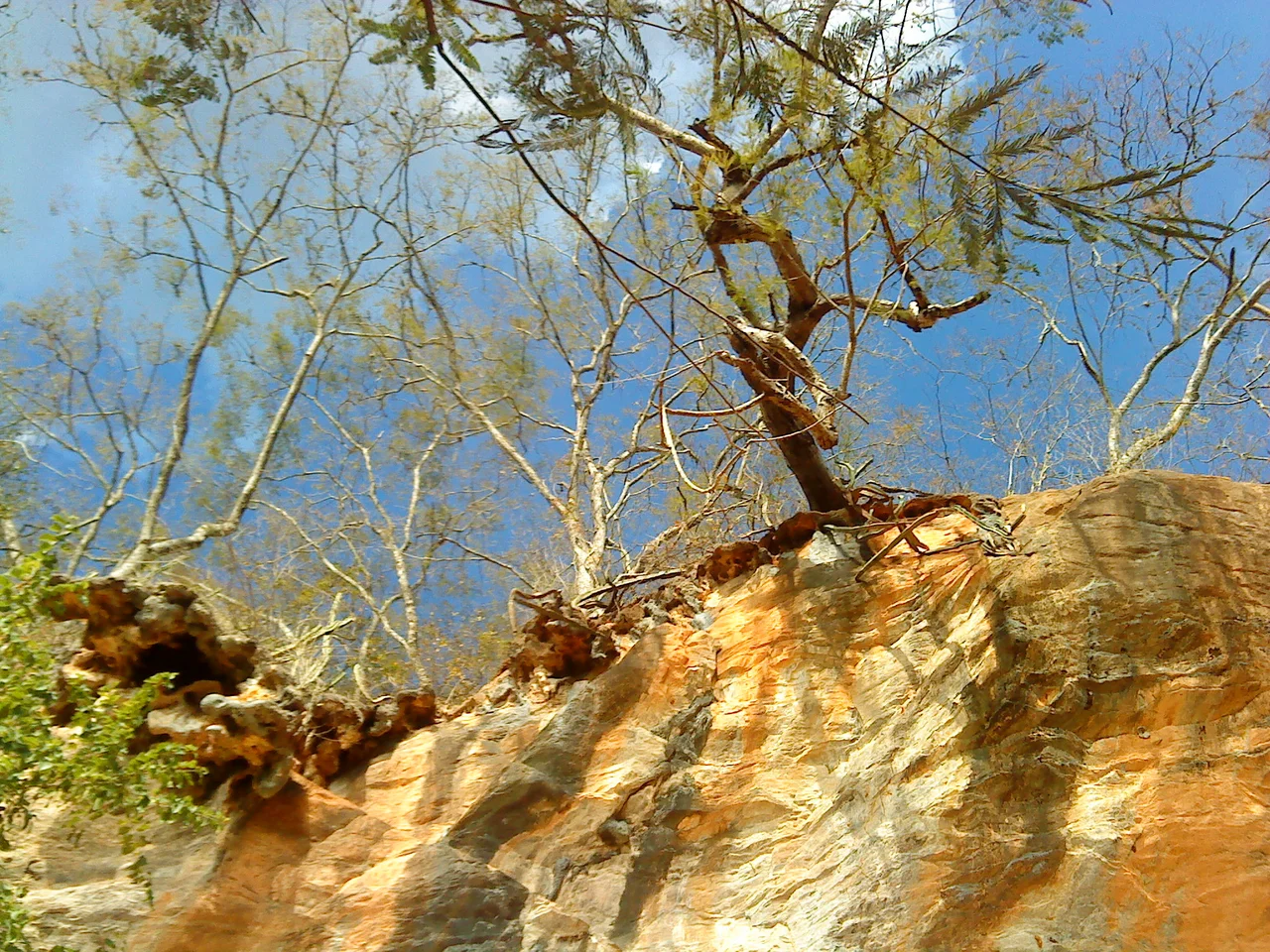
Sumidouro means sink - the place where water disappears. The lagoon at the park's heart drains through a network of underground galleries into the limestone basin beneath, carrying away whatever the rain gathers. The 2,004-hectare park sits in the municipalities of Lagoa Santa and Pedro Leopoldo, 50 kilometers north of Belo Horizonte, inside the federal Carste de Lagoa Santa Environmental Protection Area. Carbonate rock formations rise from the surrounding plain. Sinkholes pock the landscape. Caves honeycomb the subsurface, their chambers rich with speleothems - stalactites, stalagmites, flowstones - built drop by drop over time spans that dwarf human memory.
Luzia, 11,500 Years Old
In the 1970s, researchers working in the Lagoa Santa region found something that rewrote the timeline of human presence in the Americas. A skeleton they called Luzia, found in one of the caves near the park, dated to 11,500 years ago - old enough to change what everyone thought they knew about when the continent was first occupied. Traces of stone-age people who lived outside the caves, in what may be the oldest open-air paleoindian site in South America, suggest Lund had stumbled onto a cultural landscape, not an anomaly. The skulls he shipped to Denmark - about thirty of them, removed from the Gruta do Sumidouro - represent one of the first great scientific collections of ancient American remains.
A Slow Birth for a Protected Place
Governor Francelino Pereira signed decree 20.375 on 3 January 1980 creating the Sumidouro State Park. Little happened for decades. The park existed on paper but not on the land. Funding became available in 2006 as environmental compensation for the highway connecting Belo Horizonte to Tancredo Neves International Airport at Confins. By 2007 the State Forest Institute was buying land, registering existing owners, beginning the slow work of turning a decree into an actual park. Decree 44.935 expanded the area in 2008; law 19.998 defined the boundaries in 2011. A 2013 study found local people dissatisfied - they had not been consulted in the creation process, they resented the rules, and they felt their old role as stewards had been dismissed. The history of conservation rarely lands gracefully.
A Limestone Vault Six Hundred Million Years Old
The Gruta da Lapinha is the park's showpiece cave - a chamber 511 meters long and up to 40 meters deep, carved from a limestone massif that formed roughly 600 million years ago when an ancient sea covered this part of South America. The massif has been dissolving ever since, drop by mineral drop, leaving speleothems that visitors walk among today. To protect the formations from the heat that conventional lighting would generate, the cave is illuminated with light-emitting diodes, casting the chambers in a cool electric glow that reveals without warming. Above ground, the park contains both cerrado and Atlantic Forest vegetation, with transitional zones that include species typical of the drier caatinga - jaguars and pumas move through these forests, though few visitors ever see them.
The Peter Lund Museum
In 2012, nearly two centuries after Lund first descended into these caves with a lantern, the park inaugurated the museum that bears his name. Eighty fossils from the Natural History Museum of Denmark came home - at least on loan, at least for display - to the landscape where they had been excavated. The museum sits at one of the park's two visitor bases, the other being the Casa Fernão Dias, a cultural heritage monument named for the seventeenth-century bandeirante who spent years in this region searching for gold and precious stones. The house now holds administrative offices, and exhibits that tell the story of that very different era of exploration. Lund and Fernão Dias approached the same caves from different centuries with different hungers - one for gold, the other for truth.
Trails Into Deep Time
Visitors can book three guided trails. The Lapinha circuit, forty to sixty minutes, loops around the limestone massif beside the main cave, passing through the Macumba cave and revealing the karst relief. The ninety-minute Sumidouro trail starts at Casa Fernão Dias, passes the Cruz do Pai Mané historical landmark, climbs to the Sumidouro lagoon overlook, and descends into the Gruta do Sumidouro - the cave where Lund excavated his skulls, and where cave paintings thousands of years old still decorate the rock. The three-and-a-half-hour Travessia crosses the park between the two caves, through forest and meadow and past the Vinhático lookout. All visits must be scheduled in advance, and all require registered guides. The park is busiest in July and August, when Brazilian winter brings cooler weather and dry skies.
From the Air
Located at 19.55°S, 43.95°W, 50 km north of Belo Horizonte in central Minas Gerais. Recommended viewing altitude 5,000-10,000 ft; excellent overflight on approach to Confins airport. Visual landmarks: the Sumidouro lagoon and surrounding karst topography; Tancredo Neves International Airport visible to the south. Nearest airports: Belo Horizonte Confins (SBCF) 25 km south, Belo Horizonte Pampulha (SBBH) 45 km south. Weather: dry winters (May-September) offer best visibility; rainy season (November-December) may close trails.
Nearby Stories
- Morro Velho 8.8 km away
- Mineirão 16 km away
- Santa Bárbara, Minas Gerais 22 km away
- São Gonçalo do Pará 26 km away
- Paraopeba 31 km away
- Santo Antônio do Rio Abaixo 38 km away
- Bom Despacho, Minas Gerais 65 km away
- Três Marias 140 km away