
Summerlee Museum of Scottish Industrial Life
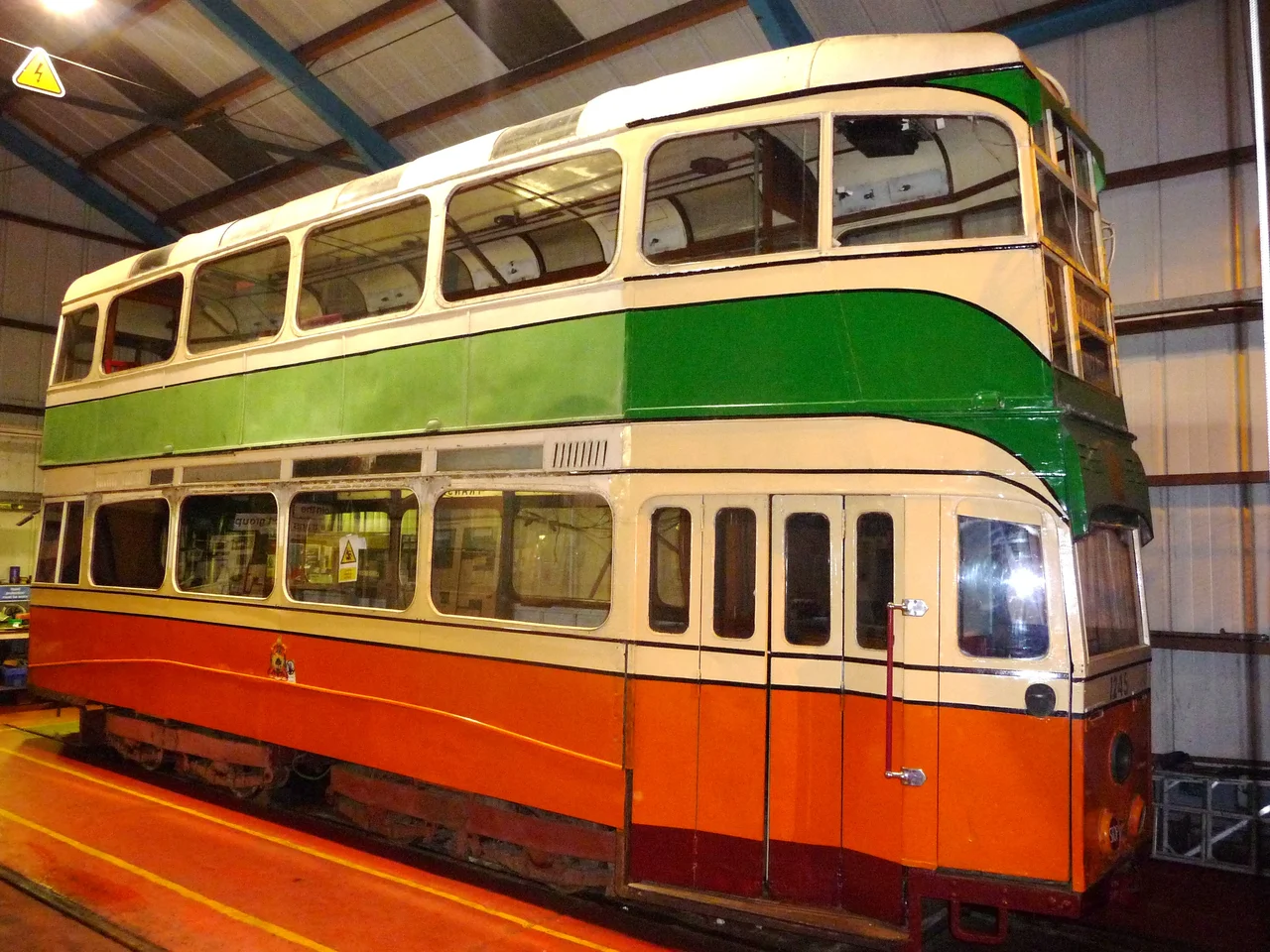
The first operational tramway in Scotland for twenty-six years started running here in 1988. Until Edinburgh reopened its trams in 2014, Summerlee's short heritage line was the only place in the country where you could still ride a tram, save briefly for the Glasgow Garden Festival line that opened six weeks later. The trams run across an old canal cut, past the buried remains of a 19th century ironworks, and up to a row of restored miners' cottages. None of it costs anything to walk through. Coatbridge built its Victorian wealth on iron, and when the wealth went the town kept the relics.
From Furnaces to Museum
Summerlee Iron Works opened in 1836 under John Neilson of Glasgow's Oakbank Engine Works, on the banks of the Monkland Canal at a moment when Coatbridge was becoming one of Scotland's most important industrial centres. Within three years the site had four furnaces in blast. By 1842 there were six. The works ran successfully through the rest of the 19th century and into the 20th. After the First World War, supply problems and a wave of industrial disputes at the mines that fed the furnaces brought the operation to an end. The furnaces were destroyed in 1929. For most of the 20th century the site was occupied by the Hydrocon Crane factory. The area opened as a museum in 1988, with the old Hydrocon factory building adapted as the main exhibition hall.
The Tram and the Canal
Two scheduled monuments now sit inside the museum grounds: the foundations of the Summerlee Iron Works themselves and a stretch of the Monkland Canal. The canal once carried coal from the Coatbridge pits to Glasgow, and a remaining branch known as the Gartsherrie Cut runs through the site. The heritage tramway opened with the museum in 1988. It runs from near the main entrance, past the timber shed, over the canal bridge and on to the Miners' Cottages. The earliest operational cars were continental imports - Brussels 9062 and Graz 225 - but the long-term ambition has been to run traditional British trams with local connections. Two further cars, Oporto 150 and Lisbon 400-474, were brought in for parts: Oporto's truck and electrical equipment went into the restoration of Lanarkshire 53, Lisbon's truck into Glasgow 1017.
Underground and Above
The 22-acre site offers more than trams. There is a reconstructed coal mine that visitors can walk into, a Miners' Row of restored 19th century workers' cottages furnished by decade, and an exhibition hall with engineering machinery, photographs and oral histories from people who worked the mines, the mills and the foundries. Several steam locomotives are preserved on the grounds, along with carriages from a 1960s-era Glasgow British Rail Class 311 electric multiple unit. A replica of the 1819 barge Vulcan, the first all-iron-hulled vessel (built at Faskine, Airdrie, on the banks of the Monkland Canal), was constructed for the 1988 Glasgow Garden Festival and is now permanently sited on the canal at Summerlee. The replica is probably the last hand-riveted boat ever built on the Clyde.
A Free Museum of Free People's Work
Entry to Summerlee costs nothing. The museum was developed jointly by Monklands District Council and what became North Lanarkshire Council, and in 2008 received a £10 million investment to redevelop the site for visitors. The exhibits document Lanarkshire's contribution to engineering, mining, steelworking, weaving and farming, with an emphasis less on industrialists than on the people who actually did the work. The cottages on the Miners' Row are decorated as they would have been by ordinary households in successive decades, the kind of detail - patterned linoleum, a fire dying in the grate, a kettle on a hob - that turns dates into recognisable lives. For a town that has lived through the closure of its iron and steel industries, Summerlee is both museum and statement: this is what we built, this is who built it, and we have not forgotten.
From the Air
Located at 55.866 N, 4.031 W in Coatbridge, North Lanarkshire, about 9 miles east of Glasgow. The 22-acre site sits beside the Monkland Canal, with the exhibition hall, miners' row, and tram line all visible from above. Best viewed from 2,000-3,000 ft. Glasgow Airport (EGPF) is about 11 nm west; Edinburgh Airport (EGPH) about 28 nm east. The M8 motorway runs about 1 nm north of the site.
Nearby Stories
- HMS Gannet 3.6 km away
- Luss 5.3 km away
- Oliver Castle 6.8 km away
- Battle of Bannockburn 6.9 km away
- Beith 7.9 km away
- Pentland Hills 7.9 km away
- Lochleven Castle 16 km away
- Cumnock 17 km away