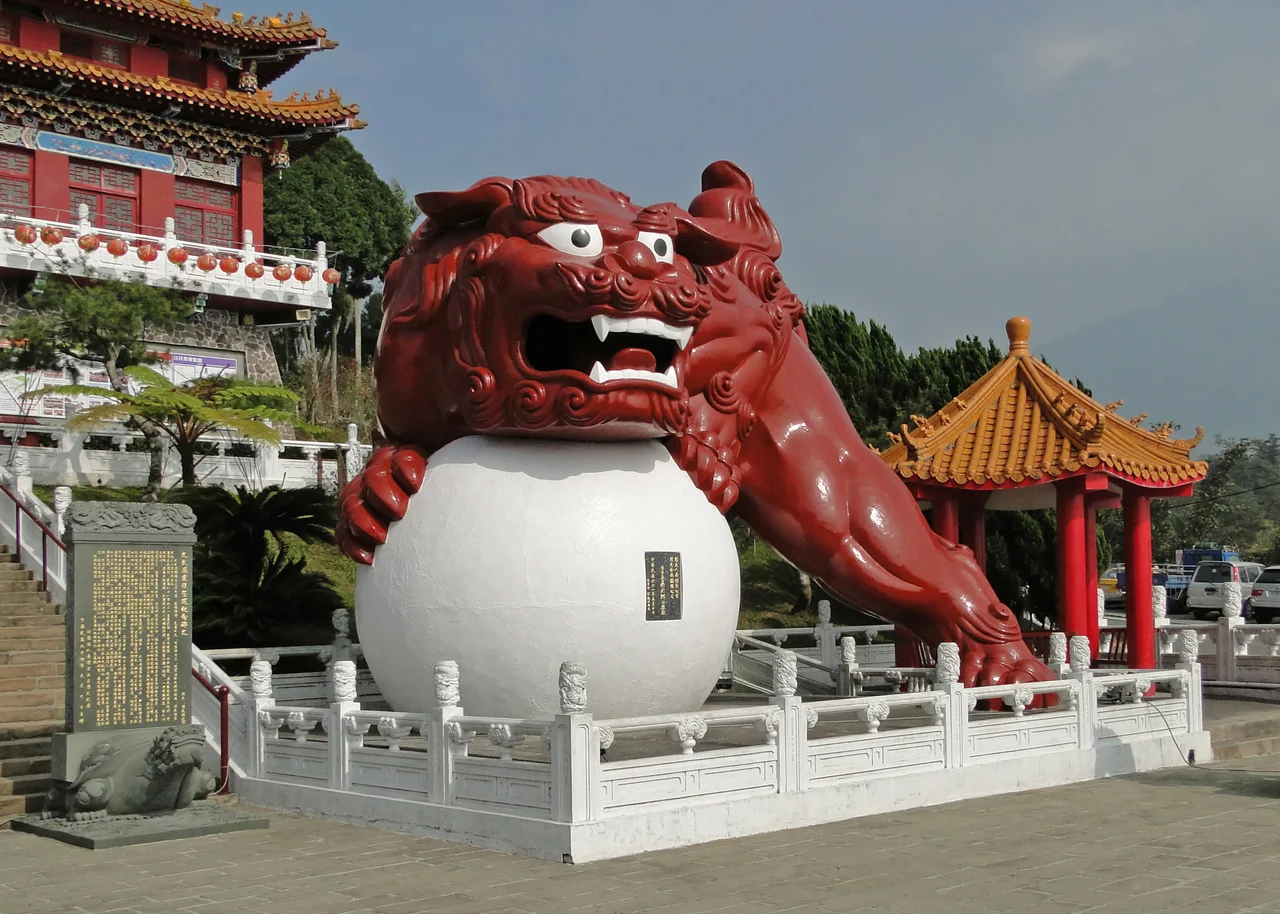

Sun Moon Lake Wen Wu Temple
Two temples once stood at the water's edge of Sun Moon Lake. Then the water rose and swallowed them. In 1919, when the Japanese colonial government built a dam to generate hydroelectric power, the lake expanded and the original shrines were submerged. Rather than let the gods drown, the faithful consolidated both temples into a single structure at a higher location in 1938. That pragmatic act of rescue created one of Taiwan's most dramatically situated places of worship: the Sun Moon Lake Wen Wu Temple, a palace-style complex that gazes out over the lake from a hillside perch in Yuchi Township, Nantou County.
Three Halls, Three Traditions
The Wen Wu Temple's name signals its ambition. In Chinese religious tradition, a Wen Wu temple unites civil and martial virtues under one roof, honoring scholarship and warfare as complementary rather than opposing forces. Here, that union plays out across three halls. The front hall on the second floor houses a shrine to the First Ancestor Kaiji and the God of Literature. The central hall belongs to Lord Guan, the legendary martial god based on the historical figure Guan Yu, and Lord Yue, the revered general Yue Fei. In the rear hall, Confucius presides. It is a rare arrangement, placing the sage of learning in the back, behind the warriors, and visitors who walk through the temple from front to rear move through layers of Chinese philosophical tradition.
Rebuilt in the Palace Style
The 1938 consolidation was modest. After Taiwan passed from Japanese to Nationalist Chinese control in 1945, the government invested heavily in tourism around Sun Moon Lake, and the Wen Wu Temple became part of that vision. In 1969, the temple was rebuilt from the ground up, dramatically expanded and constructed in the ornate Chinese palace style. The result is visually commanding: red pillars, upswept eaves, and tiered rooflines that echo the imperial architecture of mainland China. Standing at the temple's entrance and looking outward, the lake fills the view entirely, its surface shifting between blue and silver depending on the light. The architectural grandeur is deliberate, a statement that this lakeside shrine belongs to a civilization with deep roots.
Lions Without Precedent
Flanking the temple entrance stands a pair of Chinese guardian lions, one male and one female, carved in the traditional protective posture. They are typical in form but unusual in context. Guardian lions appear at Wen Wu temples throughout Taiwan, but they have not been found at Wen Wu temples in mainland China. The distinction is a quiet reminder that Taiwanese religious practice, while rooted in Chinese tradition, has evolved along its own path. Centuries of geographic separation, Japanese colonial influence, and indigenous Taiwanese culture have shaped the island's temples into something recognizably Chinese yet distinctly local. These lions guard a tradition that belongs to Taiwan.
The Lake's Constant Companion
Sun Moon Lake attracts over five million visitors annually, and the Wen Wu Temple is one of the most photographed sites along its perimeter. Buses connect the temple to Taipei Railway Station, Taichung TRA station, and THSR Taichung Station, making it accessible for day trips from both the capital and the central city. But the temple is more than a scenic overlook. Worshippers still burn incense and make offerings in the halls. The wished pond near the entrance collects coins and prayers. The Lingxing Gate marks the boundary between secular and sacred space. For all its tourism appeal, the Wen Wu Temple remains what it was built to be: a place where people come to ask the gods of war and scholarship for protection, guidance, and luck.
From the Air
Located at 23.87°N, 120.93°E on the northern perimeter of Sun Moon Lake, Yuchi Township, Nantou County. The temple's red palace-style rooflines are visible on the hillside above the lake. Sun Moon Lake itself, Taiwan's largest body of water at 748 m elevation, is an excellent visual landmark from the air, roughly 8 km² with a distinctive shape. Nearest airports: Taichung International Airport (RCMQ) approximately 60 km to the northwest. Best viewed at 3,000-5,000 ft AGL. The mountainous terrain surrounding the lake requires attention to elevation and weather conditions.
Nearby Stories
- Alishan 5.8 km away
- Cultural Heritage Park 10 km away
- Taroko National Park 10 km away
- Ruisui Tropic of Cancer Marker 12 km away
- Taixi, Yunlin 14 km away
- Lintianshan Forestry Culture Park 16 km away
- High-Heel Wedding Church 22 km away
- Taiwan Strait 87 km away