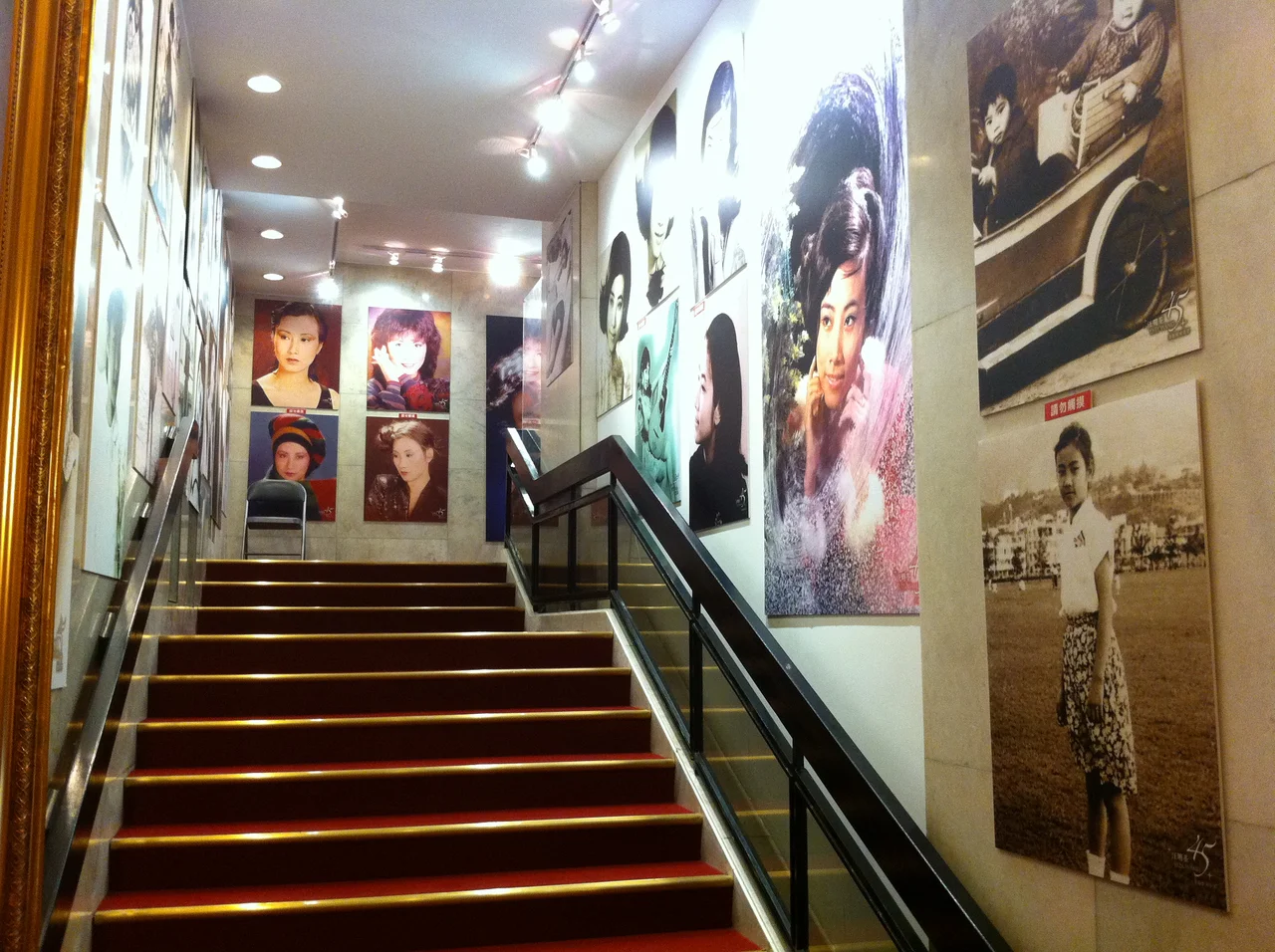

Sunbeam Theatre
In 1993, the Chung Sun Sing Opera Troupe performed 38 consecutive nights at the Sunbeam Theatre in North Point — every single one sold out. Critics handed the venue the honorary title "Hong Kong's Grand Palace for Cantonese Opera," and the name stuck. But the theatre's survival over the following three decades was never guaranteed. It was nearly demolished, nearly turned into a shopping mall, and nearly shuttered for good multiple times. That it lasted until 2025 is partly the story of a community that refused to let a tradition disappear — and partly the story of a mystery man named Mr. Leung who once arranged an unlikely meeting that changed everything.
Shanghaied to North Point
The Sunbeam's origin is inseparable from one of Hong Kong's great demographic upheavals. After 1949, waves of Shanghainese emigrants resettled in North Point, so thoroughly that the neighbourhood became known informally as "Little Shanghai." Many were leftist-leaning business owners who had relocated their enterprises alongside themselves. In this milieu, a company called Hua Chang Enterprises Ltd established the Sunbeam Theatre in 1972, building it as a venue for Cantonese opera in a district humming with mainland nostalgia and cultural energy. The art form itself — elaborate costumes, heightened vocal styles, percussion-driven orchestras — was already centuries old. On King's Road, at number 423, it found a new home in a city that was rapidly modernising around it.
Hands That Held the Stage
The theatre passed through several owners in its early decades. Henry Fok, the businessman and chairman of Sunbeam Entertainment, took control in September 1980. By 1988, the Hong Kong United Arts Entertainment Company had taken over its operation. A decade later, the building was reconfigured: the balcony became a smaller cinema, while the stalls below were converted into a dedicated stage performance space. For a while it served two audiences simultaneously. Then, in 2003, developer Francis Law Sau-fai acquired the 80,000-square-foot property for HK$162 million, and announced plans to demolish it for a shopping mall. The opera world braced for the worst.
The Mystery of Mr. Leung
What saved the Sunbeam in 2012 reads almost like a scene from an opera itself. Someone identified only as Mr. Leung quietly arranged for landlord Francis Law to sit down with opera playwright Li Kui-ming to discuss the rent. The conversation worked. Law agreed to a monthly rental of HK$1 million, and the theatre remained a Cantonese opera house. The government was also providing HK$100,000 per month through the Arts Development Council to subsidise the cost. Meanwhile, the city's cultural consciousness had shifted: years of public campaigns, petition drives, and passionate testimony at the Legislative Council had turned the Sunbeam's survival into a cause. The theatre had become bigger than its address.
The Closing Curtain
In 2024, the Island Evangelical Community Church purchased the property for HK$750 million. The theatre closed on 3 March 2025 to begin renovations. Among its final performances was Trump on Show — a Cantonese opera that reimagined Donald Trump as a singing protagonist, which had drawn young audiences and international media coverage in the months before closing. The church has pledged to honour the building's legacy: plans include ministry spaces, leadership training facilities, and a reopened performance venue accessible by elevator, with wheelchair ramps, and reinforced structurally to current safety codes. Completion is expected in early 2028. Artifacts and memories from the theatre's decades of opera will be preserved.
Why It Matters
Cantonese opera is a UNESCO-recognised intangible cultural heritage, a form that fuses music, acrobatics, elaborate painted faces, and poetic dialogue into something entirely its own. The Sunbeam was not just a venue for that art form; it was one of the last places in Hong Kong where audiences could experience it in a dedicated house built for nothing else. The 1993 record — 38 full houses in a row — tells you what was possible. That such a run happened in a commercial city, at a theatre that had to fight for its own lease, makes it more remarkable, not less. Whatever the building becomes next, that chapter belongs to the opera.
From the Air
Sunbeam Theatre sits at 22.2913°N, 114.20°E on King's Road in North Point, on the northeastern shore of Hong Kong Island. Flying from Hong Kong International Airport (VHHH) on Lantau Island, follow an easterly heading across Victoria Harbour toward the densely packed residential towers of North Point. The theatre is at street level in an urban block — not identifiable from the air — but the North Point waterfront and its ferry pier provide a reliable landmark. At 2,000 feet AGL, Victoria Harbour and the Kowloon skyline to the north make orientation straightforward. The nearest ICAO point of reference is VHHH, approximately 35 km to the west.
Nearby Stories
- Lok Ma Chau Loop 2.3 km away
- Portas do Cerco 2.3 km away
- Kweilin Incident 17 km away
- Wanshan Archipelago Campaign 34 km away
- Nanxiong Formation 115 km away
- Battle of Nanpeng Island 148 km away
- Heyuan 169 km away
- Cape Maobitou 632 km away