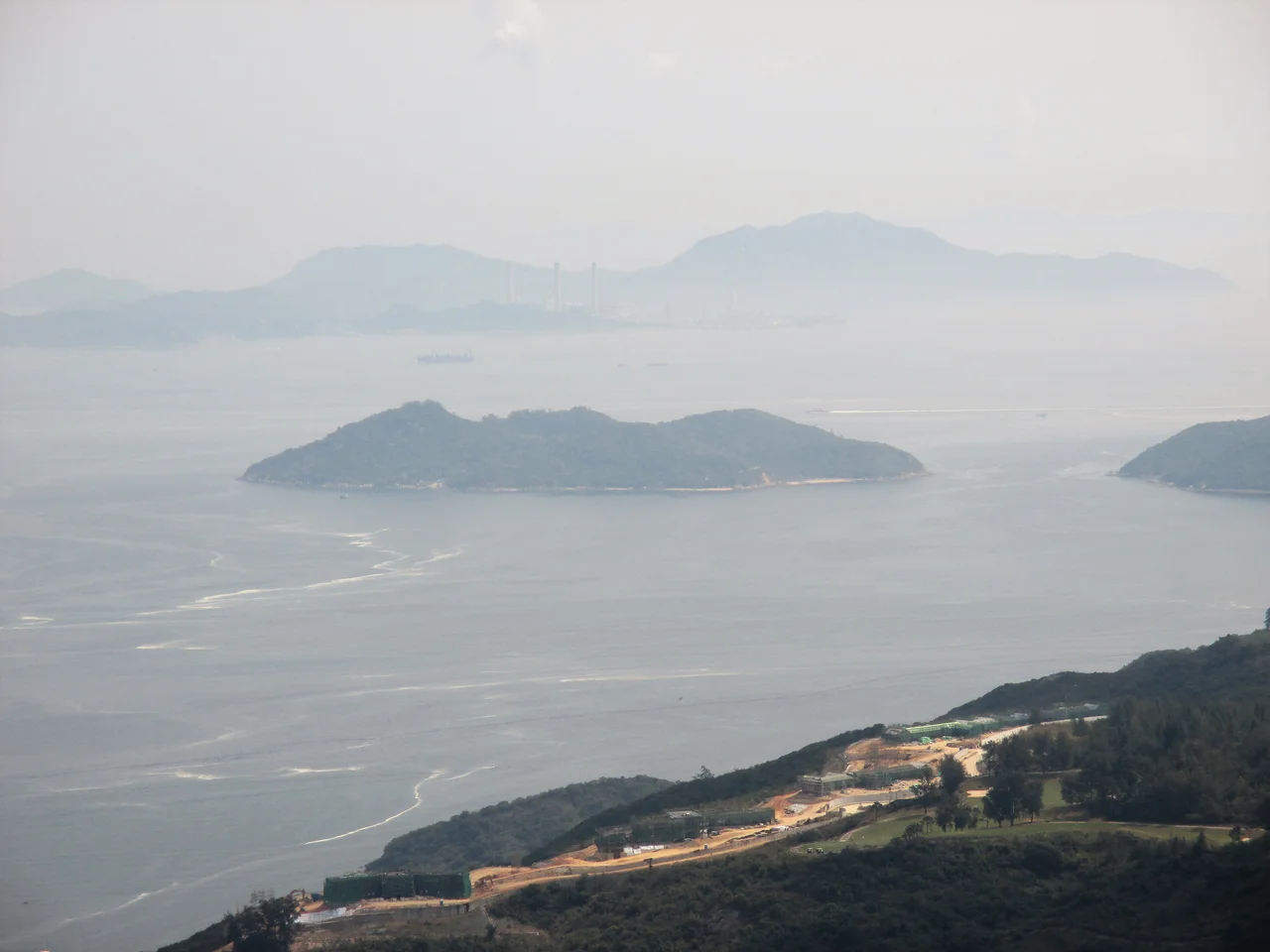

Sunshine Island, Hong Kong
Gus Borgeest gave the island its English name in 1952, and the choice was not accidental. Born in Ningbo in 1909 and shaped by Quaker principles of practical service, he arrived at a small, unnamed island northeast of Hei Ling Chau and saw possibility where others saw rock and scrub. He named it Sunshine Island — Chau Kung To in the indigenous Cantonese — and built a farming community from scratch for people who had lost everything in the upheaval of the mainland. The name held, through the community's remarkable success, through its eventual transformation into something far more contested, and through decades of quiet afterward. The island still carries it today.
A Farm Built on Second Chances
In the early 1950s, opium addiction was widespread among many of the mainland Chinese who had fled to Hong Kong. Borgeest's approach was direct and practical: provide land, housing, tools, seeds, and training, and let people rebuild. Each refugee family received the chance to work a small farm on the island. The Religious Society of Friends — the Quakers — supported the work. What followed was, by contemporary accounts, a genuine success. In May 1956, Hong Kong Governor Sir Alexander Grantham visited and met one of the resettled residents. The man's words to the governor carry a quiet force: "Sir, owning one's own land, managing one's own affairs, does something to a man. Such cannot be achieved, or even understood, by those who are content to let the government fill their rice bowls for them." For this work, Borgeest was awarded the 1961 Ramon Magsaysay Prize — awarded annually to individuals demonstrating greatness of spirit in service to others, and known informally as "Asia's Nobel Prize." Sunshine Island's model later informed drug rehabilitation settlements still operating in Hong Kong.
After the Farm
The farming community's chapter eventually closed. In the years that followed, the island found a different purpose: missionaries took it over and established a drug rehabilitation centre — the Sunshine Island Gospel Drug Rehabilitation Center — continuing the island's tradition as a place of recovery and second chances, though in a very different register than Borgeest's agricultural vision. Neighbouring islands in the Lantau Channel bore a heavier burden during the same decades. Hei Ling Chau, just to the southwest, housed Vietnamese refugees from the 1980s. Tai A Chau, further south in the Soko Islands, held a detention facility until 1996. Sunshine Island itself was not part of that network, but it sat in waters touched by the same history — a small, named place in an archipelago of contested ones.
Abandoned Buildings and Living Things
The detention centre is long gone, and the island has reverted to a kind of wildness. Some structures remain — scenic rocks, ruins of buildings, the quiet that comes when humans leave a place. According to reports, only one person lives on the island: a man named Lam Chi-ngai. There is no public transport. What thrives in this near-solitude is wildlife. After the construction of Hong Kong Disneyland disrupted habitat on Lantau Island's Pa Tau Kwu, white-bellied sea eagles relocated to Sunshine Island, finding in its stillness what the nearby theme park could no longer provide. The island is also home to Bogadek's legless lizard, Dibamus bogadeki — an endemic species found nowhere else, a small, burrowing creature that outlasted every human institution the island has hosted.
Northeast of Hei Ling Chau
Sunshine Island sits in the outer islands group south of Peng Chau, sharing its waters with the larger Hei Ling Chau island that lies to its southwest. It is small and easy to overlook on a map of Hong Kong's approximately 260 islands. No ferries call there. Its coordinates — 22.261°N, 114.051°E — place it firmly within the administrative Islands District, but the island has drifted far from any district's daily concerns. What remains, beyond the ruins and the eagles and the one resident, is a name chosen by a Quaker from Ningbo who believed that naming a place for the sun was itself a kind of intention. Whether the island has lived up to it depends entirely on which chapter you read.
From the Air
Sunshine Island lies at 22.2611°N, 114.0514°E, northeast of Hei Ling Chau and south of Peng Chau in Hong Kong's outer islands. From Hong Kong International Airport (VHHH, 22.31°N, 113.92°E), fly southeast approximately 18 km. At 1,500 feet AGL in clear conditions, the island is visible as a small distinct landmass among the cluster of outer islands. It sits at very low elevation — the highest point is only a few dozen metres — so it presents no terrain obstacle. The nearby Hei Ling Chau island is larger and easier to identify first; Sunshine Island lies just off its northeastern tip. Recommended viewing altitude: 1,500–2,500 feet AGL.
Nearby Stories
- Lok Ma Chau Loop 2.3 km away
- Portas do Cerco 2.3 km away
- Kweilin Incident 17 km away
- Wanshan Archipelago Campaign 34 km away
- Nanxiong Formation 115 km away
- Battle of Nanpeng Island 148 km away
- Heyuan 169 km away
- Cape Maobitou 632 km away