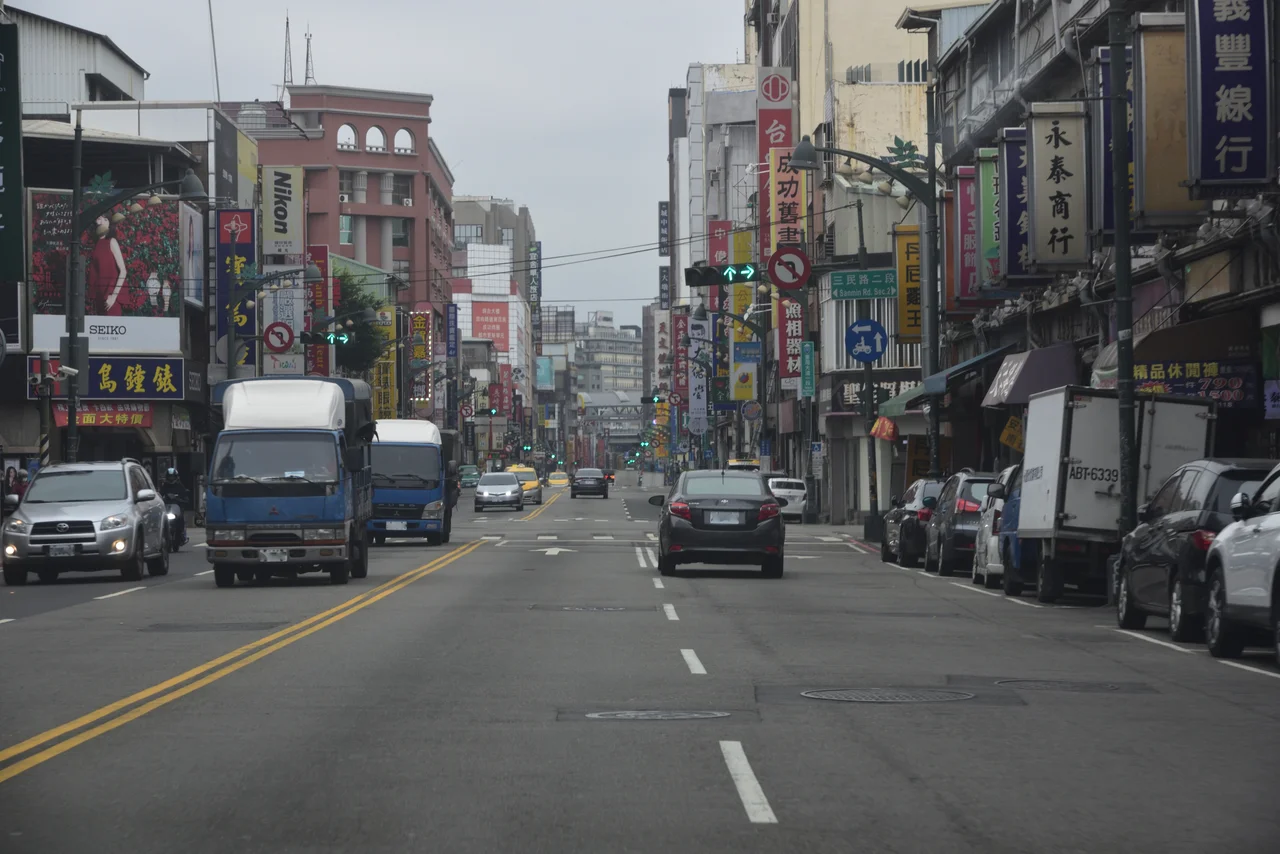

Taichung City Second Market
The bell at the top of the hexagonal tower once rang as a fire alarm. Now it presides over a market that has spent more than a century refusing to be anything other than itself. The Taichung City Second Market — known during the Japanese colonial period as Shintomichō Market, and still called the "Japanese market" by some locals — was built in 1917 for a neighborhood of Japanese residents who expected their groceries to arrive fresh and their fish to be impeccably arranged. They got what they wanted. So did everyone who came after.
Three Wings, Six Hallways, One Hexagonal Tower
The architecture alone tells a story. At the center of the original structure rises a two-story hexagonal tower — the tallest building in Taichung when it was built, a fact that becomes easier to believe when you stand beneath it and look up at the brickwork, solid and precise in the Taishō era style that was fashionable in Japan's colonial construction projects of the 1910s. From the tower, three wings extend outward, each lined with stalls. Six hallways radiate from the center in a radial pattern, creating a geometry that is part marketplace, part civic monument. The original structure has a total floor space of 2,388 ping. Street-facing qilou — the covered arcades characteristic of southern Chinese and Taiwanese commercial architecture — now wrap around the exterior on all sides, added as the market outgrew itself and the surrounding city filled in around it.
A Market That Kept Growing
The Japanese colonial government planned five public markets for Taichung. The Second Market was the second of those, situated in the Shintomichō neighborhood where Japanese residents lived and shopped. It was, from the beginning, a market for the relatively well-off: higher-end food and clothing, wholesale fruit and vegetables alongside the daily retail trade. When Taiwan passed from Japanese to Republic of China administration in 1945, the market simply kept going. The Kuomintang era brought more people to Taichung, more demand, and more stalls than the original building could absorb. Additional buildings went up around the core structure and eventually enclosed it entirely, so that the original Japanese hall now sits at the center of a denser, noisier, more layered urban organism than its builders imagined.
Steam, Broth, and a Michelin Mention
Walk through the Second Market today and the sensory experience arrives before any of the history does. Broth bubbles in large pots. Ba-wan — soft, translucent Taiwanese dumplings filled with pork and bamboo shoots — are assembled and steamed at counters that have been doing exactly this for decades. The market now hosts 331 vendors: 54 stores, 150 permanent stalls, and 107 temporary ones. In the late twentieth century, as older city markets struggled with their reputations for grime, the Second Market undertook renovation projects that brought it into the tourism mainstream while keeping the food culture that made it worth visiting in the first place. One ba-wan stall here earned a mention in the Michelin Guide — a small recognition, but one that confirmed what regulars already knew.
Still the Center of Something
The market stands in Taichung's Central District, which means it has aged alongside the city's oldest commercial and administrative neighborhoods. Morning is the best time to arrive, when the stalls are fully stocked and the vendors are in their rhythm. The hexagonal tower overhead is easy to miss when you're navigating the narrow lanes between counters, but look up and the original colonial structure reasserts itself — brick arches, careful proportions, the bones of something built to last. A century ago, the bell at the top summoned people to emergency. Now the market does its own summoning, just more quietly, through smell and steam and the knowledge that whatever the city becomes next, this particular corner of it has already decided to stay.
From the Air
Taichung City Second Market sits at approximately 24.142°N, 120.679°E in Taichung's Central District. The historic market hall is embedded in the dense urban core, a few blocks northeast of Taichung Station. Flying over central Taichung at 3,000 to 5,000 feet provides a good view of the colonial-era street grid that the market anchors. The nearest major airport is RCMQ (Taichung International Airport / Ching Chuang Kang), approximately 10 nautical miles north-northwest. The Taiwan Strait coast is visible to the west on clear days, and the Central Mountain Range rises prominently to the east.
Nearby Stories
- Taroko National Park 4.5 km away
- Jiji, Nantou 9 km away
- Miaoli Ceramics Museum 9.2 km away
- Smangus 17 km away
- Taixi, Yunlin 23 km away
- Lintianshan Forestry Culture Park 24 km away
- Taiwan Strait 52 km away
- China Airlines Flight 611 60 km away