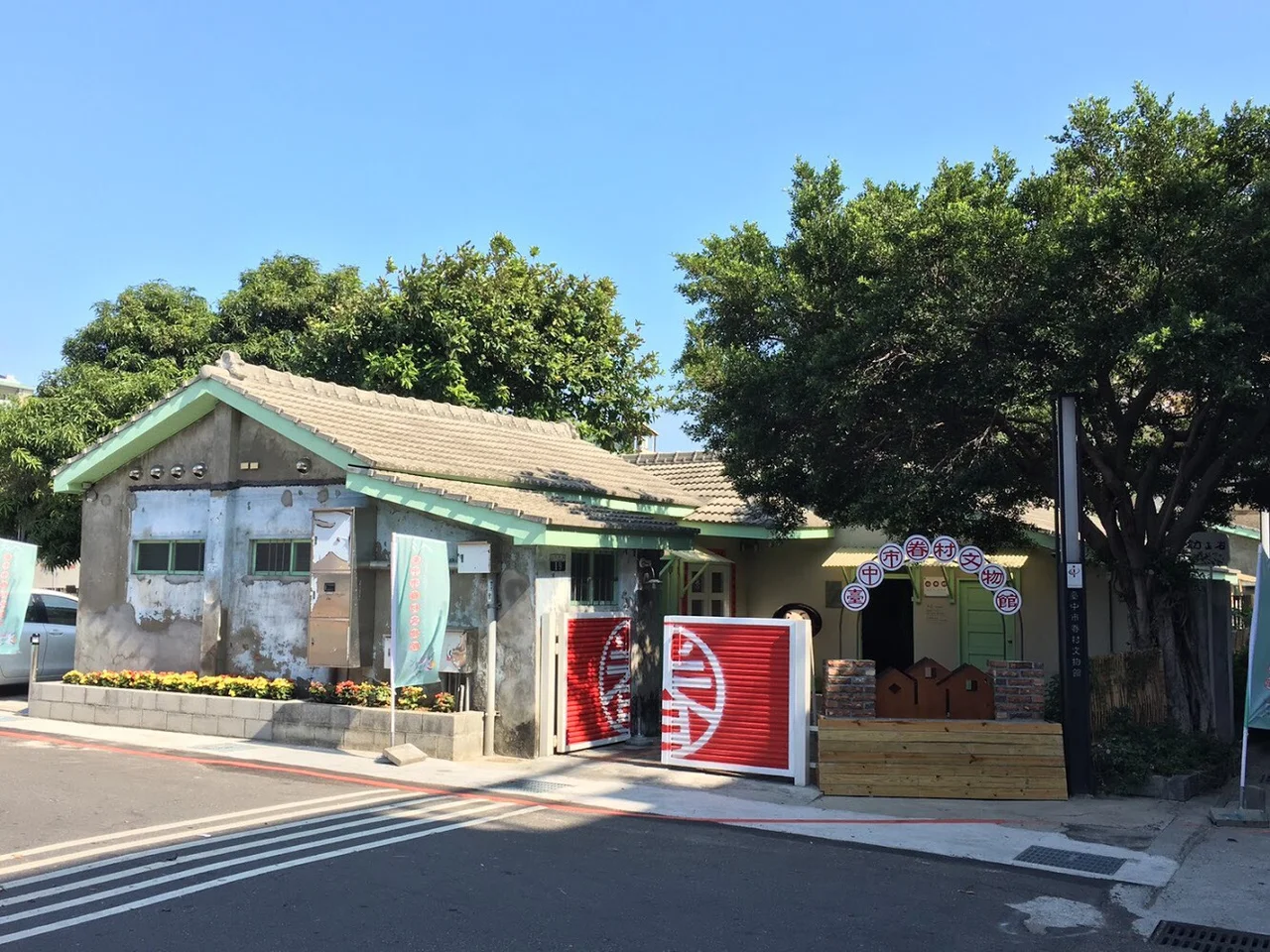

Taichung Military Kindred Village Museum
They came with almost nothing. In 1949, when the Nationalist government of the Republic of China retreated to Taiwan ahead of the Communist victory on the mainland, hundreds of thousands of soldiers and their families made the crossing — some with time to prepare, many without. The communities they were settled into, called juancun or military dependents' villages, became worlds unto themselves: insular, tight-knit, defined by a shared displacement that no one had asked for and no one could easily forget. Taichung had 134 such villages. One of them, Beitun New Village, is remembered now in a small museum that the families who once lived there helped bring into being.
What a Juancun Was
The word juancun — sometimes translated as "military kindred village" or "military dependents' village" — describes a specific kind of community that existed almost nowhere else in the world. After 1949, the Republic of China military needed to house not just soldiers but their entire extended families, who had followed them from the mainland or were brought over separately. The government built clusters of modest housing — often small, densely packed structures — and assigned families to them based on rank and unit. In Taichung alone, 134 such villages spread across the city and its outskirts. Beitun New Village, in what is now the Beitun District, housed officers of the Republic of China Air Force at the rank of major and above, along with their families. The rank requirement suggested a certain social standing; the physical reality of the housing often told a different story.
A Community That Waited to Be Remembered
The juancun generation aged. Children grew up, moved into Taiwan's broader society, attended university, built careers, and often moved away from the villages where they had been raised. From the 2000s onward, families left Beitun New Village in increasing numbers, and the physical structures — the small houses, the shared courtyards, the narrow lanes — began to empty out. Across Taiwan, many juancun were demolished as land was redeveloped and the population dispersed. The residents of Beitun New Village and the authorities who oversaw it chose a different path: renovation and preservation, keeping some of the iconic structures as evidence of what had stood here. One of the houses was converted into the Taichung Military Kindred Village Museum. Construction was completed in November 2014. Since August 2017, the museum has been operated by Yuguo Cultural and Creative Company.
Displacement, Memory, and the Weight of 1949
The people who lived in the juancun carried a particular kind of grief: the grief of people who expected to go home and gradually understood they would not. The Nationalist government maintained for decades that retaking the mainland was an imminent possibility. Soldiers were told to be ready. Families kept the mainland alive in conversation, in food, in the regional dialects they spoke at home. Taiwan-born children grew up fluent in the accents of provinces they had never visited. The museum at Beitun New Village holds these stories — not abstractly, but in the specific texture of how people lived: the furniture, the photographs, the objects that traveled across the strait and survived the decades. It is a small space, 660 square meters, but small spaces can carry enormous weight.
Finding the Village
The Taichung Military Kindred Village Museum sits in the Beitun District at approximately 24.161°N, 120.695°E, accessible by a short walk southwest from Taiyuan Station on the Taiwan Railway. Beitun is one of Taichung's northern districts, and the museum's location gives it a slightly removed, residential quality — quieter than the city center, the kind of neighborhood where the specific character of a juancun community might still feel present in the street scale and building proportions. Visitors come here to encounter a chapter of twentieth-century history that shaped millions of lives across the Taiwan Strait and that is still being processed — in memoir, in film, in the conversations between generations that the museum helps make possible.
From the Air
The Taichung Military Kindred Village Museum is located at approximately 24.161°N, 120.695°E in Taichung's Beitun District, north of the city center. The Beitun area is visible from the air as a transitional zone between Taichung's dense urban core and the hillier terrain to the north and northeast. Flying at 3,000 to 5,000 feet, the Central Mountain Range rises clearly to the east, while the flat Taichung Basin extends westward. The nearest major airport is RCMQ (Taichung International Airport / Ching Chuang Kang), roughly 8 nautical miles to the northwest — pilots approaching RCMQ from the south may pass directly over this part of Beitun District.
Nearby Stories
- Taroko National Park 4.5 km away
- Jiji, Nantou 9 km away
- Miaoli Ceramics Museum 9.2 km away
- Smangus 17 km away
- Taixi, Yunlin 23 km away
- Lintianshan Forestry Culture Park 24 km away
- Taiwan Strait 52 km away
- China Airlines Flight 611 60 km away