
Taichung Park
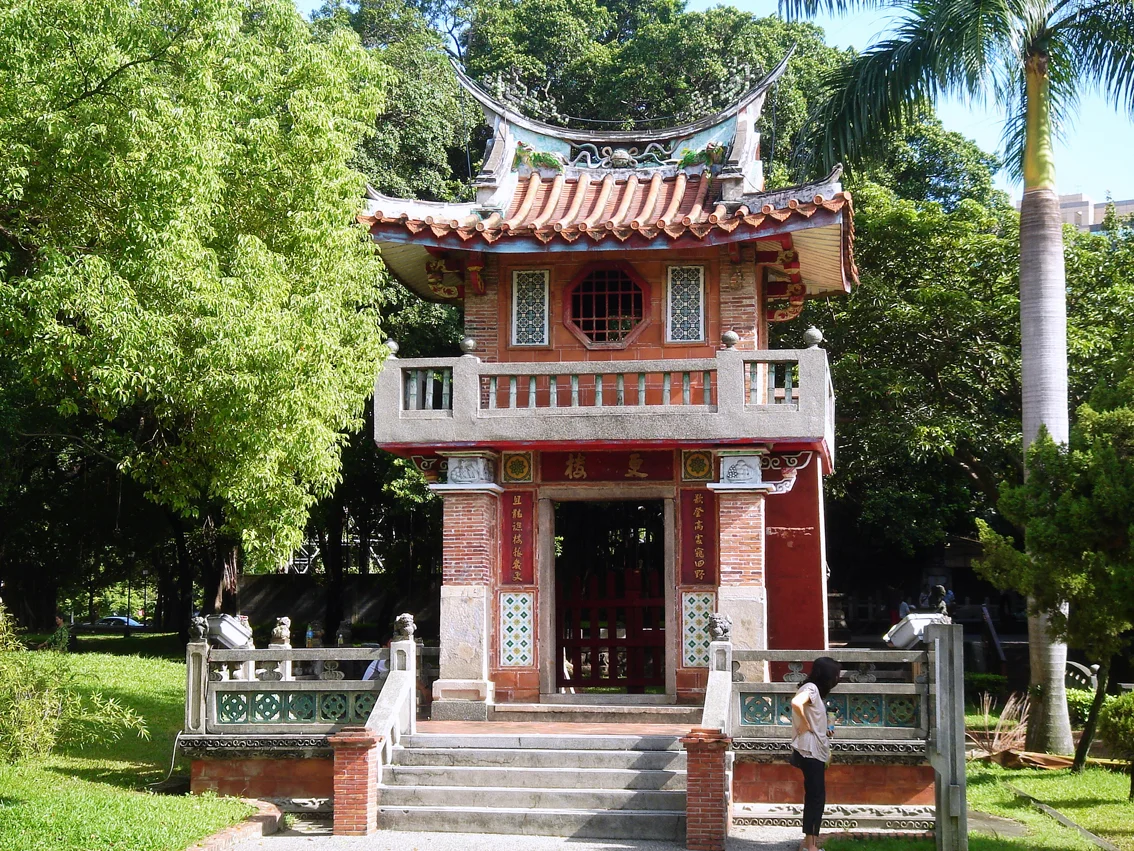
The old north gate of Taichung — a relic of the city's Qing Dynasty walls — stood in the wrong place. When Japanese colonial planners reimagined the city at the turn of the twentieth century, they moved the gate rather than demolish it, relocating it to a new park being constructed just north of the city centre. That decision preserved a piece of history inside a park that would itself become history: Taichung Park, established in 1903, is the oldest park in the city.
Planted in the Colonial Era
The Japanese who took control of Taiwan in 1895 following the Sino-Japanese War set about remaking Taichung into what they envisioned as a model modern city. Parks were part of that vision — deliberate urban lungs, ordered green space in a city being laid out on a grid. Taichung Park was built in 1903, just eight years into Japanese rule, making it one of the earliest public parks on the island. The Qing-era north gate, one of the few surviving structures from the earlier Liu Mung-chuan development period, was installed within the park grounds, giving the new space an unexpected thread of historical continuity. Today it stands inside the park, a stone reminder of the city before the Japanese renamed it.
The Lake and the Pavilions
At the heart of the park lies an artificial lake covering 13,530 square metres. Two pavilions rise from the lake on adjacent islets, connected to the shore by wooden walkways. They were built in 1908 to commemorate the establishment of the Crossway Railway — the rail line that linked Taichung into Taiwan's emerging transport network. The pavilions have become the most photographed image in the park: twin hexagonal structures reflected in still water, their curved rooflines echoing classical Chinese architecture while their setting — carefully landscaped, lakeside — has the composed quality of a classical painting. In the early morning, local residents walk the perimeter of the lake, and kayakers sometimes take to the water before the day heats up.
Lantern Light and Living Tradition
On 17 April 1999, the Taichung City Government designated Taichung Park as a city historical site — official recognition of what residents already knew. In recent years the park has hosted celebrations for the Lantern Festival, the fifteenth day of the Lunar New Year, when lanterns are lit and released into the night sky. Hundreds of thousands of people have attended these festivals in Taichung, and the park's lake becomes a mirror for the light. It is the kind of event that turns a civic green space into something more: a gathering place where a city marks time together. The oldest park in Taichung, still holding the city's oldest gate, becomes temporarily its most luminous place.
A Park That Has Held Its Ground
Taichung has changed enormously since 1903. The city that the Japanese found — a mid-sized settlement they renamed from Dadun — has become the second-largest city in Taiwan, home to more than 2.8 million people. Through Japanese colonial rule, World War II, the post-war KMT era, rapid industrialization, and the merging of Taichung City and County in 2010, the park has remained. It has tennis courts and a children's playground now, and kayaks for hire. But the lake is the same lake. The pavilions are the same pavilions. And the old north gate still stands where the Japanese put it, watching over the park that has outlasted every government that built, moved, or designated it.
From the Air
Taichung Park sits at 24.145°N, 120.683°E in the North District of central Taichung. From the air at 2,000–4,000 feet, the park's artificial lake is a clear visual anchor — a reflective oval amid dense urban blocks north of the railway station. The twin lakeside pavilions are visible in clear conditions. Taichung International Airport (RCMQ) lies approximately 9 km to the west. The park is easily located by tracking the city's main commercial spine northward from Taichung Station.
Nearby Stories
- Taroko National Park 4.5 km away
- Jiji, Nantou 9 km away
- Miaoli Ceramics Museum 9.2 km away
- Smangus 17 km away
- Taixi, Yunlin 23 km away
- Lintianshan Forestry Culture Park 24 km away
- Taiwan Strait 52 km away
- China Airlines Flight 611 60 km away