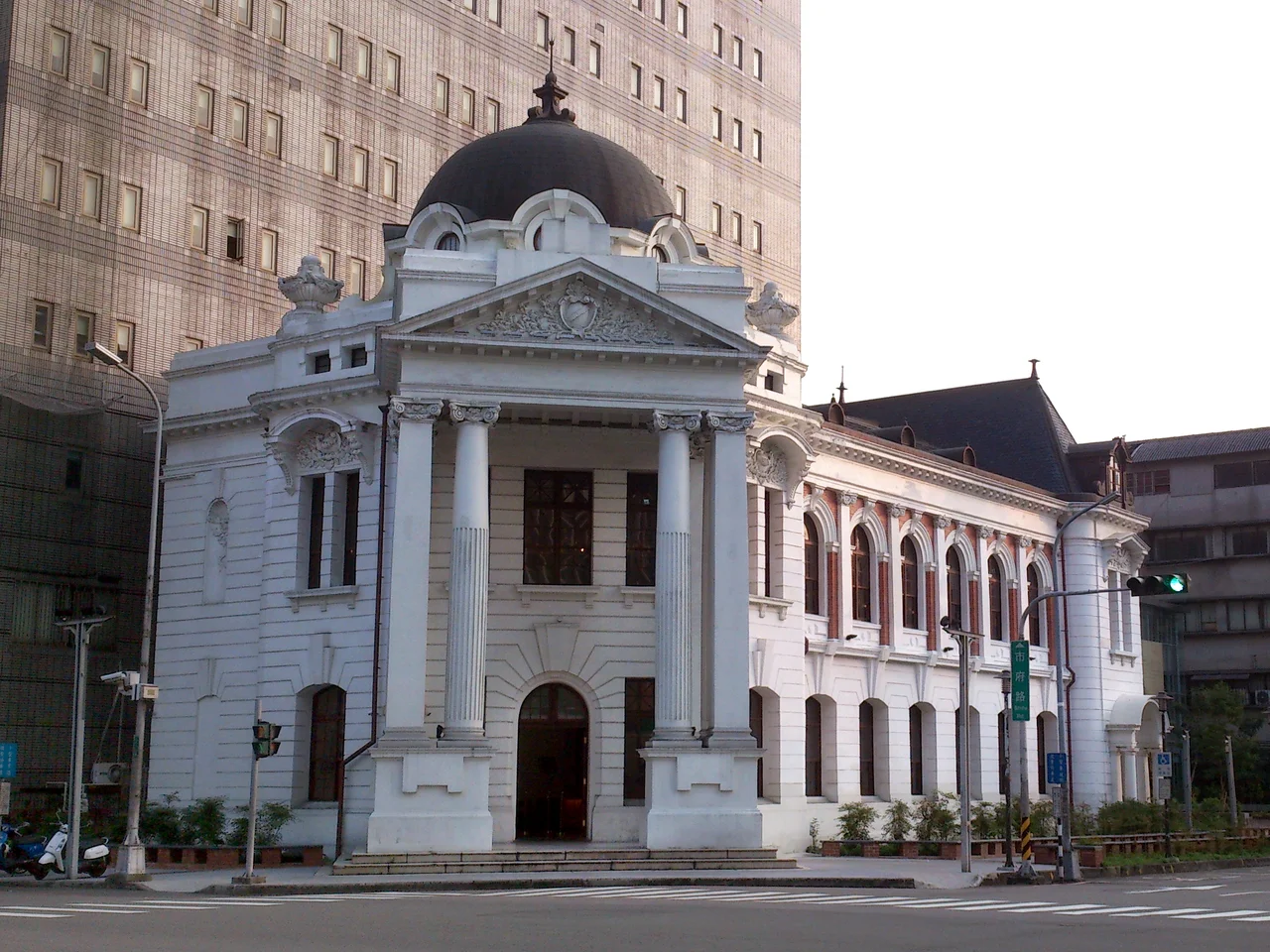

Taichung Shiyakusho
The café on the ground floor is called Café 1911. It is a deliberate choice of name. The building it occupies — a three-storey Baroque-style structure in the West District of Taichung — was constructed in 1911 as the Taichū Shiyakusho, the municipal hall of the city under Japanese rule. More than a century later, the building serves coffee and hosts art, and its construction year has become its brand. There are worse ways to carry history forward.
A City Hall Built for a Colonial City
When Japanese planners built the Taichū Shiyakusho in 1911, Taichū — the Japanese name for what had been Dadun, and would eventually become Taichung — was in the middle of a colonial makeover. The Japanese administration was transforming the city grid by grid, adding Western-inflected civic buildings in the Baroque style that was fashionable for official architecture across their empire. The Shiyakusho, or city hall, was one of these: three storeys, Baroque ornamentation, built to hold the administrative machinery of an increasingly significant Japanese city. It stood near Taichung Station, walkable from the main rail link that connected the city to the rest of the island, a position that reflected its importance.
A Long Quiet Century
The building's history between Japanese rule and the present is not extensively documented — it stood, and the city changed around it. After 1945, when Taiwan came under Republic of China governance, the building continued to serve various purposes as Taichung grew from a mid-sized city into one of Taiwan's largest. By the time renovation plans were drawn up in 2014, the structure was historic but not yet celebrated — a colonial-era building in a city that had accumulated layers of post-war development on top of its Japanese-era bones. The renovation took the building seriously: rather than repurposing it for purely functional use, the plans called for it to become a cultural and dining destination, honouring the structure's age.
Café 1911: History as Hospitality
In February 2016, the renovated Taichung Shiyakusho reopened. The Rose House Group, which operates Café 1911 on the ground floor, made the year of the building's construction its calling card. The café occupies the most accessible level, bringing foot traffic and daily life back into a building that might otherwise have become a museum piece. The two upper floors house an art centre. The arrangement makes sense: coffee and art, the ground floor pulling people in, the upper floors offering something more contemplative. The Baroque exterior — its decorative facade, its proportioned windows, its sense of confident institutional weight — frames the whole enterprise with a pleasing incongruity. Colonial formality, reimagined as somewhere to spend a quiet afternoon.
Neighbours in Stone
The Taichung Shiyakusho is not alone in its neighbourhood. A short walk away stands the Taichung Prefectural Hall, built two years later in 1913 and larger in scale — a reminder that the Japanese colonial administration built its civic presence in clusters. Between them, these two buildings hold the architectural character of Japanese-era Taichung more vividly than almost anything else in the city. Both survived the post-war decades intact, both were eventually designated for heritage protection, and both now serve cultural purposes. Walking between them takes only minutes. The difference in scale is instructive: the Prefectural Hall was built for governance over a region; the Shiyakusho was the municipal hall of the city itself, slightly more modest, and now — with its café and art centre — slightly more intimate.
From the Air
The Taichung Shiyakusho stands at 24.138°N, 120.679°E in the West District of Taichung, within walking distance west of Taichung Station. From the air at 2,000–4,000 feet, the building's three-storey Baroque form is visible in the historic city core, close to and distinguishable from the larger Taichung Prefectural Hall nearby. Taichung International Airport (RCMQ) lies approximately 8 km to the west-northwest. The railway corridor through central Taichung provides a reliable visual reference for locating the historic West District precinct.
Nearby Stories
- Taroko National Park 4.5 km away
- Jiji, Nantou 9 km away
- Miaoli Ceramics Museum 9.2 km away
- Smangus 17 km away
- Taixi, Yunlin 23 km away
- Lintianshan Forestry Culture Park 24 km away
- Taiwan Strait 52 km away
- China Airlines Flight 611 60 km away