
Locked Doors at 1:45 AM
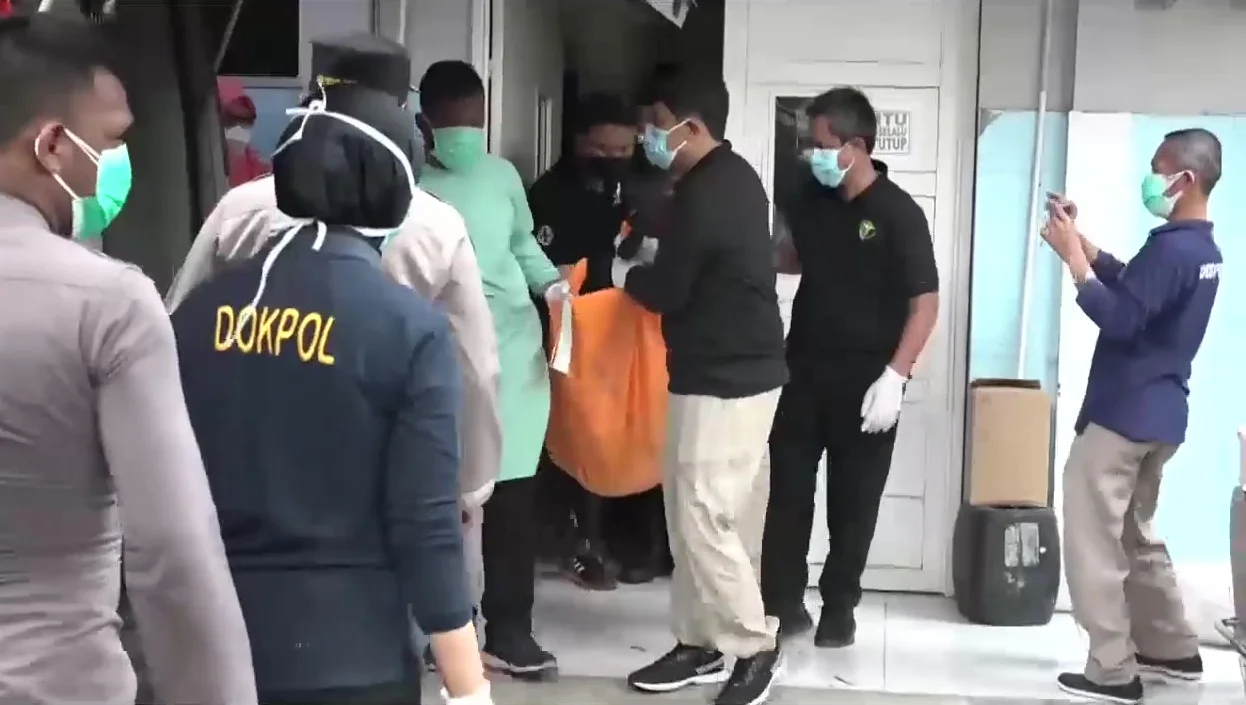
Iyan Sofyan heard the screams first. It was 1:45 in the morning on 8 September 2021, and the prison employee was close enough to Sector C of the Tangerang Class I Correctional Facility to hear voices coming from behind the locked doors. A fire had started in section C2 -- a short circuit in electrical wiring that had not been upgraded since the prison was built in 1972. The sector had been designed to hold 38 inmates. That night, 122 people were locked inside. Sofyan and other wardens and guards managed to evacuate 20. The rest remained behind doors that protocol required to stay locked, in a building that lacked adequate fire extinguishers, inside a prison system that had been overcrowded for years. By the time the flames were out, 49 people were dead.
Three Times Over Capacity
The Tangerang prison was not supposed to be this kind of place. Constructed in 1972 as a replacement for the old Glodok prison -- which had been sold to a private company -- the facility was inaugurated on 6 December 1982 and initially intended for white-collar criminals. That changed in 2008, when a surge in drug-related crime prompted the government to begin transferring narcotics offenders into the facility. By 2021, sixty percent of the prison's inmates were serving drug-related sentences. The prison's official capacity was 600. It held more than 2,000. This was not an anomaly. Indonesia's prison system had been overcrowded for years, driven by stringent narcotics laws that favored incarceration over rehabilitation. Sector C, known as Chandiri Nengga, was the sharpest expression of this crisis: 122 human beings in a space built for 38, more than three times the intended occupancy.
Two Hours That Defined the Disaster
When the fire broke out in the early hours, the prison's own protocols became the mechanism of death. Inmates were kept in locked cells overnight -- standard procedure in Indonesian correctional facilities. As flames spread through Sector C2, wardens struggled with locks and doors while smoke filled corridors designed for a fraction of the people now trying to survive in them. The 20 inmates who were evacuated owed their lives to guards who reached their cells in time. The rest waited behind doors that no one could open fast enough. Firefighters received the alert shortly after the fire started. Around 30 fire trucks were dispatched and arrived by 2:00 AM. They had the blaze under control by 3:00 and fully extinguished roughly two hours after it began. Every person who died was found inside a locked cell. The distinction was absolute: those who got out lived, those who did not burned.
Forty-Nine Lives
The initial count was 41 dead, with eight seriously injured and 73 more with lighter injuries. The wounded were taken to Sitanala Hospital and Tangerang Regency General Hospital. Over the following days, the number climbed. Three critically injured inmates died in hospital the next day, bringing the toll to 44. Six days after the fire, it reached 46. Eventually, 49 people died from the blaze and its aftermath. Most had been imprisoned for drug-related offenses. Some were serving sentences for terrorism and murder. Two were foreign nationals -- one from South Africa, one from Portugal. Each had a name, a sentence, a family somewhere that received the news. The government offered compensation of 30 million rupiah per family, announced by Minister of Law and Human Rights Yasonna Laoly. Mayor Arief Rachadiono Wismansyah pledged additional city funds. President Joko Widodo expressed condolences through his spokesperson.
Wiring from 1972
The investigation pointed to a cause that surprised no one who knew the facility. Police determined the fire was caused by a short circuit in electrical wiring that dated to the prison's construction nearly five decades earlier. The wiring had never been upgraded. Fire extinguishers were insufficient. The building's safety infrastructure had not kept pace with the tripling of its population. Laoly formed five response teams to handle identification, funerals, family support, coordination, and public relations. The political response was swift but familiar -- condolences, compensation, promises of reform. Indonesia's prison overcrowding crisis did not begin on 8 September 2021, and it did not end there. The Tangerang fire joined a grim international catalog of prison blazes: the 1930 Ohio Penitentiary fire, the 2010 Santiago prison fire, the 2012 Comayagua prison fire in Honduras. In each case, overcrowding and infrastructure failures turned incarceration into a death sentence that no judge had imposed.
From the Air
The Tangerang Class I Correctional Facility is located at approximately 6.187S, 106.640E in Tangerang, Banten, roughly 25 km west of central Jakarta. The area is densely urban with few distinguishing landmarks from altitude. Soekarno-Hatta International Airport (WIII) is approximately 8 km to the northwest, making this area frequently overflown on approach and departure. The prison complex appears as a large rectangular compound amid the residential sprawl of western Greater Jakarta.
Nearby Stories
- The King's Footprints in the River 2.8 km away
- Rawagede Massacre 6.4 km away
- The Cruiser That Wouldn't Stop Fighting 14 km away
- Four Minutes Over the Java Sea 14 km away
- The Scholar's Mosque 21 km away
- Through the Cidepong Hills 37 km away
- Ujung Kulon National Park 97 km away
- The Islands That Vanished from Sight 352 km away