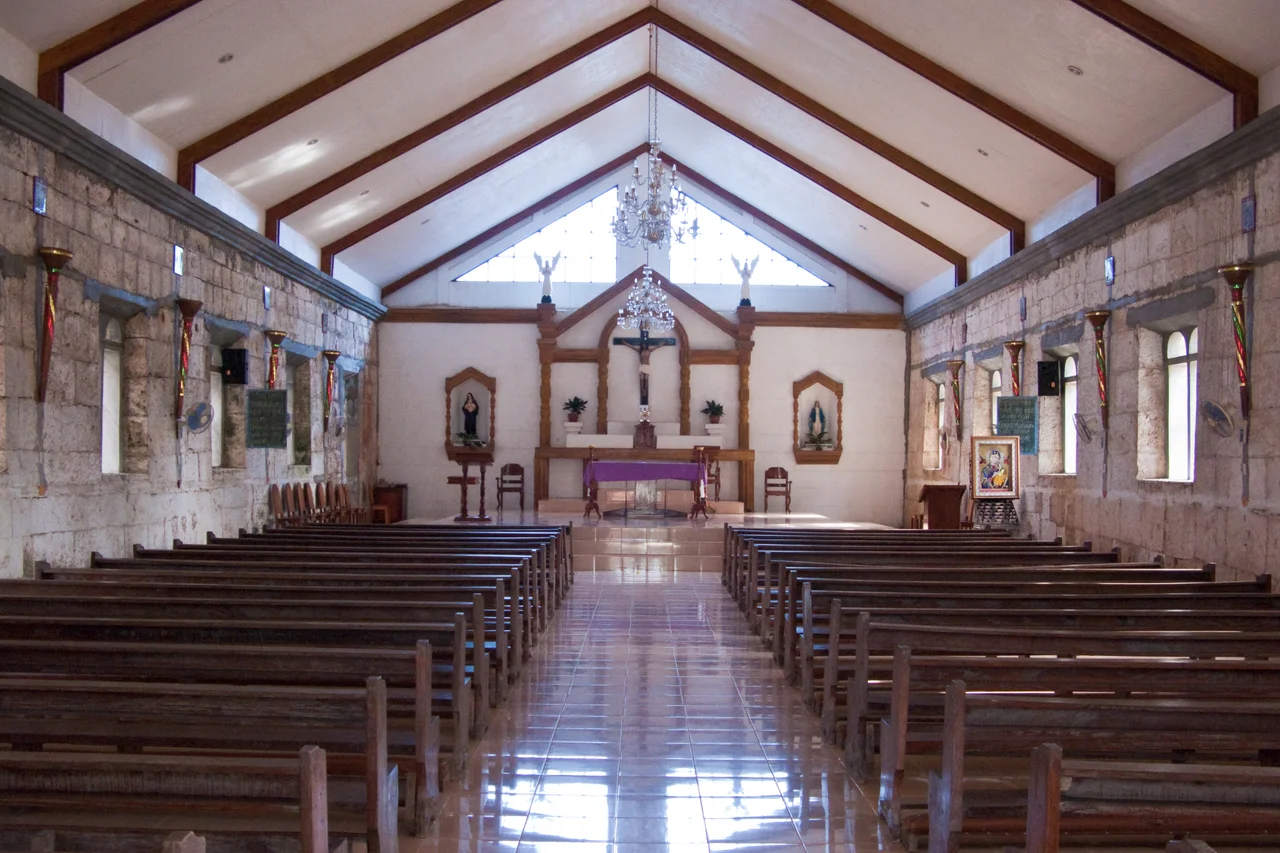

Taytay, Palawan
Antonio Pigafetta, chronicler aboard what remained of Magellan's fleet, recorded something curious about the Kingdom of Taytay: the natives were passionate about cockfighting, centuries before Europeans had ever seen the sport. He also recorded something far less charming -- that after Magellan's death at the Battle of Mactan in 1521, the surviving crew seized the King of Taytay and his consort, holding them hostage for supplies. The king complied, and then gave more provisions than the Spaniards had demanded. That combination of dignity and generosity still echoes through this northern Palawan town, which sits between the South China Sea and the Sulu Sea, guarding the passage to some of the Philippines' most pristine waters.
The Kingdom Before the Colony
Long before the Spanish arrived, Taytay was no backwater. Chinese records from the 1200s mention the nations of Sandao, which owed allegiance to the trading polity of Ma-i. By the time European ships appeared, Taytay had its own monarch, attended at all times by ten scribes -- a sign of a literate, administratively sophisticated court. The Spanish formally founded the town in 1623, and by 1818 it had become the capital of the entire province of Calamianes, encompassing all of Paragua, as Palawan was then known. For more than a century, this was the seat of colonial power in northern Palawan, a distinction the town carried until the American era stripped it of that role.
Stone Walls Against the Sea
The Fuerza Santa Isabel de la Paragua tells Taytay's story in coral stone and cannon metal. Construction began in 1667 under the Augustinian Recollect Fathers and was completed in 1738 -- seventy-one years of building to create a fortress named for Queen Isabela II. Its purpose was blunt: defend against Moro raiders whose war boats swept through these waters regularly. But those raids were not simple piracy. The Tausug people who mounted them were contesting Spanish control over islands they considered their own -- a showdown of sovereignty disguised as plunder. Similar raids struck the Christian communities of Cuyo, Dumaran, Linapacan, and Culion. Today the fort's chapel and cannons remain intact, and the walls still face the sea they were built to watch.
A Revolutionary's Last Stand
When American forces captured Cuyo in May 1901 and turned their attention toward Taytay, the Filipino revolutionary commander Rufo Sandoval refused to surrender. On May 24, his small naval force engaged the American gunship Samar at Maytiguid. Outgunned, his fleet was bombarded and scattered. Most of his men raised white flags, while the townspeople -- to the Americans' surprise -- welcomed the new occupiers. Major George LeRoy Brown pursued Sandoval to Bacuit Island, only to learn that the commander had already fled with thirty men. It was the last anyone saw of Sandoval, who reportedly died of illness shortly after. The revolutionary government's documents were confiscated, its boats destroyed, and Taytay's era as a seat of power quietly ended.
Dolphins in the Sound
Today Taytay draws visitors not for its political significance but for what surrounds it. The town sits at the edge of Malampaya Sound, a protected marine area that is home to the critically endangered Irrawaddy dolphin -- one of only a handful of populations remaining in the world. Dubbed the "Star of the North," the municipality stretches across 31 barangays, from coastal fishing villages to island communities like Paly and Casian. Its waters, straddling two seas, offer diving and snorkeling that rival anything in northern Palawan. The 60-kilometer road connecting Taytay to neighboring El Nido has been rehabilitated, tying this former colonial capital more tightly to the tourism economy that now defines the region. With a population of 85,258 as of the 2024 census, Taytay is growing steadily, though it remains far quieter than its famous neighbor to the north.
From the Air
Taytay sits at approximately 10.82N, 119.52E on the northeast coast of Palawan island. From the air, look for the distinctive shape of Malampaya Sound and the coral-stone Fort Santa Isabel near the waterfront. The nearest significant airport is El Nido Airport (RPME) approximately 50 km to the north. Puerto Princesa Airport (RPVP) is 214 km to the south. Best viewed at 3,000-5,000 ft for the town and fort; higher altitude reveals the dramatic coastline between the South China Sea and Sulu Sea.
Nearby Stories
- San Vicente, Palawan 11 km away
- El Nido, Palawan 12 km away
- Puerto Princesa 90 km away
- Coron, Palawan 109 km away
- Iwahig Prison and Penal Farm 120 km away
- Fort Cuyo 123 km away
- 2019 Reed Bank Incident 225 km away
- Guimaras Oil Spill 289 km away