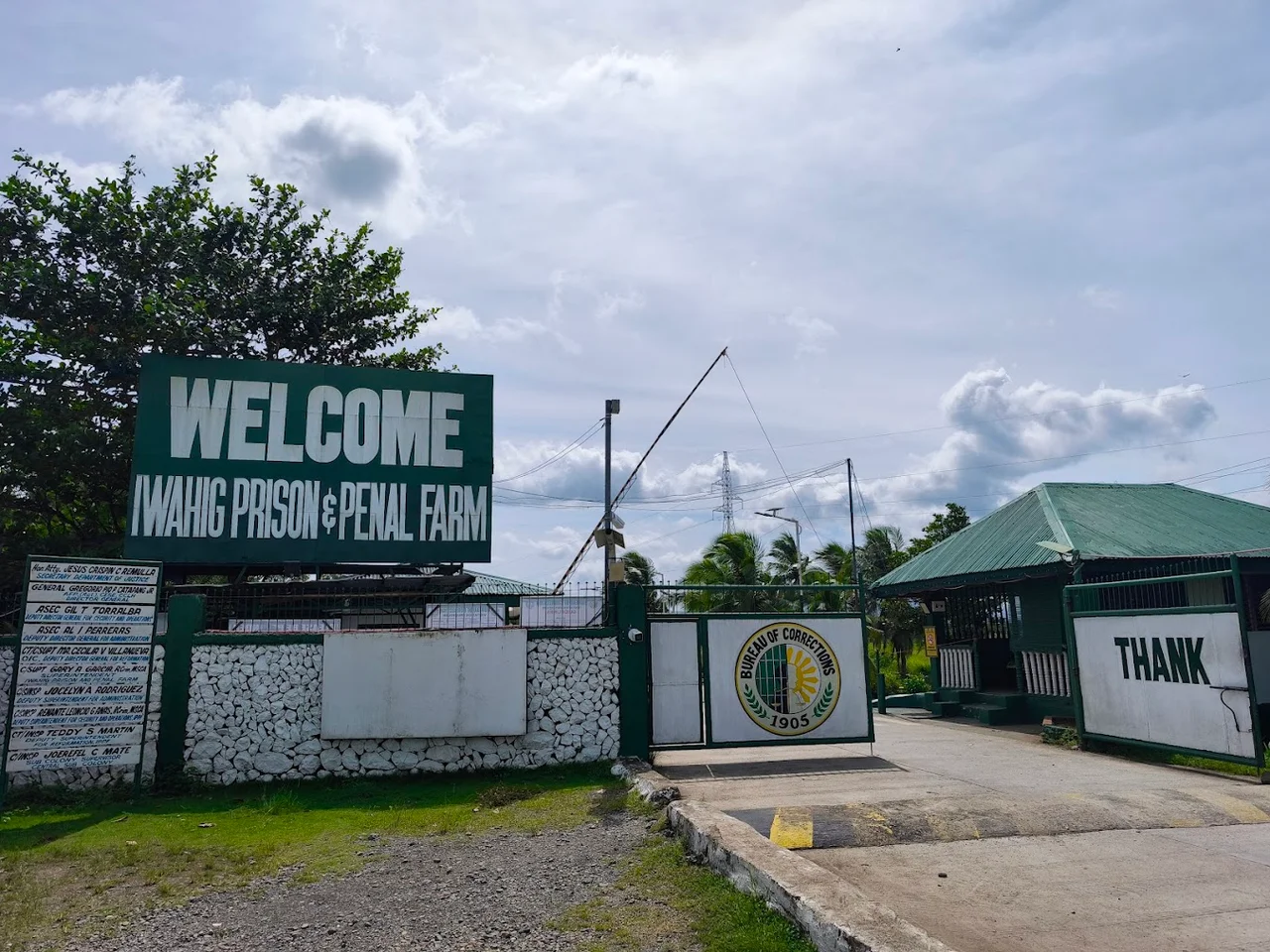

Iwahig Prison and Penal Farm
There are no walls at Iwahig. No guard towers loom over the perimeter, no razor wire marks the boundary between confinement and freedom. Instead, there are rice paddies, coconut groves, and small houses where inmates live with their families on plots of land they cultivate themselves. Located just outside Puerto Princesa on the island of Palawan, Iwahig Prison and Penal Farm has operated on a premise that most correctional systems would consider radical: that the best way to rehabilitate a person is to give them land, responsibility, and the dignity of self-governance.
An American Experiment in the Tropics
The idea came from William Cameron Forbes, who served as the American colonial government's Secretary of Commerce and Police from 1904 to 1909. Forbes envisioned a penal colony modeled on the George Junior Republic, a progressive American reform school that taught self-governance through simulated citizenship. His plan was straightforward: give prisoners land to cultivate and reward good conduct with increasing freedom. Three classes of colonists were established. Newly arrived convicts occupied the lowest tier. Those who demonstrated good behavior moved to the Home Zone, where they received a two-hectare plot and could build a house to live in with their families. The highest class occupied the Free Zone, with their own two hectares and significant autonomy. The first group of 61 convicts arrived in November 1904. By June 1908, the population had grown to 446 prisoners, plus 20 families.
A Republic Behind No Bars
What distinguished Iwahig from other colonial prisons was how quickly it embraced self-governance. Under superintendent Carroll H. Lamb, the colony established its own judicial system: Justice of the Peace Courts and a Court of Last Resort were created in 1909. By 1910, top-class colonists could elect minor officials, police, and petty officers from among their own ranks. Forbes himself noted with evident pride that by 1911, with a population exceeding 1,000, the colonists were allowed to govern themselves -- electing their own president and council from among men who had earned promotion through good conduct and industry. One observer described the arrangement as 500 convicts living under "moral constraints" with "interior discipline maintained without guards." The system worked not because it was lenient, but because it offered something most prisons do not: a path toward something resembling a normal life.
Land and Legacy
The penal farm's relationship with the land deepened over the decades. In 1955, President Ramon Magsaysay issued Administrative Order No. 20, allowing the distribution of colony lands to deserving colonists for cultivation. Secretary of Justice Pedro T. Tuazon implemented the order, granting qualified colonists six hectares of land -- enough to sustain a family and build a livelihood. Today, Iwahig remains one of seven operating units of the Bureau of Corrections under the Philippine Department of Justice, housing approximately 4,000 inmates across its vast grounds. The farm stretches across the landscape outside Puerto Princesa, a patchwork of cultivated fields, livestock areas, and residential clusters that looks more like a rural community than a correctional facility. Visitors are welcome, and the contrast between Iwahig and conventional prisons remains as striking now as it was when Forbes first imagined a place where punishment meant planting seeds rather than sitting in a cell.
From the Air
Located at 9.74°N, 118.66°E, approximately 20 km south of Puerto Princesa city center on Palawan island. Best viewed from 5,000-10,000 feet. The penal farm's extensive agricultural fields are visible from the air as a large cultivated area distinct from the surrounding forest. Nearest airport: Puerto Princesa International Airport (RPVP), about 20 km to the north.
Nearby Stories
- Tabon Caves 28 km away
- Puerto Princesa Subterranean River National Park 33 km away
- San Vicente, Palawan 57 km away
- Japanese Cruiser Maya 88 km away
- Tubbataha Reef 96 km away
- Taytay, Palawan 124 km away
- 2019 Reed Bank Incident 223 km away
- USS Billfish (SS-286) 226 km away