
Tete Province
Two hundred and fifty kilometers west of the city of Tete, a stretch of ground about 1,500 square kilometers in extent preserves something that existed almost none of anywhere else: a forest from the end of the Permian, fossilized in sandstone and siltstone just before the planet's largest mass extinction erased most of what was then alive. The conifers that grew here watched the ending of a world. In 2022, the International Union of Geological Sciences placed the Tete Fossil Forest in its First 100 Geological Heritage Sites - a recognition that this province, better known to the world for coal and hydroelectric power, also holds one of the deepest windows into planetary history in the southern hemisphere.
A Province of Rivers and Borders
Tete Province fills the northwest wedge of Mozambique, a 98,417-square-kilometer expanse that shares borders with four other countries: Zambia to the northwest, Malawi to the north and east, Zimbabwe to the south. Between those borders the Zambezi curves through, swelling into the long impoundment of the Cahora Bassa reservoir before running east toward the Indian Ocean. The population numbered 2,648,941 at the 2017 census, spread across fifteen districts: Angónia, Cahora-Bassa, Changara, Chifunde, Chiuta, Doa, Macanga, Magoé, Marávia, Marara, Moatize, Mutarara, Tsangano, Zumbo, and the capital district around the city of Tete itself. Two of those districts - Marara and Doa - were carved out of existing ones only in 2013, when Mozambique's Assembly of the Republic authorized thirteen new districts nationally.
The Coal Country
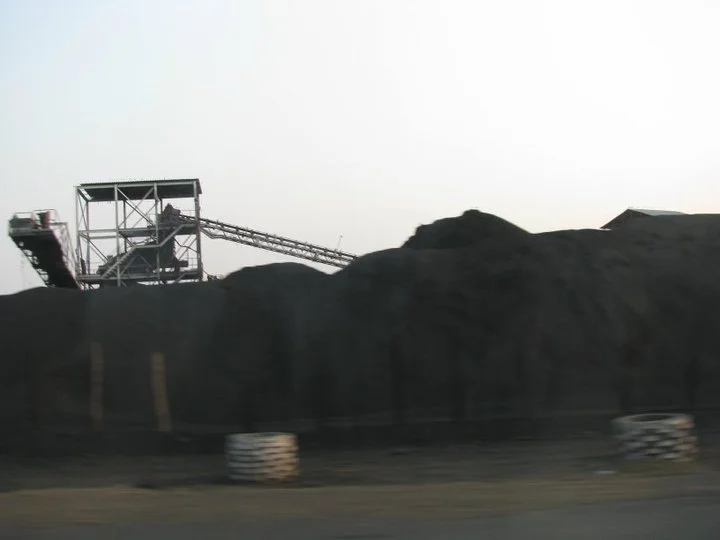
Beneath Tete sits one of the world's great coal basins. The province has been reported to hold roughly 6.7 billion tons of reserves, of which 3 billion tons are economic or sub-economic grade - enough that geologists once called it the largest undiscovered coal province on Earth. The seams formed in the early and late Permian, in fluvial and deltaic sediments of the Karoo Supergroup that accumulated in the Zambezi graben. The largest known deposit is at Moatize, just east of the city of Tete, where 2.4 billion tons of metallurgical and thermal coal lie within reach. The Brazilian mining company Vale SA bid 122.8 million US dollars for exploration rights in 2008. Vale's expansion plans targeted 22 million metric tons of coal per year at full capacity, though actual production never reached that level before Vale sold its Mozambican coal assets to Vulcan Minerals in 2022. It is a working mine on a scale unusual even for Africa.
The Cost of the Boom
Development at this scale has moved people. Vale relocated 5,000 residents from the land the mine now occupies, placing them in planned settlements with new housing and infrastructure - though critics pointed out that families in the new settlements must pay for the electricity they consume, a departure from the rural economies they had left. Rio Tinto established a Riversdale Training Centre in Tete, where 28,300 candidates had registered and 1,172 people had been trained in civil trades and building by the early 2010s. At Moatize, 90 percent of Vale's employees and contractors are Mozambicans. To move the coal to world markets, the government has refurbished the 600-kilometer Sena railway linking Moatize to Beira at a cost of 375 million US dollars, and a deep-water port is being built at Beira to receive coal trains. The so-called Beira Corridor has become a test of whether Mozambique can convert mineral wealth into broader development.
Deep Time at Magoé
For all the coal trains and haul trucks, the most extraordinary thing in Tete Province is much older. In the district of Magoé, between Cahora Bassa and the small settlement of Magoé, an area of 1,500 square kilometers preserves fossil wood from the end of the Permian period, roughly 252 million years ago. The trees - mostly conifers - are preserved in the Matinde Formation of sandstones, siltstones, and coal beds that accumulated just before the end-Permian mass extinction, the most severe biological crisis in the geological record. Roughly ninety percent of marine species and seventy percent of land vertebrates died during that event. The trees at Magoé were growing in the world that extinction would erase. The IUGS listing in October 2022 recognized the forest's global scientific significance. David Livingstone's expedition noted coal outcrops here in 1859, when Richard Thornton - traveling with Livingstone - produced the first geological report on the province's coal beds. The fossil forest and the modern coal mines, it turns out, are parts of the same ancient deposit - carbon from one moment in Permian time, remembered in two very different forms.
From the Air
Tete Province, Mozambique. Centered near 15.50°S, 32.50°E. Nearest airport: Chingozi (FQTT) at Tete. Recommended altitude 10,000-25,000 ft. Key landmarks: the long sinuous Cahora Bassa reservoir running west from the dam, the city of Tete on the wide Zambezi, and the terraced Moatize coal excavations east of the city. Fossil forest area lies between Cahora Bassa and Magoé, roughly 250 km west of Tete city.
Nearby Stories
- Cahora Bassa 21 km away
- Tete, Mozambique 69 km away
- Great Dyke 116 km away
- Kalemba Rockshelter 140 km away
- Lilongwe 168 km away
- Majete Wildlife Reserve 186 km away
- Centenary, Zimbabwe 186 km away
- Luangwa Bridge 194 km away