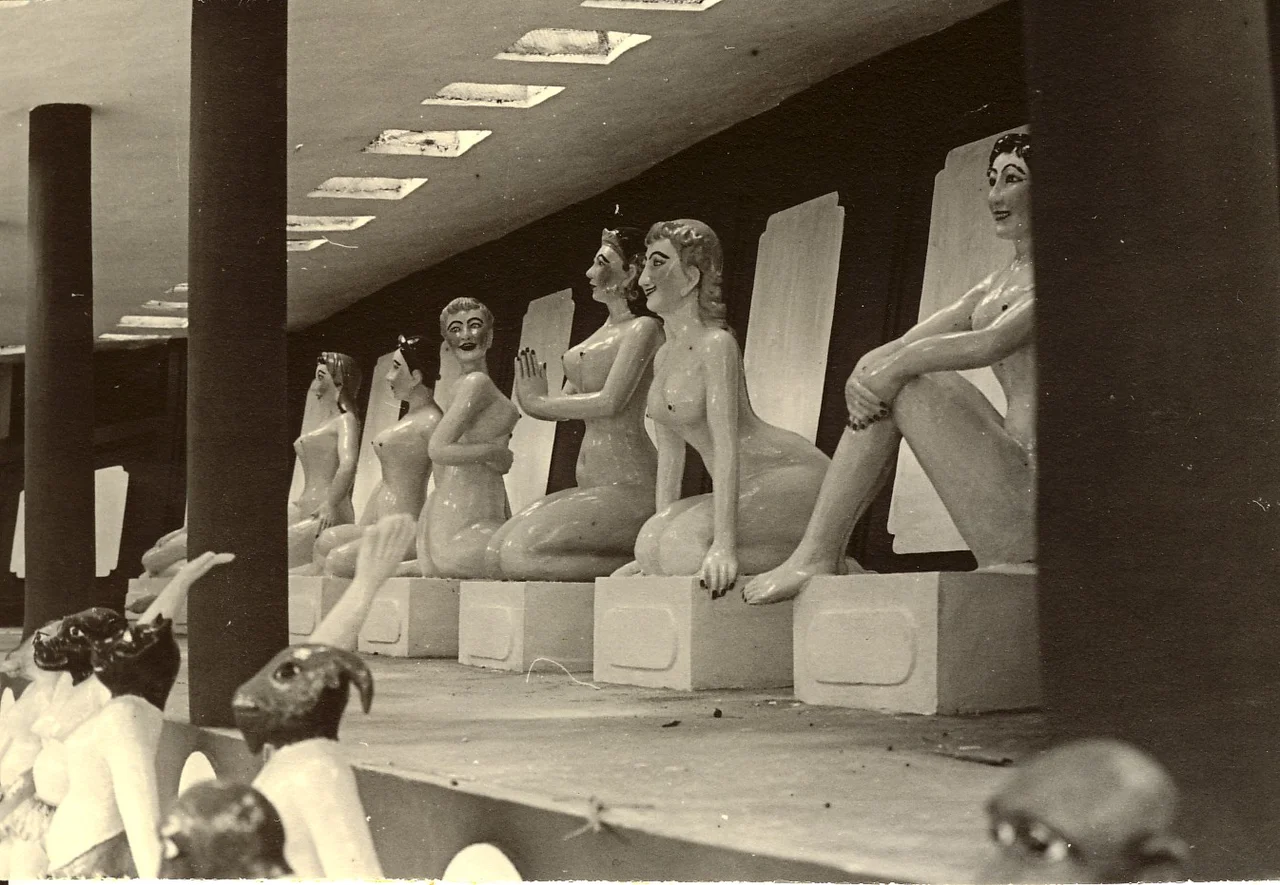

Tiger Balm Garden (Hong Kong)
Aw Boon Haw built three mansions in three cities — Hong Kong, Singapore, and Fujian — each with extravagant public gardens attached, each paid for by a fortune built on a single product: Tiger Balm, the camphor-and-menthol rub that his father had invented and that he and his brother Aw Boon Par turned into a consumer brand sold across Asia. In Hong Kong, the result was Haw Par Mansion at 15 Tai Hang Road in the Wan Chai District, and the Tiger Balm Garden that spread across 8 acres beside it. The gardens were opened to the public and became one of Hong Kong's more improbable attractions — a landscape of hand-painted dioramas and plaster figures depicting Chinese moral fables, Buddhist hells, and scenes from mythology, all free to enter. They were not subtle. That was the point.
The Aw Brothers and Their Gardens
Aw Boon Haw and Aw Boon Par were the sons of a Hakka herbalist who had developed Tiger Balm in Rangoon in the late nineteenth century. The brothers built the brand into a pan-Asian empire — at its peak, they owned newspapers, printing operations, and businesses across Southeast Asia. The Hong Kong mansion was part of a strategy of conspicuous philanthropy and public display: by opening the gardens to visitors, the Aw family cultivated goodwill and kept the Tiger Balm name in front of the public. The gardens at Haw Par Villa in Singapore, which still operate today, give some sense of what the Hong Kong gardens would have been like: lurid, theatrical, sometimes unsettling tableaux of figures being punished for various sins, rendered with total earnestness in painted concrete.
A Family Empire Contested
After Aw Boon Haw's death, the fortune became the subject of prolonged legal dispute. In 1961, his fourth son, Aw It Haw, placed a public notice claiming authority to sell the property on behalf of Haw Par Brothers (Private) Limited. His half-sister Sally Aw — who had taken control of the family's Hong Kong newspaper operations, including the Sing Tao Daily — was not a party to the advertisement and the arrangement was disputed. The lawsuit over the Aw Boon Haw estate was finally settled in 1967. By 1978, Cheung Kong Holdings — the conglomerate controlled by Li Ka-shing — had entered the picture, reportedly acquiring land rights for HK$25 million plus HK$40 million for the leasehold, with plans for redevelopment. The property changed hands and uses several times over the following decades, reflecting the enormous pressure on Hong Kong land throughout the city's post-1970 boom years.
Amusement Park, Heritage Site, and Finally Rubble
In 1985, the gardens were converted into an amusement park called Haw Par Villa, with rides replacing many of the original sculptures — which were then replaced by the old statues again when the rides failed to draw crowds. By 2001, the Hong Kong Government had reached an agreement with Cheung Kong: as part of the land premium for redevelopment rights, Cheung Kong would surrender the Haw Par Mansion itself to the government's Antiquities and Monuments Office, which would preserve and restore it as a museum. Cheung Kong paid HK$943 million in land premium for the redevelopment rights. The Tiger Balm Garden itself was demolished in 2004. The mansion — a Grade I historic building since 2000 — survived.
What Remains
The Haw Par Mansion still stands at Tai Hang, preserved and periodically opened to the public for tours. It is a reminder of the scale of private wealth that was built in the early twentieth century on mass-market consumer goods, and of the particular kind of philanthropy — public garden, moral theater, free admission — that wealth sometimes produced. The Tiger Balm Garden itself is gone, replaced by residential towers. Its absence is a very Hong Kong story: the land was simply too valuable to leave in the hands of the past. The Singapore Haw Par Villa, which remains open, offers the closest living equivalent to what the Tai Hang garden must have been like — vivid, strange, and entirely serious about its own moral purposes. The Hong Kong garden was also featured in the manga series JoJo's Bizarre Adventure: Stardust Crusaders, a detail that would probably have puzzled Aw Boon Haw considerably.
From the Air
The former Tiger Balm Garden site lies on the Tai Hang slope of Hong Kong Island, at approximately 22.2764°N, 114.195°E, about two kilometers east of the Wan Chai waterfront. Approaching VHHH (Hong Kong International Airport) from the west, the steep green hillside between Happy Valley and Causeway Bay is visible as the terrain rises sharply inland from the north shore. The mansion at Tai Hang Road is in the saddle between the high ground of Jardine's Lookout and the residential mid-levels. Altitude for a good view of the district: 2,500 feet. The airport is approximately 40 kilometers to the west on Lantau Island.
Nearby Stories
- Lok Ma Chau Loop 2.3 km away
- Portas do Cerco 2.3 km away
- Kweilin Incident 17 km away
- Wanshan Archipelago Campaign 34 km away
- Nanxiong Formation 115 km away
- Battle of Nanpeng Island 148 km away
- Heyuan 169 km away
- Cape Maobitou 632 km away