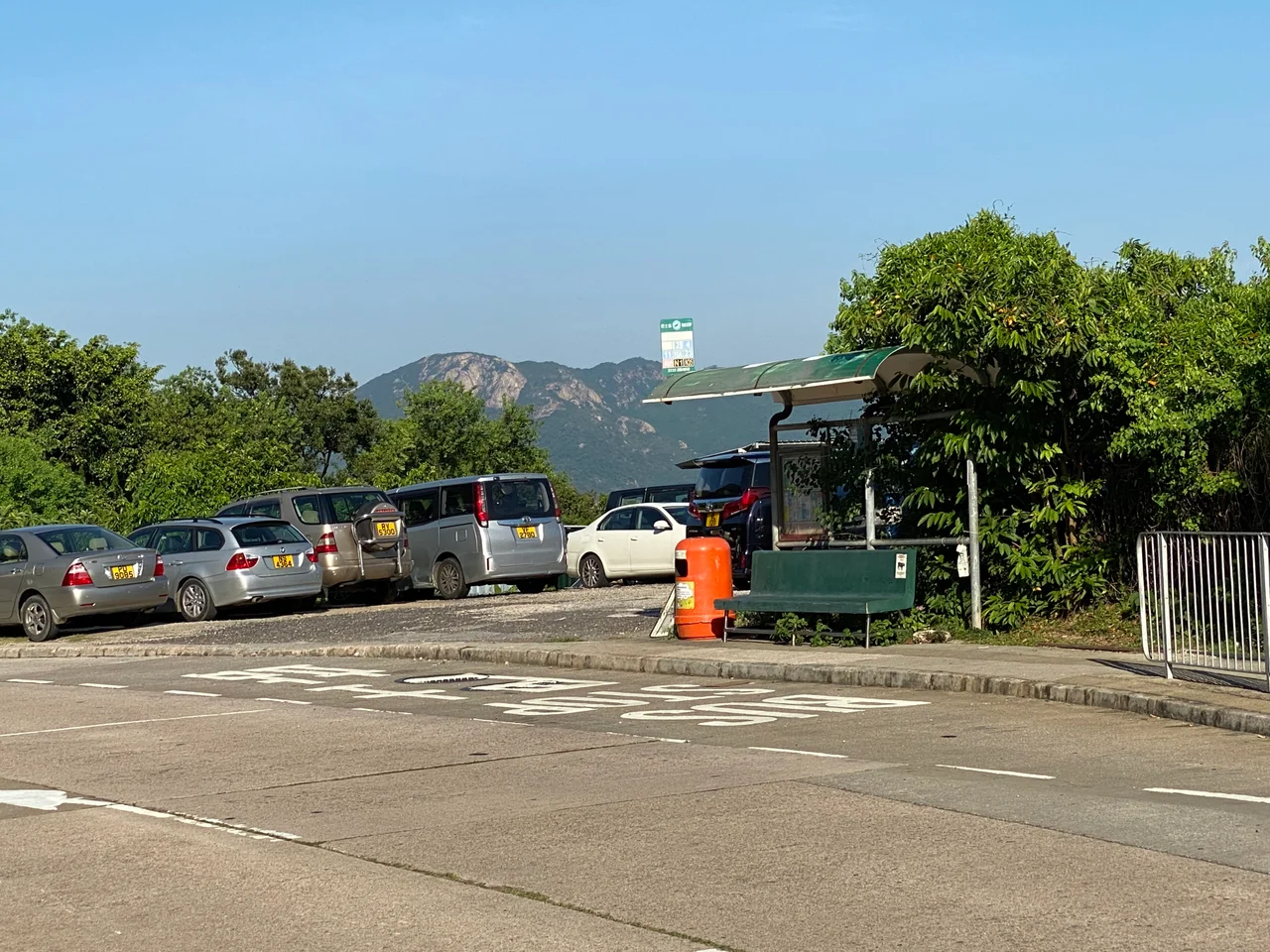

Tong Fuk
Somewhere between the bus terminus and the South China Sea, Tong Fuk refuses to be hurried. Buses pass through on their way between Tai O and Mui Wo, cows wander South Lantau Road as if the timetable is none of their concern, and The Gallery bar has been pouring drinks at the same spot opposite the terminus since 1983. This is South Lantau at its most unhurried — a village that has been here since the Ming dynasty and seems to know there is no particular reason to change.
Four Hundred Years of Chan and Tang
The original Tong Fuk Tsuen was settled by two clans during the Wanli reign of the Ming dynasty, roughly between 1572 and 1620. The Chan family came from Sha Lo Wan on the northern side of Lantau; the Tang family originated from Tuen Mun on the mainland shore. They were fishermen and farmers, and they worshipped Hung Shing — the Chinese folk religion deity associated with the sea, winds, and weather. The choice of deity was not incidental: Tong Fuk faces the open water of the South China Sea, and its people depended on what that water gave and what it threatened to take. Four centuries later, the clans are still here, now living alongside a multicultural community of more than twenty nationalities — an unlikely but apparently comfortable coexistence on a few hundred metres of Lantau coastline.
The Temple That Named the Bay
The Hung Shing Temple at the eastern end of Tong Fuk Miu Wan was built by the villagers in 1803. It gave the bay its name — Miu Wan means temple bay — and has anchored community devotion here ever since. Renovated in 1965, the temple enshrines not only Hung Shing but also two less commonly celebrated deities: the King of Fish Head and the King of Crystal Palace. Neither the temple nor its unusual residents have earned a place on Hong Kong's graded historic buildings list, which perhaps suits Tong Fuk's general indifference to official recognition. The building sits quietly at the water's edge, doing what it has always done.
Cables Beneath the Sea
Right beside the temple, two facilities bear witness to just how significant this quiet stretch of coast has become to the wider world: Tong Fuk Submarine Cable Station and South Lantau Submarine Cable Station. From these unassuming buildings, telecommunications cables reach out beneath the South China Sea, linking Hong Kong to destinations across the Pacific and beyond. The contrast is quietly remarkable — a 1803 deity temple and an international cable landing station, sharing the same bay on the same island, separated by only a short walk. Neither seems to notice the other's presence.
A Beach Without Distractions
Tong Fuk Beach lies to the south of the village, and unlike its neighbour Cheung Sha — which has shops, restaurants, and bars — Tong Fuk Beach has none of those things. What it has instead is space, quiet, and a view across open water. This is not an oversight; it is simply what the beach is. Locals and regulars come here knowing exactly what to expect. The same principle applies to the village itself: there are corner shops and local restaurants, but the dominant experience is of a place that was not designed to be visited, and remains pleasantly useful to the people who actually live there. The Gallery bar, running since 1983, is the closest thing to a landmark for outsiders — and even it seems more interested in regulars than in attracting new custom.
Island Rules
Getting to Tong Fuk requires following Lantau's own logic. New Lantao Bus routes 1, 2, and 4 connect from Mui Wo; routes 11, 11A, and 23 come from Tung Chung. The buses pass through on South Lantau Road, a single-lane artery shared with the occasional cow and the light of afternoon pressing through the hills. There are no red taxis here — only the distinctive blue Lantau taxis, which are the only cabs licensed to operate on the island. The taxi stand at the bus terminus is the practical center of the village for arrivals and departures. Beyond that, Tong Fuk asks only that you slow down, which is the same thing the cows have been asking of the buses for years.
From the Air
Tong Fuk lies on the southern shore of Lantau Island at approximately 22.228°N, 113.933°E. Approaching from the northeast, the village is visible as a narrow coastal strip between South Lantau Road and Tong Fuk Beach. The Hung Shing Temple and adjacent submarine cable stations sit at the eastern end of the bay. Lantau Peak (Fung Wong Shan) rises to the north at 934 meters, making it a useful navigation landmark. The nearest major airport is Hong Kong International Airport (VHHH) on the northern tip of Lantau, approximately 20 km to the northeast. Recommended viewing altitude 1,500-3,000 ft for coastal detail. Visibility is typically good except during the typhoon season (May to September) or when southeast winds bring sea fog.
Nearby Stories
- Lok Ma Chau Loop 2.3 km away
- Portas do Cerco 2.3 km away
- Kweilin Incident 17 km away
- Wanshan Archipelago Campaign 34 km away
- Nanxiong Formation 115 km away
- Battle of Nanpeng Island 148 km away
- Heyuan 169 km away
- Cape Maobitou 632 km away