
Trebah
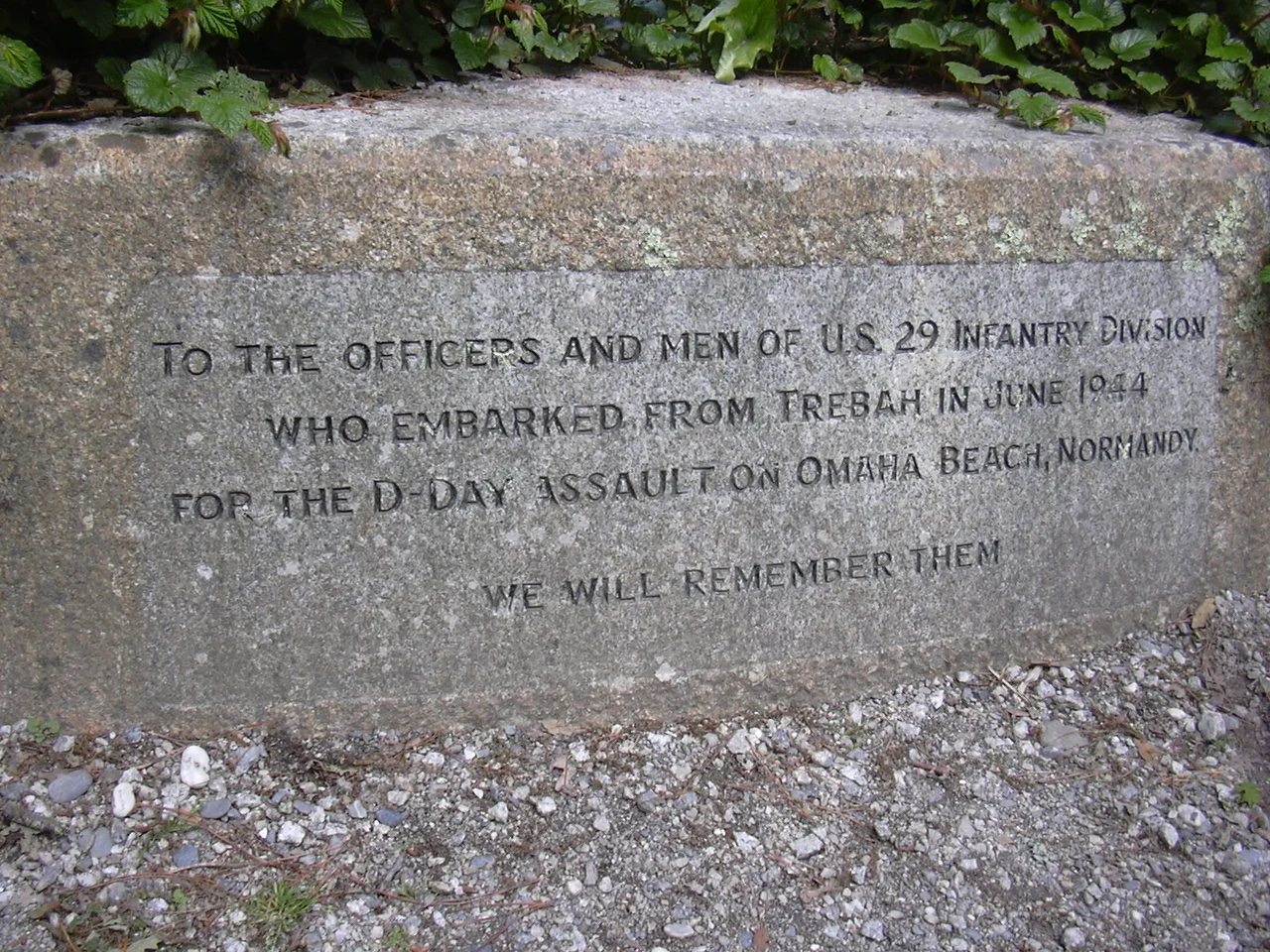
At the foot of the garden, half-buried in the shingle, a memorial slab reads: "To the officers and men of the U.S. 29th Infantry Division, who embarked from Trebah in June 1944 for the D-Day assault on Omaha Beach. We will remember them." Above it, a 26-acre ravine drops 200 feet to the Helford River through tree ferns and giant gunnera, leaves the size of dining-room tables, hydrangeas glowing blue beneath rhododendron canopies. It is one of the strangest juxtapositions in the English landscape. A sub-tropical pleasure garden, planted with Quaker precision, that also happened to be the launching ramp for some of the bloodiest hours of the twentieth century.
A Quaker's Garden
Trebah was acquired in 1831 by the Fox family, the same Falmouth Quakers who built neighbouring Glendurgan. The first true gardener here was Charles Fox, a Quaker polymath who paid meticulous attention to the exact position of every tree, walking the ravine with sight-lines and shadows in mind. His son-in-law Edmund Backhouse, a Member of Parliament for Darlington, carried the work on. Cornwall's mild Atlantic air, with its rare frosts and steady rain, lets things grow here that have no business growing in England. Tree ferns shoulder up like green umbrellas. Bamboo arches in dim corridors. The Gunnera manicata in the valley bottom, sometimes called giant rhubarb, throws leaves taller than a person, and an old photograph from the garden shows a single Gunnera plant standing six and a half feet high. In 1907 the Hext family bought the estate, kept extending it under Alice Hext until her death in 1939, and then the place fell silent.
Polgwidden Beach, June 1944
By 1943 the United States Army's 29th Infantry Division had taken over the lower garden. The lawns were buried under concrete. Embarkation hards were laid through the ravine down to Polgwidden, the small private beach below. In early June 1944 around 7,500 American soldiers loaded onto landing craft here and slid out along the Helford River toward the open Channel. They were bound for Omaha Beach. The 29th, drawn largely from Virginia and Maryland National Guard regiments, made the first wave at Vierville and Dog Green sector. Many of the men who walked through these ferns and palms did not come home. Donald Healey, the motor-car designer who later owned Trebah, removed many of the concrete military structures and added a boathouse. The Hext family's memorial slab remained.
Major Hibbert's Twenty-Four Years
In 1981, on their 64th birthday, Tony Hibbert and his wife Eira bought Trebah as a retirement home. The garden had been derelict for four decades. They were persuaded to spend the first three years of retirement restoring it. Major Hibbert, a former British Army officer, agreed reluctantly. The three years became twenty-four. Hibbert later wrote that the decision "has given us the happiest twenty-four years of our lives and had we not taken up the challenge we'd have been dead long ago of gin poisoning and boredom." The gates opened to the public in 1987. By 1989 visitor numbers reached 36,000. In 1990 the Hibberts handed the whole estate to a registered charity, the Trebah Garden Trust, ensuring the ravine they had pulled back from the brambles would outlive them.
What Grows Now
Walk down the path today and the ravine unfolds in layers. Rhododendron hedges, magenta in spring, give way to the Bamboo Garden, then to the Gunnera jungle around the small stream, then to a clear blue tunnel of hydrangeas the Hibberts called the Hydrangea Valley. Tree ferns lean across the path with the casual menace of a Jurassic illustration. At the bottom, the garden opens to Polgwidden Beach and the silver line of the Helford River curling toward the open sea. A 1.94 million pound Heritage Lottery Fund grant in 2000 paid for the Hibbert Centre and rebuilt Alice Hext's garden seat. Standing at that seat now, looking down the ravine to the beach, you can see the entire arc at once: Cornish copper money planting a Victorian fantasy, the fantasy filled in with concrete and steel for one terrible month in 1944, the concrete prised out again, the ravine reclaimed by ferns and a retired major who refused to die of boredom.
From the Air
Trebah sits at 50.104 N, 5.123 W on the south side of the Helford River, between Mawnan and Durgan. The ravine runs roughly southeast toward Polgwidden Beach. Neighbouring Glendurgan Garden lies less than a kilometre to the east. The Helford River makes a clear navigation feature. Nearest airport is Newquay (EGHQ), about 31 nautical miles north. Land's End Airport (EGHC) is around 32 nm west-southwest. Best viewed below 2,000 feet AGL.
Nearby Stories
- Morvah 2.9 km away
- Carnewas and Bedruthan Steps 6.1 km away
- Liskeard 7.5 km away
- Battle off Lizard Point 14 km away
- Polperro 17 km away
- MV Cita 47 km away
- HMS Affray 86 km away
- 1979 Fastnet Race 96 km away