
Trikora
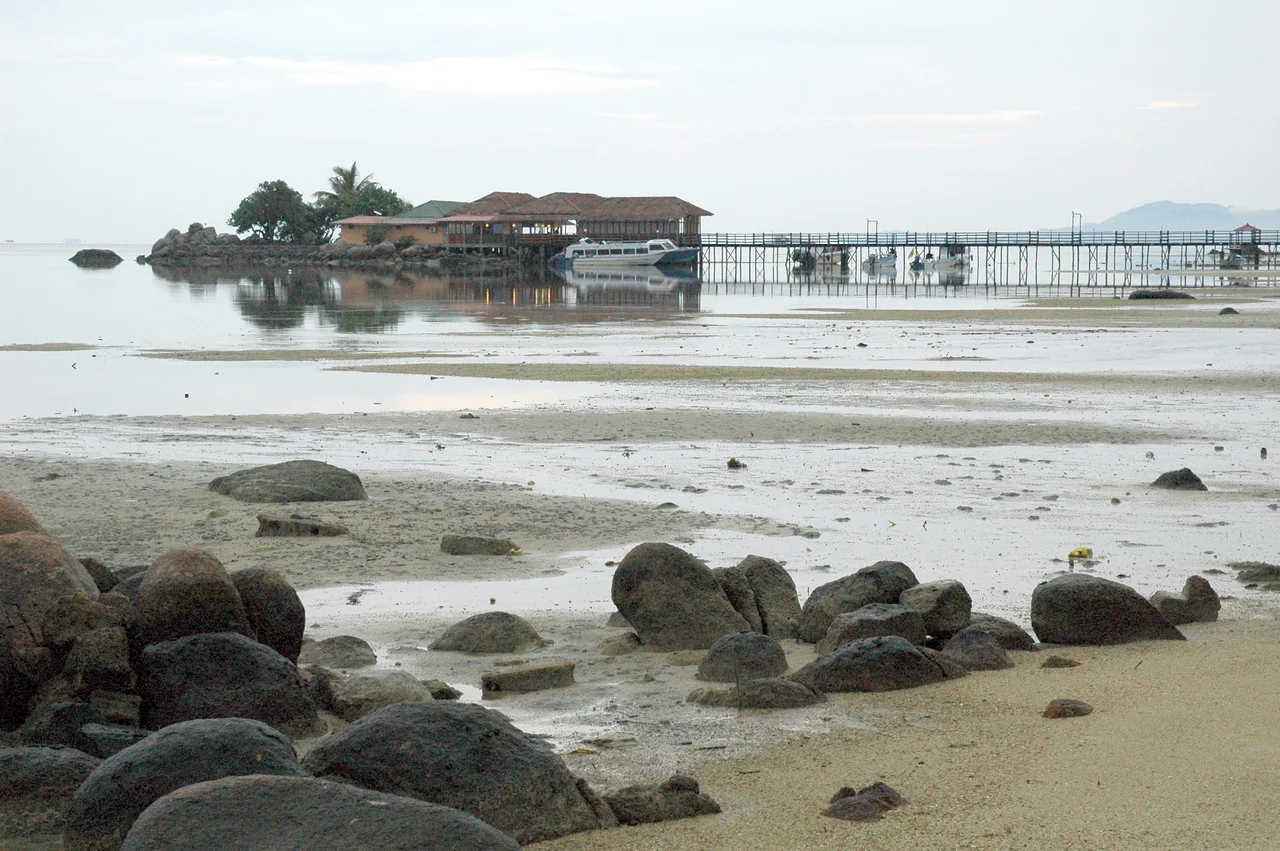
Count the beaches in Indonesian: satu, dua, tiga, empat. That is how Trikora names its stretch of coast on the northeast side of Bintan Island - four beaches in sequence, numbered rather than named. Trikora Empat, the fourth and northernmost, is the one most people mean when they say they're going to Trikora. It sits right against the border with the Bintan Resorts enclave where Singaporean weekenders lounge, but the Trikora side has a different feel - basic shelters you rent from food sellers, backpacker bungalows built over the water, and monsoon seasons strong enough to prohibit swimming. The name itself comes from somewhere else entirely: Tri Komando Rakyat, the Indonesian military campaign of 1961 that eventually brought western New Guinea into the republic.
Before the Resorts
Until about 2000, the only tourist activity along Bintan's east coast was here, at Trikora Beach. Local day-trippers came from Tanjung Pinang, the main port at the island's south end. Foreign backpackers came from Singapore, which is close enough that you can see the skyline on clear days from parts of Bintan's north coast. They stayed in rustic bungalows like the Nostalgia Yasin Bungalow near the 38-kilometer mark, where a two-person hut built out over the water cost about S$34 a night and a plate of good nasi goreng ran 12,500 rupiah. The backpacker scene has faded since. Larger developments have moved into the coast, taking some of the foreign traffic elsewhere, but Trikora remains what it was - a place for beach-lovers who prefer sand without crowds.
Tides, Tar, and Sand Flies
Trikora rewards patience. The tides here are strong enough that the lovely morning beach becomes afternoon mudflats, and the afternoon mudflats become evening beach, on a rhythm that will not accommodate your schedule. The beaches are also littered with tiny pockets of tar from ships that pass in the nearby shipping lanes - the kind that sticks to feet and hands and refuses soap. The locals know the trick: baby oil, or plain cooking oil, will lift it off. Sand flies are the other price of the quiet. They bite at sunrise and sunset and leave itchy welts that last days. Bring repellent. Bring more repellent than you think you need.
Kelongs and Fishing Boats
The stretch north of Ocean Bay Resort holds a working fishing village. In the mornings, fishermen motor out in houseboats so idiosyncratic they look, as one traveler put it, "uniquely Miyazaki-inspired." Kelongs - stilt fishing structures rising out of the shallows like water-bound treehouses - dot the coast. Some can be visited, and on a lucky day a fisherman will show you how he brings in his catch. Local sail-and-paddle fishing boats can be rented from fishermen for as little as Rp50,000 a day. The Southern islands, Pulau Kelong and Pulau Mantang, hold traditional fishing communities off the usual tourist path. Some trips there are arranged only through resorts like Loola. Others you negotiate at the harbor in Tanjung Pinang.
Kite Surfers and Coconut Climbers
The windy season runs August to September. Young Singaporean expats haul kite surfing gear across the strait to take advantage, since nobody rents it locally - you bring your own kite or you watch. Other months the activity list reads like a beach resort brochure worked up honestly: island hopping, jungle tours, kelong tours, sport fishing, picnicking, volleyball. The larger resorts rent snorkeling equipment. Mr. Lobo or Mr. Sularto - both well-known in the local backpacker scene - can arrange almost anything on short notice. Failing all else, the locals will happily teach you to climb a coconut tree, which is more difficult and more satisfying than it sounds.
The Name's Strange Origin
The word Trikora is not about the beach. It is a military acronym - Tri Komando Rakyat, "the People's Triple Command" - from a speech Indonesian President Sukarno gave on 19 December 1961 calling for the annexation of what was then Netherlands New Guinea. The resulting campaign ran for about a year, ending with the New York Agreement that transferred the territory to UN administration and then to Indonesia. The name stuck to things across the archipelago - streets, monuments, and, for reasons mostly forgotten by anyone currently sunning themselves on Trikora Empat, a sequence of four backpacker beaches on Bintan's east coast. The tide will go out. The mudflats will glisten. The history will remain embedded in a name most visitors never think to translate.
From the Air
Coordinates given as 2.52 degrees south, 140.74 degrees east, though the described Trikora beaches sit on Bintan Island in the Riau Archipelago at approximately 1.0 degrees north, 104.5 degrees east. Bintan sits just south of Singapore, served by Raja Haji Fisabilillah International Airport at Tanjung Pinang (WIKN / TNJ). From altitude, Bintan reads as a lozenge-shaped island between Singapore and the Lingga Archipelago, with the east coast facing the South China Sea. The Trikora beaches run along the northeastern shore north of the town of Kawal. Monsoon winds turn the sea rough August through September, then again November through February.
Nearby Stories
- Battle of Driniumor River 119 km away
- Aitape 131 km away
- Foja Mountains 132 km away
- Battle of Wakde 145 km away
- Baliem Valley Campaign 193 km away
- Merpati Nusantara Airlines Flight 9760D 212 km away
- Battle of Lone Tree Hill 250 km away
- HMS Nabaron 619 km away