
Truro
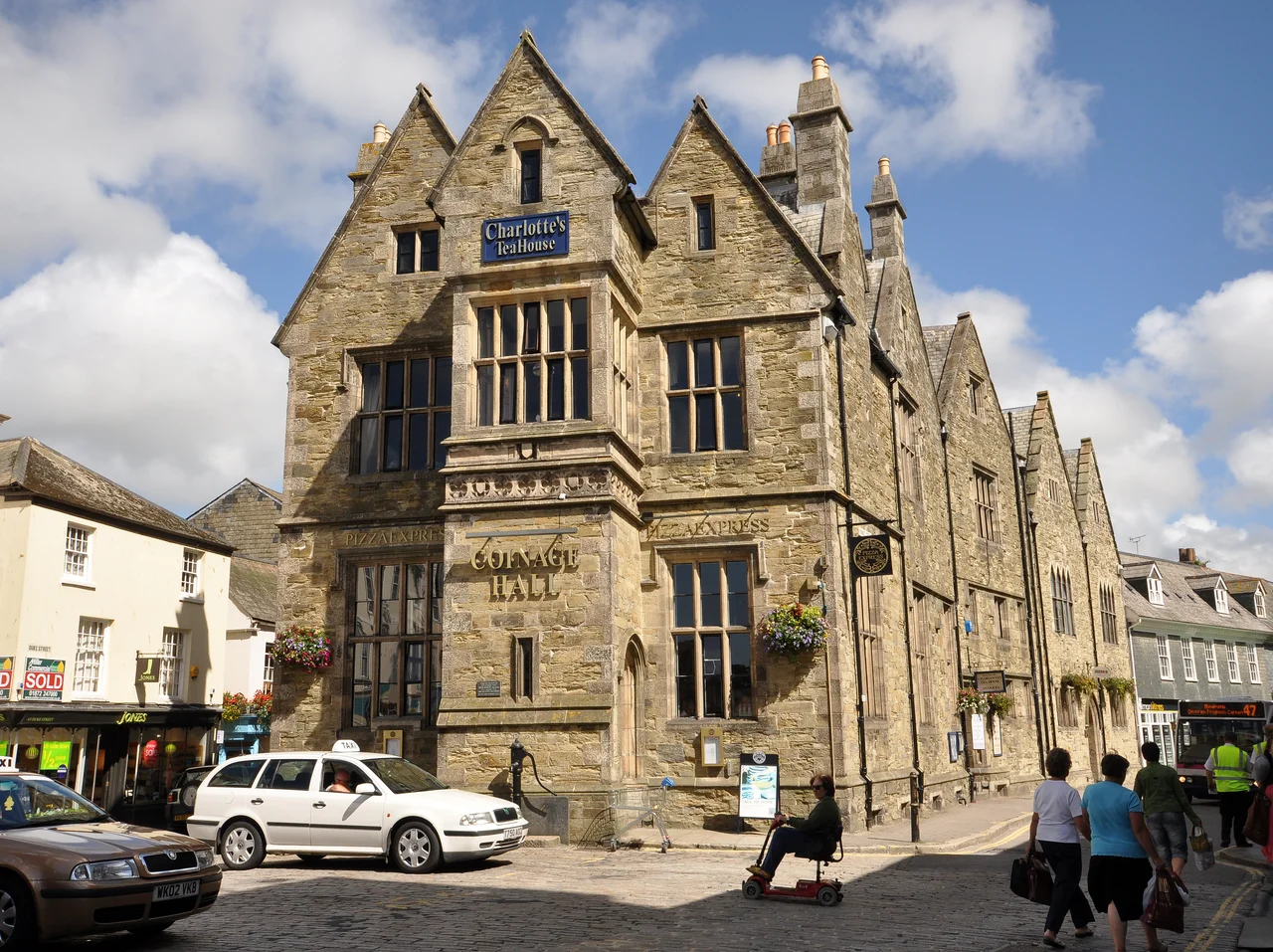
On a January night in 1646, with General Fairfax's Parliamentary army pressing through the West Country, the Royalist commanders at Truro made their last calculation. The garrison had raised a sizeable force for Charles I. Truro's mint had stamped the king's coinage. Now the cause was lost. The senior officers, Lord Hopton, the Prince of Wales, Sir Edward Hyde and Lord Capell, slipped down to Falmouth and across to Jersey. The town that bears the title of Cornwall's only city has spent a very long time being the place where Cornwall's biggest decisions get made and then unmade. It is the southernmost city in the United Kingdom, sitting 232 miles west-southwest of London, in a steep bowl where two rivers, the Kenwyn and the Allen, become the Truro and then the Fal.
Three Rivers, Three Streets
The name Truro may come from the Cornish tri-veru, meaning "three rivers," though Oliver Padel and the Oxford Dictionary of English Place-Names have always thought that derivation possible rather than certain. Other readings give "the town on the rivers," "the town on the Roman road," or "three streets." Whatever its etymology, the settlement grew below a small adulterine castle built around 1139 by Richard de Luci, Chief Justice of England under Henry II, who styled himself "Richard de Lucy, de Trivereu." The 75-foot castle motte was already ruined by 1270 and finally levelled in 1840. The Crown Court now stands on its footprint. People from Truro are called Truronians. By the 14th century Truro was a major port, an inland sanctuary from coastal raiders, prosperous from fishing and from its status as a stannary town where tin and copper were assayed and stamped before export.
The London of Cornwall
The Black Death gutted Truro and the recovery took centuries. The Tudor years rebuilt the place. In 1589 Elizabeth I issued a new charter granting an elected mayor and control over the port of Falmouth, which began a rivalry the two towns settled only in 1709, splitting the River Fal between them. In the 18th and 19th centuries Cornish tin and copper made fortunes again, and the wealthy mine-owners poured the proceeds into Truro. Walk along Lemon Street today and you walk past terraces of Georgian and Victorian townhouses named for Sir William Lemon, the mining magnate and MP. Some sources call these the finest examples of Georgian architecture west of Bath. The town styled itself "the London of Cornwall," and county society followed. Notable Truronians of this period include Richard Lander, the first European to reach the mouth of the Niger and the first recipient of the Royal Geographical Society's gold medal; Henry Martyn, who translated the New Testament into Urdu and Persian; and Humphry Davy, educated in Truro, who later invented the miner's safety lamp.
City Status, 1877
Truro was made a city by Queen Victoria in 1877, the year after the Diocese of Truro was created. The Gothic Revival cathedral that defines the skyline rose between 1880 and 1910 over the bones of the parish church of St Mary, whose south aisle was kept on as St Mary's Aisle and is still the city-centre parish church. The cathedral's central tower reaches 250 feet above the city. It was here, on Christmas Eve 1880, in a temporary wooden building, that Bishop Edward White Benson invented the Nine Lessons and Carols service that the world now associates with King's College, Cambridge. The 1988 floods, when the Kenwyn and Allen burst into the city centre, prompted the construction of a flood defence and tidal barrier that now guard the lower streets. The Pannier Market continues a tradition centuries old. The Hall for Cornwall stages theatre and music in a Georgian building on Boscawen Street. Cornwall Council, the Royal Cornwall Museum and the Crown Court are all based here.
Living in the Bowl
Cornwall Council moved to Truro from Bodmin in 1889, and although Bodmin held the Assizes until 1972, Truro has been the seat of Cornish government for more than a century. About 21,000 people live in the parish itself, with a built-up area closer to 23,000. About 22,000 jobs sit inside the city limits but only 9,500 working residents, which is why the A30 and A390 fill up at rush hour with commuters from the rest of the duchy. The valleys around Truro hold parklands, salt marsh, the historic gardens of Trelissick and Tregothnan, and the Cornwall Area of Outstanding Natural Beauty. Down the Truro River, the Enterprise Boats service runs to Falmouth four times a day, tide permitting, calling at Malpas, Trelissick, Tolverne and St Mawes. A 28-metre stone viaduct, completed in 1904 to replace Brunel's wooden Carvedras Viaduct, carries the Cornish Main Line over the river toward Penzance, the city ringed by green slopes, the three cathedral spires rising over slate roofs in a bowl that has been doing this for nearly nine hundred years.
From the Air
Truro lies at 50.264 N, 5.051 W in the steep river bowl of west-central Cornwall, about 9 miles inland from the south coast. The three spires of Truro Cathedral are the dominant landmark, with the central spire reaching 250 feet. The Truro River runs southeast from the city to join Carrick Roads, the great natural harbour at Falmouth. Nearest airport is Newquay (EGHQ), about 11 nautical miles to the north-northeast. Best viewed 2,000 to 4,000 feet AGL.
Nearby Stories
- Morvah 2.9 km away
- Carnewas and Bedruthan Steps 6.1 km away
- Liskeard 7.5 km away
- Battle off Lizard Point 14 km away
- Polperro 17 km away
- MV Cita 47 km away
- HMS Affray 86 km away
- 1979 Fastnet Race 96 km away