
Tumebamba
The stones came north over 1,600 kilometers of Andean road. Four hundred and fifty of them, each weighing as much as 700 kilos, quarried near Cuzco and dragged across mountain passes by conscripted labor - no wheels, no draft animals, just ropes and men and the order of Huayna Capac. The Inca emperor wanted his new capital built of Cuzco stone. The place he had chosen, Tumebamba, sat at the north end of his empire in what is now southern Ecuador. He intended it to rival and eventually replace the old capital. He died before it could. And then, in the civil war that followed, the city he built was burned.
Knife Field
Tumebamba - sometimes spelled Tomebamba, pronounced something like Tumipampa in the Kichwa original - means 'Knife Field' in the Inca tongue: tumi for knife, pampa for plain. Before the Incas arrived, the place was called Guapondelig and belonged to the Canari, a people who had lived in these Andean valleys for at least 500 years before any Inca set foot there. The Canari did not surrender easily. It took Topa Inca Yupanqui, Huayna Capac's father, a series of long campaigns to subdue them starting in the 1470s. Even after conquest, the valley was valuable enough that the Incas did not just garrison it; they rebuilt it. Huayna Capac was probably born in Tumebamba, and when he became emperor in 1493 he made the place his great project.
An Empire Moves North
What Huayna Capac envisioned for Tumebamba was unprecedented. He wanted a second Cuzco. Not just an administrative outpost, but a true imperial capital, complete with the temples and plazas that structured the spiritual life of the empire. This is why the stones came from so far south. Spanish chroniclers recorded the story of the stone transport, and for centuries skeptics dismissed it. Then in 2004 archaeologists matched geological signatures on building blocks found in Ecuador to a specific quarry near Cuzco, confirming the impossible. As one scholar put it, the stones embodied the transfer of sanctity and power from the imperial capital to Tomebamba - and their movement was, in itself, a public display of how much labor the empire could command.
The Civil War
Around 1525, something swept through the Inca heartland - probably a European-introduced disease, possibly smallpox or measles, carried ahead of the Spanish advance by native trade networks. Huayna Capac died of it. So did his chosen successor. What remained were two sons with competing claims: Huascar, based in Cuzco, and Atahualpa, who had been with his father's army in the north. The ensuing war tore the empire in half. Several of its battles were fought near Tumebamba. The Canari, still remembering their own long resistance to the Incas, sided with Huascar. They chose wrong. When Atahualpa's forces took the city, the Canari were punished severely, and Huayna Capac's northern capital - his entire architectural project - was largely destroyed. Then Pizarro landed.
Cuenca on Top
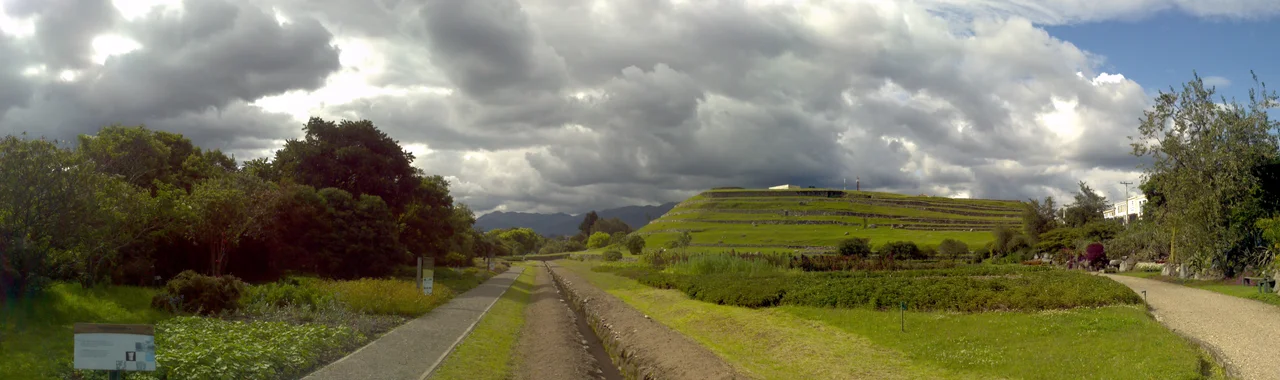
When the Spanish chronicler Pedro Cieza de Leon passed through in 1547, barely fifteen years after the Inca civil war ended, he looked at the ruins and wrote: 'Everything has crumbled and in ruins, but you can still appreciate how grand it was.' The Spanish built their own city, Cuenca, directly over the Inca site beginning in 1557. Most of Tumebamba disappeared under colonial construction. What remains visible today are two archaeological areas near the Tomebamba River, about 300 meters apart: Pumapunku (also called Pumapongo) and Todos Santos. Neither has the precisely-fitted, mortarless stonework that makes Cuzco famous. Archaeologists suspect the real imperial structures - the ones with the transported Cuzco stone - lie buried under modern Cuenca itself, impossible to excavate without demolishing a working city.
What the Spindles Say
At Pumapunku, excavators found spinning tools - whorls and small bone implements used to turn wool into thread. This fragment of evidence suggests the building may have housed aclla, the so-called 'chosen women' of the Inca empire, sequestered in institutional compounds where they wove ceremonial cloth and brewed chicha for state rituals. A large artificial pool, canals, and terraces at the site also echo Quispiguanca, Huayna Capac's royal estate near Cuzco in the Sacred Valley. The Pumapungo Museum and Archaeological Park now interprets the ruins for visitors; the adjacent Manuel Agustin Landivar Museum displays finds from Todos Santos. Together they tell a small fraction of the story of what Tumebamba was. The rest is under the streets of Cuenca, where people walk each day across the foundations of a capital their city made sure would never quite be.
From the Air
Coordinates 2.91 S, 79.00 W, elevation roughly 2,560 meters in the southern Ecuadorean Andes. Tumebamba's archaeological sites sit within the modern city of Cuenca, adjacent to the Tomebamba River on the southeastern edge of the historic center. From 8,000-10,000 feet the river gorge is a distinctive feature cutting east-west through the city. Nearest airport is Mariscal Lamar (SECU/CUE) just north of central Cuenca. Andean climate, with afternoon convection common year-round; mornings typically clearest.
Nearby Stories
- Ingapirca 12 km away
- Cueva de los Tayos 27 km away
- 2023 Guayas earthquake 39 km away
- El Guabo Canton 43 km away
- Battle of Yaguachi 56 km away
- Saraguro People 62 km away
- Eastern Cordillera Real Montane Forests 85 km away
- Borja, Peru 173 km away