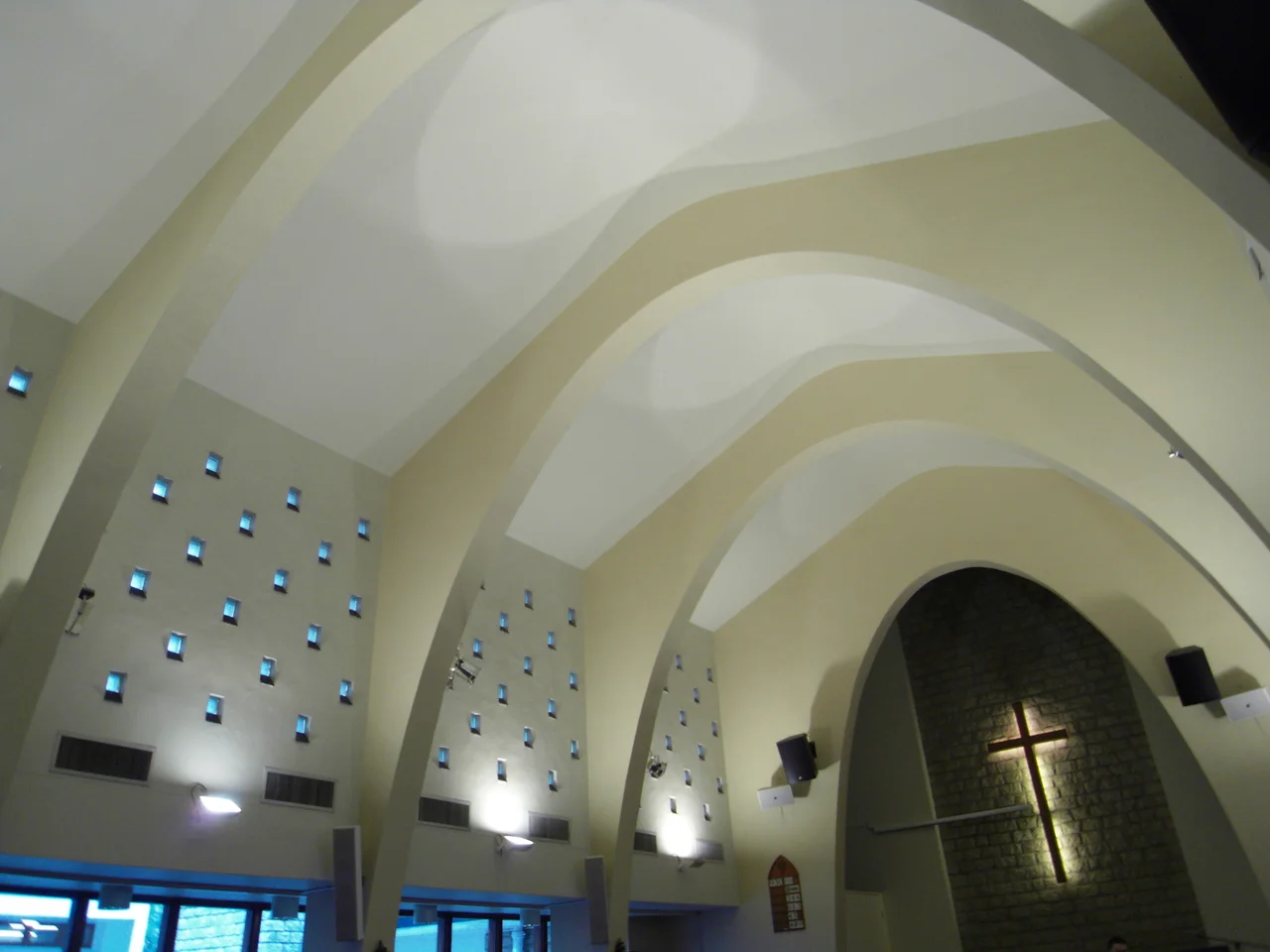

Union Church, Hong Kong
James Legge arrived in Hong Kong in 1843, a year after the British flag was raised, carrying two roles that sat uneasily together: Christian missionary and obsessive scholar of Chinese classical literature. Within a year, he had founded a congregation. What is less obvious is that this same man would spend the next half-century translating the Chinese classics — the Confucian texts, the Tao Te Ching, the I Ching — into English with a rigor that made him the preeminent Western sinologist of his era. Union Church, the institution he founded, outlived its founder by more than a century and a half. It did so by moving four times, surviving a war, and finally rising again in a new building on the same Kennedy Road hillside where it had stood for nearly a hundred years.
The Scholar Who Built a Church
James Legge was born in Huntly, Scotland, in 1815, and came to Hong Kong through the London Missionary Society. He served as pastor of Union Church from 1844 to 1867, and again from 1870 to 1873 — two terms that bracketed a return to Britain and the beginning of his most intensive translation work. The church he founded in 1844 was called Union Chapel and stood on Hollywood Road, the first of what would become four generations of buildings.
Legge's scholarly career eventually led him to Oxford, where he became the first professor of Chinese at the university in 1876. His translations of the Chinese classics — running to dozens of volumes in the Sacred Books of the East series — remained standard references for decades. The church he founded and the scholarship he pursued were not as separate as they might appear: both were attempts to understand, in different registers, what held human communities together across time and difference.
Four Generations, One Congregation
The original Union Chapel on Hollywood Road quickly outgrew itself. By 1866, the congregation had moved to a new building at the corner of Staunton Street and Peel Street — the second generation. That building, too, became crowded, and in 1890 the church relocated again, to Kennedy Road in the Mid-Levels, a neighborhood of gradual hillside above Central and Admiralty. The third-generation building sat next to where the Peak Tram bridge crosses Kennedy Road.
The fourth-generation building on the same site opened in stages between 1949 and 1970, rebuilding from wartime damage. Its sanctuary and bell tower were completed in 1955; the Annex followed in 1970. That building stood until 27 August 2017, when the last service was held before demolition began. A fifth-generation building, developed in collaboration with Henderson Land Development and incorporating a residential tower above the church, now occupies the same address at 22A Kennedy Road.
Wartime and Internment
The Japanese occupation of Hong Kong, which began in December 1941 and lasted until August 1945, brought religious services at Union Church to a halt. The pastor at the time, Rev. Kenneth Mackenzie Dow, was interned at Stanley Internment Camp — the civilian internment facility on the southern tip of Hong Kong Island where thousands of foreign civilians, including children, were held under harsh conditions for the duration of the occupation.
Rev. Dow survived internment. The church building did not survive the occupation intact: it was severely damaged during the war years. Reconstruction was patient work. The rebuilt structure took shape in pieces — the main body of the building completed in 1949, the sanctuary and bell tower finished in 1955, the Annex added in 1970. Each phase represented not just reconstruction but continuity: the determination of a congregation to reassemble around the same site, the same community, the same faith.
Independence and the Long View
Union Church began as a ministry of the London Missionary Society, but it has long since become an independent congregation — interdenominational, English-speaking, governed by three boards: the Deacon's Court, the Committee of Management, and the Board of Trustees. That independence reflects the evolution of missionary Christianity in Hong Kong from colonial outpost to self-sustaining community.
The congregation that James Legge founded in 1844 has now met for more than 180 years, across four centuries by calendar and five buildings by count. It has outlasted the colony that gave it context. What persists — the English-language service, the interdenominational character, the hillside address in the Mid-Levels — is the thread connecting the scholar-pastor of the 1840s to the congregation still gathering today.
From the Air
Union Church sits at 22.27611°N, 114.15811°E on Kennedy Road in the Mid-Levels, a residential hillside area above Central on Hong Kong Island. From the air at 3,000–5,000 feet, the Mid-Levels are identifiable as the dense low-rise zone between the glass towers of Central and the green slopes rising toward Victoria Peak. The Peak Tram route — a useful visual marker — crosses Kennedy Road near the church's location. Hong Kong International Airport (VHHH) is approximately 23 miles to the northwest. The harbor and the Kowloon peninsula are visible to the north.
Nearby Stories
- Lok Ma Chau Loop 2.3 km away
- Portas do Cerco 2.3 km away
- Kweilin Incident 17 km away
- Wanshan Archipelago Campaign 34 km away
- Nanxiong Formation 115 km away
- Battle of Nanpeng Island 148 km away
- Heyuan 169 km away
- Cape Maobitou 632 km away