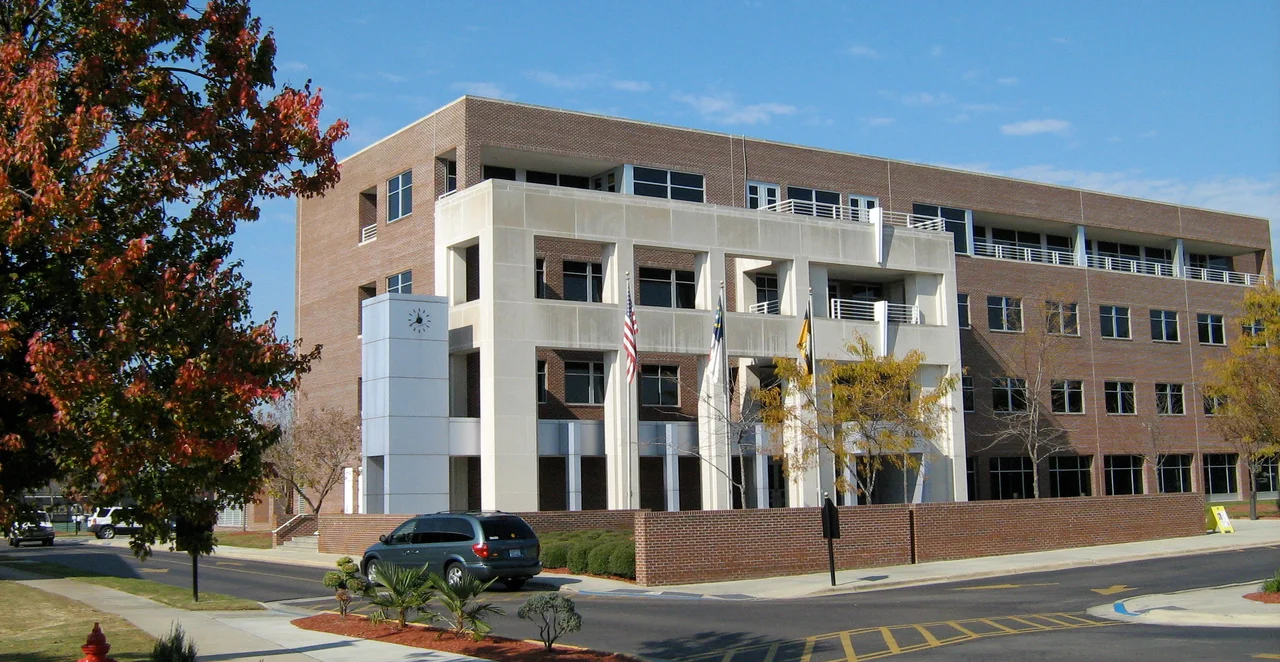

University of North Carolina at Pembroke
It opened in 1888 with one teacher and fifteen students. The act creating it had passed the General Assembly the previous March, sponsored by a state representative from Robeson County named Hamilton McMillan, a man who had spent years researching the Native American communities of his district. The school's first name — Croatan Normal School — reflected McMillan's theory that the Lumbees were descended in part from the Lost Colony of Roanoke. The theory has not held up. The school has. For 138 years it has done what it was founded to do: educate the children of a people who, in 1887, could not legally attend any other public school in the state.
A School Born of a Petition
In the post-Reconstruction South, North Carolina ran segregated public schools for white and Black students. Lumbee children were not legally allowed in either system. Some attended church schools, some attended schools the Lumbee community organized themselves with no public funding, most attended no school at all. In 1887 a local petition went to Raleigh asking for state support of a teachers' college that would train Lumbee teachers to staff the schools the community had been forced to build alone. Hamilton McMillan carried the bill. The legislature, in a moment of pragmatism mixed with paternalism, agreed: $500 in start-up funds, no land grant, no buildings. The community had to raise its own money to build a wooden schoolhouse in the village of Pates. One teacher. Fifteen students. The first class of Native American teachers in the state of North Carolina.
Five Names, One School
The school's name changed five times in its first hundred years, each change reflecting how the legislature was choosing to classify the people it served. Croatan Normal School (1887). Indian Normal School of Robeson County (1911). Cherokee Indian Normal School of Robeson County (1913) — during the brief period when the state called the Lumbees Cherokee. Pembroke State College for Indians (1941). Pembroke State College (1953), after admission was opened to non-Native students. Pembroke State University (1969). The University of North Carolina at Pembroke (1996). Until 1953 the school taught only Lumbee students. The current chancellor is Robin Cummings, who is Lumbee. The athletic teams are called the Braves, and because the institution was founded by and is governed in close partnership with the Lumbee Tribe, the name does not carry the controversy it would almost anywhere else in American sports.
Old Main
The building called Old Main has been at the heart of the campus since 1923, when it replaced a series of wooden classrooms that had served the school since the 1909 move from Pates. It is a red-brick, three-story structure with a portico and a clock tower, the kind of academic building that small Southern colleges built in the 1920s by the dozen — except this one is on the National Register of Historic Places and houses the Museum of the Southeast American Indian, one of the few American museums devoted specifically to Southeastern Native cultures. The collection includes contemporary Lumbee, Tuscarora, Catawba, and Cherokee work alongside historical artifacts. The museum's programming explicitly centers Native voices telling Native histories — an approach that until recent decades was rare in American institutions of any size.
What the Modern Campus Does
UNC Pembroke today serves 7,667 students across the College of Arts and Sciences, the College of Health Sciences, the McKenzie-Elliott School of Nursing, the Thomas School of Business, the School of Education, and a Graduate School. The school is repeatedly ranked among the most diverse regional universities in the South — and among the safest. Its 18-to-1 student-faculty ratio and small average class size make it a place that students stay at for the teaching, not the prestige. The Givens Performing Arts Center, on campus, has hosted Cory Booker, Bill Nye, Gabby Douglas, Hill Harper, and dozens of touring Broadway productions over the years. The Lumbee Hall administrative building, the Sampson Building, the Dial Humanities Building, the Oxendine Science Building — many of the names on campus belong to families whose roots in this place run deeper than the institution itself.
Notable Alumni and the Quiet Influence
Kelvin Sampson, now head basketball coach at the University of Houston and a former NBA assistant, played at UNC Pembroke as an undergraduate. Julian Pierce, the civil-rights attorney whose 1988 murder shook Robeson County, was a UNCP alumnus. Freda Porter, one of the first Native American women to earn a PhD in the mathematical sciences, graduated here. Charles Graham and Jarrod Lowery both served in the North Carolina House of Representatives. Derek Brunson became a UFC fighter. Pardon Ndhlovu, a Zimbabwean marathoner, ran for his country at the 2016 Summer Olympics — having earned his undergraduate degree at UNCP before going on to compete on the world stage. The university's alumni map runs in directions a small Sandhills school in a small Sandhills town has no business covering. That is the quiet legacy of a place that started with fifteen students and a question about whether anyone would teach them.
From the Air
UNC Pembroke sits in Pembroke, North Carolina, at 34.69°N, 79.20°W in Robeson County. The campus covers about 300 acres on the eastern edge of town. Nearest airports: Lumberton Municipal (KLBT) 12 miles southeast, Laurinburg-Maxton (KMEB) 15 miles west, and Fayetteville Regional (KFAY) 35 miles north. From altitude the campus shows as a distinct cluster of academic buildings around Old Main's red-brick rectangle with its clock tower, the Givens Performing Arts Center to the north, athletic fields to the south, and residence hall communities (Oak, Pine, Belk) on the west side. The Lumber River runs about a mile to the east of campus.
Nearby Stories
- Cheraw, South Carolina 8.6 km away
- Delta Force 17 km away
- Darlington County, South Carolina 20 km away
- Columbus County, North Carolina 23 km away
- Battle of Colson's Mill 32 km away
- Battle of Averasborough 33 km away
- 1958 Mars Bluff B-47 Nuclear Weapon Loss Incident 45 km away
- Sampson County, North Carolina 46 km away