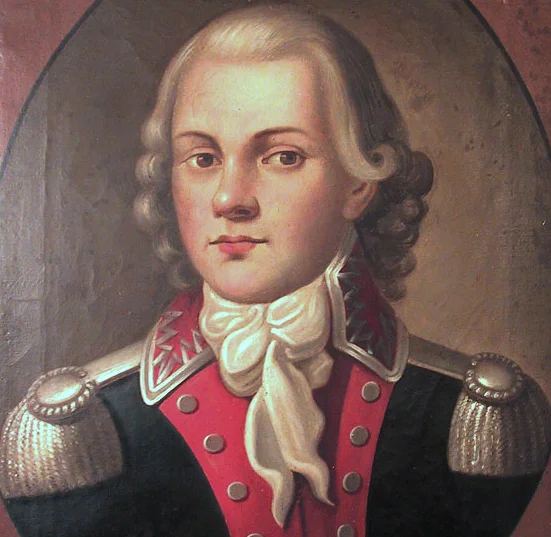

Vilnius Uprising (1794)
On the night of 22-23 April 1794, fewer than 400 Polish-Lithuanian soldiers under Colonel Jakub Jasiński moved against a Russian garrison of about 2,000 stationed in Vilnius. By morning the Russians were gone. Not a single rebel had died. The townspeople had joined the fight - some, the chronicles record, throwing stones from their windows when they had nothing else to throw. It was the kind of small, improbable victory that comes once in a generation, and it lit Lithuania's contribution to the Kościuszko Uprising. By August the Russians would return with 12,000 soldiers and cannons, and the city would fall. But for four months in the spring and summer of 1794, Vilnius was free.
The Night It Began
Tadeusz Kościuszko had launched his uprising in Lesser Poland in March 1794, declaring himself dictator of an insurrection meant to reverse the partitions that had carved up the Polish-Lithuanian Commonwealth. Vilnius received the news quickly - too quickly for Russian comfort. On the night of 11-12 April, Russian General Nikolay Arsenyev ordered the arrest of suspected rebels. On 21 April, Grand Lithuanian Hetman Szymon Kossakowski - the highest-ranking Lithuanian noble who had thrown his lot in with Russia - arrived in Vilnius and pressed for more arrests and for an attack on rebel forces gathering outside the city. Jasiński had run out of time. He moved that night. The fighting was short. The Russians, surprised in their billets and outmaneuvered in the narrow streets of the Old Town, surrendered or fled. By 24 April, the rebels controlled Vilnius.
An Act, a Council, a Hanging
On 24 April the rebels announced the Act of Rebellion of the Lithuanian Nation, declaring formal unity with Kościuszko's uprising in Poland. The same day they established the High Temporary Council under Mayor Antoni Tyzenhaus and Józef Niesiołowski, Voivode of Novogrudok. The council had 31 members and split into committees for military, administrative, and treasury affairs. Jasiński became commandant of rebel forces in the Grand Duchy of Lithuania. On 25 April, Hetman Szymon Marcin Kossakowski - the same man who had urged the Russians to crack down a few days earlier - was hanged in Vilnius as a traitor to the Commonwealth. The execution was public. It was meant to be. The council was making clear that the new authority intended to be Lithuanian, not Russian-Lithuanian, and that the consequences for collaboration were now real.
Kościuszko Intervenes
On 4 June, Kościuszko - operating from headquarters far to the south - dissolved the High Temporary Council. He considered it too radical, too Jacobin in its language about social reform and the rights of peasants. He replaced it with the more cautious Central Office of the Grand Duchy of Lithuania. He also dismissed Jasiński, the man who had taken Vilnius in a single night, replacing him with General Michał Wielhorski. Jasiński accepted the demotion and continued to fight - eventually dying that November defending Praga, the Warsaw suburb, when Russian forces under Suvorov stormed it. The dismissal of Jasiński and the council remains controversial. Lithuanian historians have argued that Kościuszko, focused on Poland and uneasy with the political character of the Vilnius leadership, weakened his eastern flank when he could least afford it.
Defending the Indefensible
Through July and August, Vilnius prepared for the inevitable Russian return. Even the city's nobility - not a class accustomed to manual labor - dug defensive lines outside the walls. On 19 July, Russian General Gotthard Johann von Knorring attacked with 8,000 soldiers and several cannons. The city was defended by 500 regular soldiers and 1,500 armed members of the municipal militia. Two days of heavy fighting ended with the Russians repulsed. The defense had held against four-to-one odds. On 11 August, von Knorring came back with 12,000 men. General Antoni Chlewiński now commanded the defense. The fighting lasted one day. Vilnius capitulated on 12 August. The Kościuszko Uprising itself collapsed soon after, and the Third Partition of 1795 erased the Polish-Lithuanian Commonwealth from the map for 123 years.
What the Tomb Says
The Vilnius Uprising of 1794 is commemorated on the Tomb of the Unknown Soldier in Warsaw with the inscription "WILNO 22 IV - 13 VIII 1794." The dates encompass everything: the bloodless night when 400 rebels expelled 2,000 Russians, the council that ruled for forty days, the hanging of a hetman, the reluctant intervention of Kościuszko, and the two assaults that ended four months of independence. Jakub Jasiński, dead at Praga in November, became one of those Polish-Lithuanian patriots whose name still echoes in two national memories. The Lithuanian-language manifesto distributed in Vilnius in spring 1794 was one of the first political documents in the modern Lithuanian language - a small, almost accidental contribution to the language's survival through the long Russian century that followed. The independence of 1794 was a dress rehearsal. The performance came in 1918, and again in 1990. The script had been written in Vilnius, on a quiet April night.
From the Air
The 1794 uprising centered on Vilnius Old Town at approximately 54.667 degrees north, 25.317 degrees east. The defensive perimeter Vilnius rebels dug in summer 1794 ran around the medieval city core - today's UNESCO-listed Old Town. Vilnius International Airport (EYVI) is approximately 6 km south of the historical center.
Nearby Stories
- Trakai Island Castle 8.3 km away
- Dubingiai Castle 24 km away
- Battle of Vilnius (1915) 35 km away
- Lida Castle 49 km away
- Pažaislis Monastery 60 km away
- Mir Castle Complex 101 km away
- Grodno Ghetto 102 km away
- Minsk Ghetto 124 km away