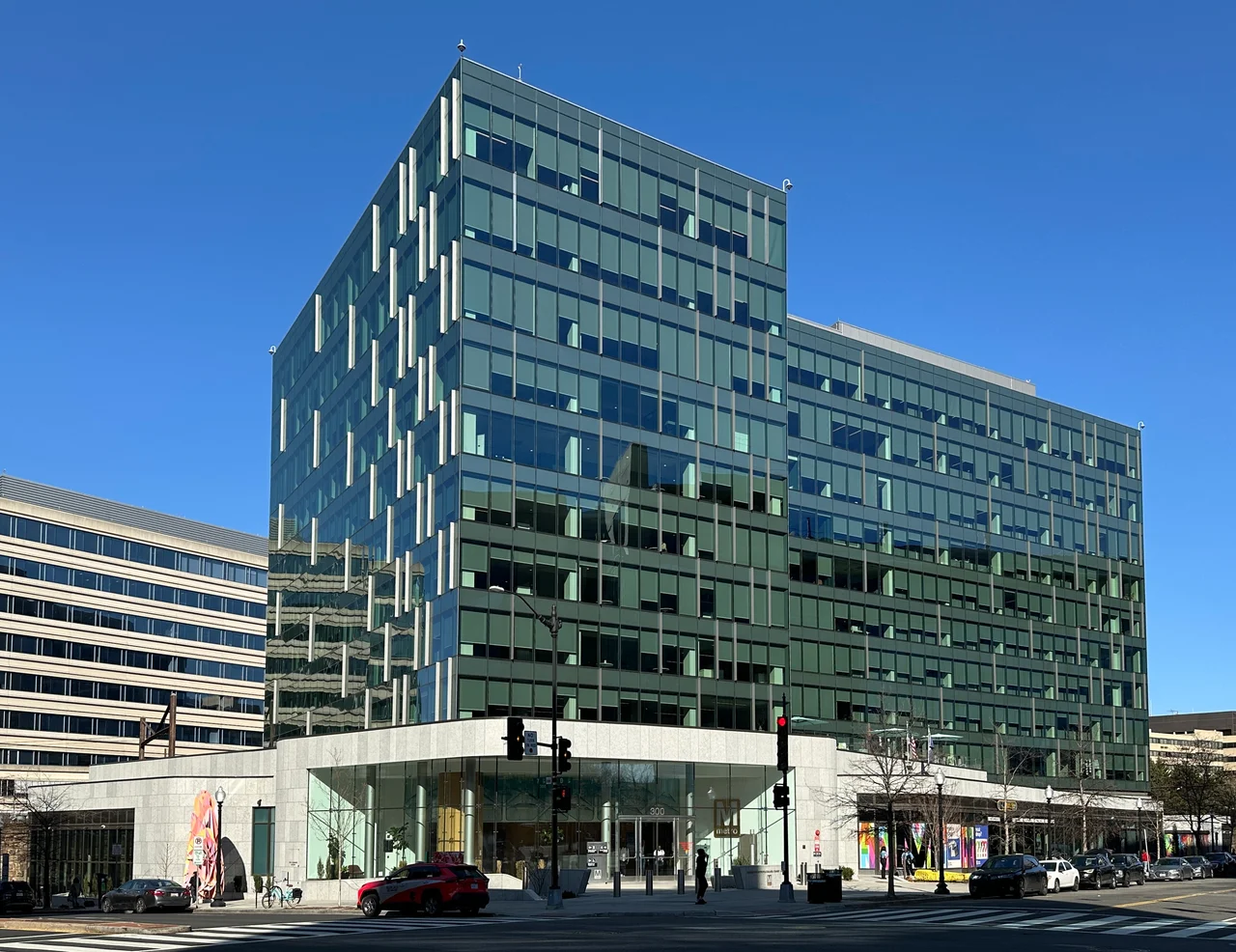

Washington Metropolitan Area Transit Authority
On June 22, 2009, at 4:58 in the afternoon, a Red Line train traveling north toward Glenmont struck a stopped train at full speed near the Fort Totten station. The lead car telescoped into the rear of the standing train. Nine people died. Eighty more were injured. It was the deadliest crash in the Washington Metro's history. The accident exposed years of deferred maintenance, an aging signal system that had been recommended for replacement four years earlier, and a culture of safety failures that the National Transportation Safety Board's investigation laid bare in painful detail. The Washington Metropolitan Area Transit Authority - WMATA - had been operating the country's third-busiest rapid transit system for thirty-three years. It would spend the next decade rebuilding its safety practices, its track system, and the public trust the crash had broken.
Three Jurisdictions, One Compact
WMATA exists because of an interstate compact - a legal instrument that requires approval from each participating state legislature and from Congress, used when neighboring jurisdictions need to operate a single shared institution. The Washington Metropolitan Area Transit Authority Compact was approved by Maryland in 1965, by Virginia in 1966, by Congress in 1966, and signed into law by Lyndon Johnson on November 6, 1966. WMATA formally came into existence on February 20, 1967. The board of directors has eight voting members and eight alternates: two voting and two alternates each from the District of Columbia (appointed by the D.C. Council), Maryland (appointed by the Washington Suburban Transit Commission), Virginia (appointed by the Northern Virginia Transportation Commission), and the federal government (appointed by the U.S. Secretary of Transportation, added to the compact in 2009 after the Fort Totten crash). The compact grants WMATA sovereign immunity in all three jurisdictions, meaning the authority cannot be sued without its explicit waiver. WMATA has no independent taxing authority. It depends on its member jurisdictions for capital and operating funding - a structural problem that has shaped every financial crisis in its history.
Jackson Graham's Subway
Construction broke ground on December 9, 1969, with retired Army Corps of Engineers Major General Jackson Graham overseeing the project as WMATA's first general manager. Graham had supervised the construction of dozens of military and federal civil engineering projects during the Korean War and the Eisenhower administration. He brought military-engineering discipline to a system that required tunneling through ancient bedrock, swampy fill, and the constantly congested streets of the federal city. The first portion of the system opened on March 27, 1976, with five stations on the Red Line between Farragut North and Rhode Island Avenue. The Blue Line followed in 1977. The Orange Line opened in 1978. The Yellow Line in 1983. The Green Line in 1991 (initially to U Street, with the Branch Avenue extension completed in 2001). The Silver Line - built largely on existing surface alignments along the Dulles Access Road - opened to Reston Town Center on July 26, 2014, and was extended to Dulles International Airport on November 15, 2022. The system currently operates 98 stations on six lines and approximately 129 miles of track. NoMa-Gallaudet (2004) and Potomac Yard (2023) are the only two infill stations - new stations added to existing lines.
Brutalist Cathedrals
The Metro's distinctive station architecture - vaulted concrete coffered ceilings, brutalist concrete platforms lit dramatically from above, broad central platform configuration in most underground stations - was designed by Harry Weese, a Chicago architect chosen in 1966 from a competition that included submissions from Eero Saarinen and Bruce Goff. Weese specified the coffered concrete vaults to express the engineering of the system honestly while creating spaces large enough to feel monumental. The vaults are 60 feet wide, 30 feet tall, and run the full length of each underground platform. Weese specified that the stations should have no advertising, no commercial concessions, no visual clutter - just the architecture, the trains, and the passengers. The American Institute of Architects honored the system with the 2014 Twenty-Five Year Award, recognizing its 'enduring significance' to American architecture. The stations are sometimes called America's most underrated cathedrals. They were intentionally designed to inspire civic pride and to make using public transit feel like an exercise in civic dignity rather than a chore.
Riding It Hard
By the late 1990s the Metro was carrying more than 700,000 weekday passengers - the third-busiest U.S. rapid transit system after New York and Chicago. The 2009 Fort Totten crash interrupted the trajectory. The 2015 L'Enfant Plaza fire, in which a train stopped in a smoke-filled tunnel and a passenger died of smoke inhalation, exposed further safety failures. The Federal Transit Administration took over direct safety regulation of WMATA in 2015 - the first time the federal government had directly regulated a state-level transit authority since FTA's creation in 1991. General Manager Paul Wiedefeld, appointed in November 2015, instituted SafeTrack - a 24-month emergency maintenance program that closed sections of the system for weekend and weeklong shutdowns to rebuild track that had been deferred for two decades. The 24/7 closures were unpopular. They worked. Ridership crashed during the SafeTrack period, then began to climb. The COVID-19 pandemic crashed it again in 2020. Wiedefeld resigned in May 2022 after WMATA disclosed that half its train operators had missed required retraining. General Manager Randy Clarke, brought from the Austin transit authority, took over in summer 2022. By 2024 ridership had recovered to pre-pandemic levels, the Washington Post's reader poll gave the Metro its highest approval rating in a decade, and the safety incident rate had fallen to its lowest level since the early 2000s.
Metrobus, MetroAccess, and the Transit Police
Beyond the rail system, WMATA operates Metrobus - 1,500 buses on more than 269 routes serving the entire metropolitan area, carrying approximately 460,000 weekday passengers. The Metrobus system grew from WMATA's 1973 takeover of D.C. Transit (the bankrupt successor to the old Capital Transit Company) and Washington, Virginia and Maryland Coach. MetroAccess provides paratransit service for riders who cannot use the regular bus or rail system because of disability. The Metro Transit Police Department - WMATA's own sworn law enforcement agency - has full police powers within the system's jurisdiction across the District, Maryland, and Virginia. Coordinating regional transit is part of the compact's original mandate: WMATA also issues the SmarTrip farecard used across the metropolitan area's smaller bus systems (Ride On in Montgomery County, ART in Arlington, DASH in Alexandria, Fairfax Connector, and others) and serves as the central planning authority for transit in the entire National Capital Region. The whole arrangement - three jurisdictions, eight board seats, federal oversight, no taxing authority, perpetual budget arguments - somehow continues to work. Most days, six million people get where they are going.
From the Air
WMATA's headquarters sits at 38.8964 degrees N, 77.0212 degrees W, at 600 Fifth Street NW in the Penn Quarter neighborhood of Washington. From the air the Metro system is invisible (most of it is underground in the urban core) but the surface segments on the Silver Line (along the Dulles Access Road) and the Red Line (along the Beltway in Maryland) are visible as parallel rail alignments. Best viewed at 1,500 to 4,000 feet AGL; the headquarters lies within the Washington FRZ. Nearest airports are Ronald Reagan Washington National (KDCA) 3 nm south, College Park (KCGS) 7 nm northeast, and Washington Dulles (KIAD) 23 nm west - the last of which is now connected to the Metro system via the Silver Line extension that opened in November 2022.
Nearby Stories
- Gunston Hall 1.1 km away
- 2023 Baltimore Shooting 4.9 km away
- Battle of Middleburg 6.6 km away
- Crownsville Hospital Center 10 km away
- Battle of Loudoun Heights 13 km away
- First Battle of Rappahannock Station 20 km away
- Howard County, Maryland 21 km away
- Harriet Tubman Underground Railroad 50 km away