
Welsh Football Museum
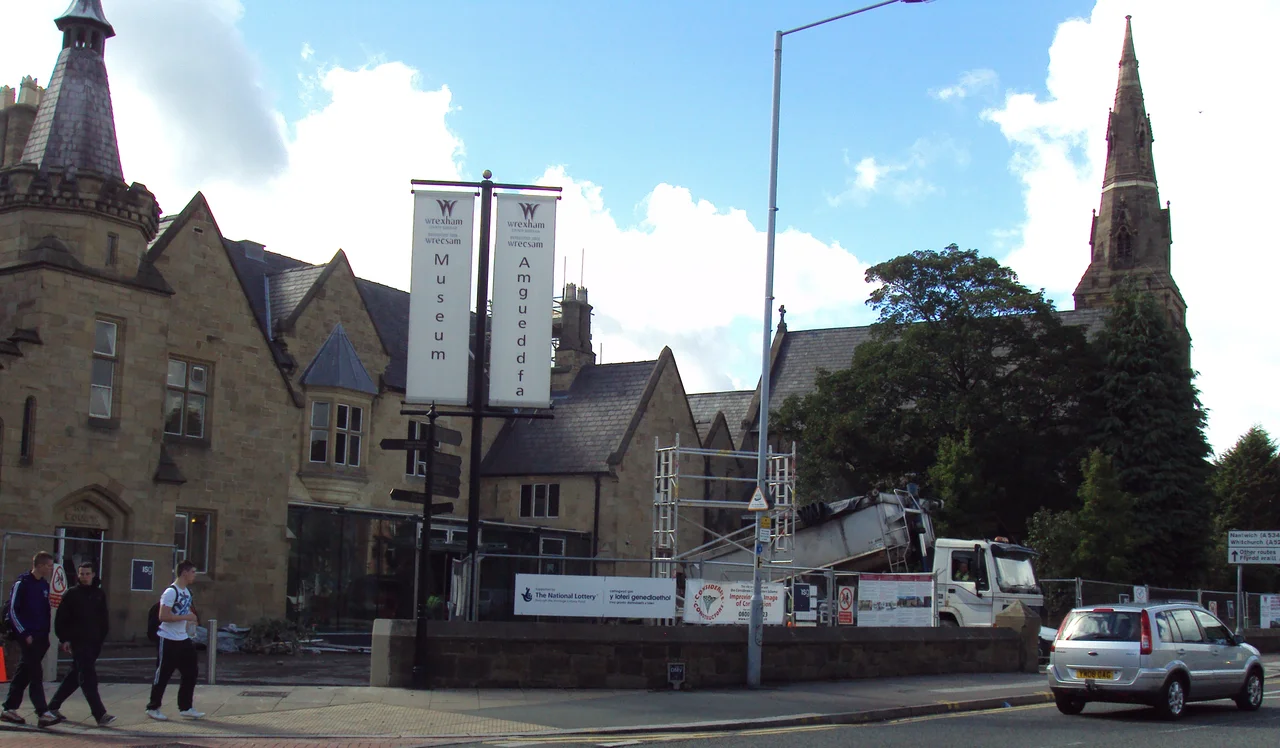
The Football Association of Wales was founded in a hotel on Wrexham's High Street in 1876. For more than a century, the national museum that ought to have commemorated that history did not exist. Cardiff had a Sports Hall of Fame with 1,400 artefacts. Wrexham's local museum quietly accumulated 2,000 pieces of Welsh football memorabilia - the largest such collection in the country - without anywhere proper to display them. Politicians proposed a museum. Feasibility studies were commissioned. Powys County Council bid for it. By 2026, the Museum of Two Halves finally opens in the County Buildings on Regent Street, merging Wrexham Museum and the new football galleries in one Grade-II-listed Victorian building.
The Spiritual Home Argument
The case for Wrexham was straightforward and difficult to argue against. The Football Association of Wales was founded at the Wynnstay Arms on Yorke Street in 1876. Wrexham AFC, the city's professional club, was founded in 1864 - the oldest club in Wales and the third-oldest professional football team in the world. The Racecourse Ground, where they play, is the world's oldest international football stadium that still hosts internationals. The 2018 Welsh Government feasibility study used the phrase that stuck: Wrexham is the spiritual home of Welsh football. Goalkeeper Neville Southall - the most-capped Welsh outfield player of his generation, the Everton legend who became a relentless social-justice voice on Twitter in retirement - publicly backed Wrexham. The other serious bid came from Powys County Council, arguing for Newtown on the grounds that Newtown AFC was a founder member of the FAW and the town sits in geographic mid-Wales. In May 2019 Dafydd Elis-Thomas, the Deputy Minister for Culture, Sport and Tourism, named Wrexham as the preferred option. The decision was, by then, almost a formality.
Where to Put It
Choosing the city was simpler than choosing the building. Wrexham's Independent-Conservative executive board wanted the museum inside the existing County Borough Museum on Regent Street, repurposing partly vacant upper floors. Opposition councillors from Plaid Cymru and Welsh Labour argued instead for the Kop End stand at the Racecourse Ground itself - what could be more spiritually appropriate than displaying Welsh football history inside the world's oldest international football stadium? The council commissioned an independent consultancy report. The report backed the museum building. Wrexham AFC themselves said they preferred the Kop End free for revenue-generating facilities. By 2026 the Regent Street site is being refurbished to make use of the entire upper floor. Architects Purcell - the same firm that has worked on Westminster Abbey and St Paul's Cathedral - lead the design with Haley Sharp Design and MDA Consulting. The combined facility will be called the Museum of Two Halves: football galleries and local history galleries side by side, with shared cafe, shop and entrance.
What's in the Collection
The objects already exist. A football cap dating to 1899 was donated to the project in July 2021. The wider Welsh football collection includes match programmes, kit, photographs, trophies, and the long paper trail of an association that has operated continuously since 1876. The football museum officer, Nick Jones, came over from England's National Football Museum in Manchester. The Scottish Football Museum at Hampden Park provided peer expertise during planning. The 2024 Welsh Government funding of GBP 5.4 million confirmed what the 2021 Welsh Labour-Plaid Cymru cooperation agreement had promised: the project would happen. The themes named for the football galleries are deliberately broad - Welsh-language communities, fan culture, Black, Asian and Minority Ethnic communities, LGBTQ+ experiences. Not just trophies and lineups, but the social history of a small country's relationship with its national game.
Hollywood Made the Question Loud
The museum had been in slow planning for years before Ryan Reynolds and Rob McElhenney bought Wrexham AFC in February 2021 - the Welsh Government feasibility study predated the takeover by three years - but the documentary Welcome to Wrexham, the consecutive promotions, and the global attention that followed made the project's timing fortunate. By the time the Museum of Two Halves opens in 2026, the question of why Wales should have a national football museum is one almost nobody is asking. The City of Culture bid for 2029 builds on the same momentum. The football cap from 1899 will sit in a gallery a short walk from the hotel where the FAW was founded, in the city of the oldest club, the oldest stadium, and the most-watched lower-league team on Earth. The building is two halves. So, in a way, was the argument that led to it.
From the Air
The Welsh Football Museum sits at 53.05N, 3.00W inside the County Buildings on Regent Street, in central Wrexham. The Racecourse Ground - the world's oldest international football stadium - is about 600m north. From the air at low altitude the Racecourse's distinctive grandstand is the most obvious football landmark; the museum itself is a small Victorian municipal building visible by its position adjacent to Wrexham Cathedral. Nearest airports are Hawarden (EGNR, ~7nm north) and Liverpool (EGGP, ~22nm north). Cruise at 1,500-2,500 ft AGL.
Nearby Stories
- Lilleshall Abbey 5 km away
- RAF Hooton Park 5.5 km away
- Gwrych Castle 6.7 km away
- Knutsford 7.5 km away
- Battle of Blore Heath 9.7 km away
- Ysbyty Ifan 14 km away
- Powis Castle 15 km away
- Machynlleth 28 km away