
Welsh Mountain Zoo
Robert Jackson opened the Welsh Mountain Zoo on 18 May 1963 on a steep, wooded hillside above Colwyn Bay. Most zoos at the time were laid out in straight lines on flat ground; Jackson's was anything but. Visitors climb instead of stroll, looking up at the Irish Sea between the trees, then down again to find a Bactrian camel or a Sumatran tiger in a clearing. Thirty-seven acres of conifers and beech wood do half the work, the animals supplying the rest. Today the zoo is run by the Zoological Society of Wales, the conservation charity that took over in 1983, but its character still belongs to a naturalist who thought a zoo ought to feel like a mountain walk.
A Zoo Goes Vertical
The land Jackson chose climbs steeply from the coastal plain - a former hilltop estate called Flagstaff Gardens, with views all the way to the Great Orme and across to the Wirral on clear days. The contours forced a different kind of planning. Paths wind through woodland rather than crossing open lawn. Enclosures are tucked into clearings and against rock faces. Visitors gain and lose altitude all afternoon. The arrangement suits some species better than a flat zoo ever could - the snow leopards in particular, native to crags themselves, look as if they belong on the slope rather than in it. Jackson founded the place as a private venture, and it remained one until financial pressure led to the formation of the Zoological Society of Wales twenty years later.
Forty Years of Building
Once the society took over in 1983, the zoo grew in deliberate stages. Jungle Adventureland opened in 1986, the European otter enclosure in 1987. Chimpanzee World and the Children's Farm both arrived in 1990. Sea Lion Rock - one of the more theatrical additions, with daily feeding shows - opened in 2006, followed by Condor Haven in 2007, the Lemur Walkthrough in 2012, the Prytherch Himalayan Terraces for red pandas and otters in 2013, and Gibbon Heights in 2014. Each enclosure tries to use the slope rather than fight it; the lemurs in particular thrive in a walkthrough where visitors share the canopy. A planned tropical reptile house was begun in 2007 but quietly shelved in 2021, the money diverted to other priorities.
Snow Leopards and a Welsh Camel
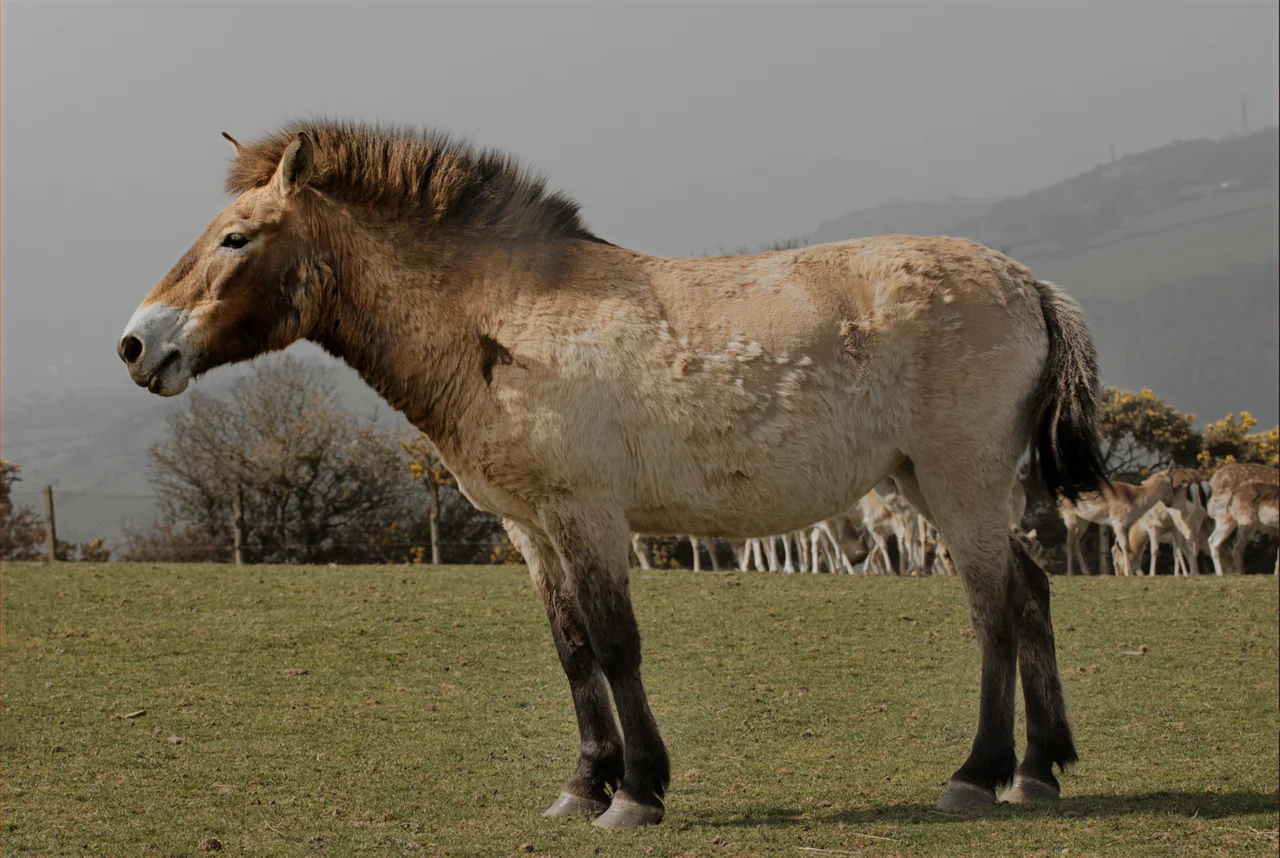
The headline arrivals came in 2006: a pair of endangered snow leopards, and the first Bactrian camel ever bred in Wales. Caracaras moved into the old condor aviary. Margays - small spotted cats from Central and South America - joined the collection around the same time. Today the mammal roster reads like a working atlas: African crested porcupines, Oriental small-clawed otters, California sea lions, common chimpanzees, cottontop and emperor tamarins, European brown bears, fallow deer, lar gibbons, Przewalski's wild horses, red-faced black spider monkeys, red-necked wallabies, red pandas, red squirrels, Sumatran tigers, and - inevitably, this being north Wales - Welsh mountain goats. The bird collection runs from Humboldt penguins to Andean condors, with macaws, ostriches, Chilean flamingos and a great grey owl scattered between.
The Conservation Argument
The zoo's working argument, like that of most modern zoos, is that it earns its keep through breeding programmes and education. Several species in the collection - snow leopard, Sumatran tiger, red panda, Przewalski's horse - are listed by the IUCN as endangered or critically endangered. Przewalski's horse, in particular, was extinct in the wild for decades; every individual alive today descends from twelve animals captured around 1900, and captive breeding kept the species going long enough for reintroductions on the Mongolian steppe to begin. The Welsh Mountain Zoo is not large enough to do this work alone, but it contributes animals and bloodlines to coordinated European studbooks. The Children's Farm and the daily keeper talks do the more local work: persuading a school-age visitor from Llandudno that a chimpanzee or a flamingo might be worth caring about.
A Day on the Hill
On a typical summer day, the queue forms early at the gates, then thins as families spread up the slope. The penguin feed draws a crowd at one end of the morning, the chimpanzees at the other. Children find the squirrel monkeys faster than their parents do. The cafe overlooks the bay, and on clear afternoons the view runs all the way to the Lake District. The zoo closes earlier than visitors expect - the keepers need light to settle the animals - but the last hour, when the heat has gone out of the day and most of the school groups have left, tends to be the best one. The cats stretch out. The gibbons call. The hill begins to feel less like an attraction and more like what Jackson intended back in 1963: a small piece of mountain, with creatures in it.
From the Air
The Welsh Mountain Zoo sits at 53.29 degrees north, 3.75 degrees west, on the hillside immediately south-west of Colwyn Bay. From the air, the wooded slope stands out clearly against the coastal town and the A55 expressway running along the seafront. Cruise at 2,500-4,000 feet for a sense of how the zoo nestles into the contours. Hawarden (EGNR) lies about 25 nautical miles east, Caernarfon (EGCK) about 25 nautical miles west. The Great Orme limestone headland is the unmistakable landmark to the immediate west.
Nearby Stories
- Caldy 1 km away
- Moelfre, Anglesey 1.2 km away
- Pen-yr-Orsedd Quarry 2.5 km away
- Ysbyty Ifan 7.5 km away
- Birkdale Palace Hotel 9.5 km away
- Wrexham County Borough Museum 12 km away
- Celtic Array 22 km away
- Southport Lifeboat Station 45 km away