
Westmalle Abbey
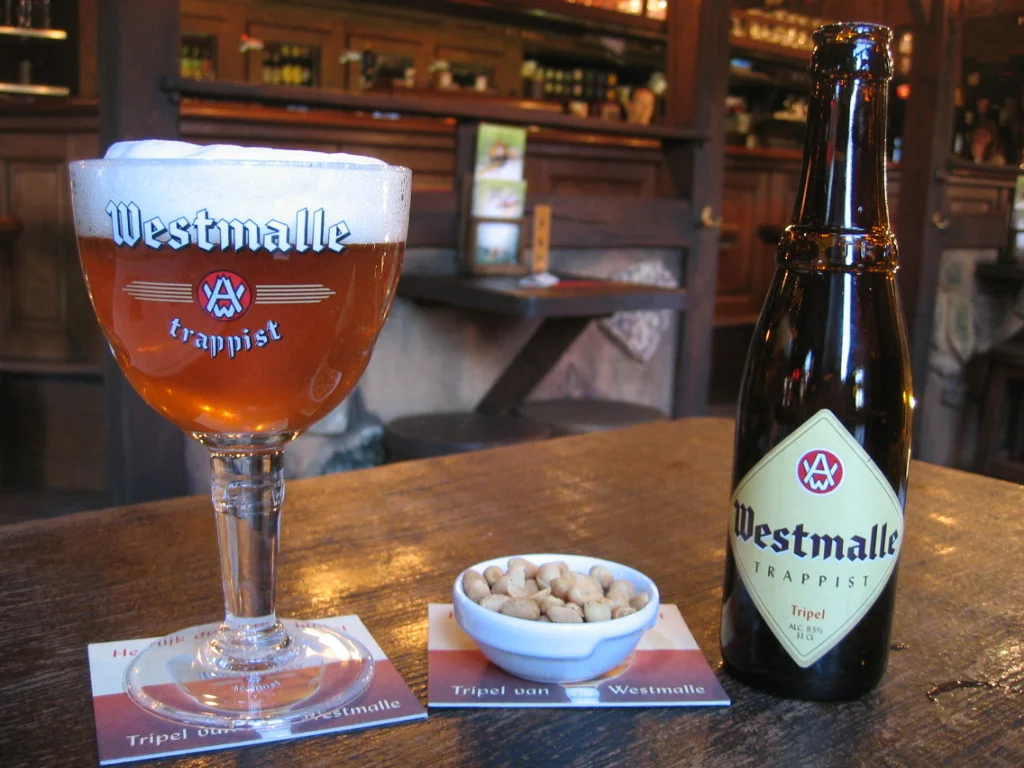
On 10 December 1836, the abbot Martinus Dom served the first brew of Trappist beer at lunch in the refectory at Westmalle Abbey. The monks were not pioneering anything they would have recognized as such. They were following a rule written by Abbé de Rancé in 1677 - that monks could drink the popular local beverage with their meals besides water - and in Flanders the popular local beverage was beer. They built a small brewery rather than pay outside brewers. Two centuries later, the names of the beers that descended from that lunch - Westmalle Dubbel, Westmalle Tripel - are spoken with reverence in beer halls from Tokyo to Portland. The Tripel, refined here in the 1930s, defined an entire style of Belgian brewing. The monks still brew it. They still serve it at lunch.
The Group Bound for Canada
In 1791, in the chaos following the French Revolution, the novice master of La Trappe Abbey - a man named Augustinus de Lestrange Dubosc - fled France for Switzerland and settled with refugee monks at a vacant Carthusian house near Fribourg called Val-Sainte. The Sacred Valley filled past capacity. Lestrange began sending groups out to found new houses: one to Spain, one to Italy, a third to Canada. The Canada group passed through Flanders on its way west. The bishop of Antwerp, Cornelius Franciscus de Nelis, intercepted them and asked if some might stay and establish a Trappist house in his diocese instead. Lestrange agreed to leave eight monks behind. They settled on 6 June 1794 at a small Campine farm called Nooit Rust - never rest. Two novices joined them. The Canada plan never quite recovered, and a community that should not have existed at all began.
Closed, Reopened, Closed Again
Six weeks after they arrived, French troops invaded the Austrian Netherlands and the monks fled to Münster, founding a new house in Darfeld. They returned in 1802. In 1811 Napoleon closed every Trappist house in his empire. They left again. After Napoleon's defeat in 1814 they came back for the third time and were not displaced again. Even then it was close - under William I of the United Netherlands the priory nearly closed for lack of legal status, saved at the last moment in 1822 by the support of Viscount Leonard Pierre Joseph du Bus de Gisignies. The community grew slowly through the 1820s and 30s, until on 22 April 1836 Pope Gregory XVI elevated the priory to a full abbey. Martinus Dom became the first elected abbot. Eight months later, the brewery began.
What the Monks Send Out into the World
Westmalle has spent two centuries founding daughter houses. Achel Abbey was established in 1846. Saint-Sixtus at Westvleteren - now famous for the rarest Trappist beer in the world - received material support from Westmalle in its early years. In 1884 the monks founded Ulingsheide Abbey at Tegelen on the German border, specifically to receive German novices fleeing Bismarck's Kulturkampf. In 1894, four brothers and Father Jozef Peeters left for the Belgian Congo and founded a Saint Joseph abbey in Kasai, later relocated to Bamania near Mbandaka. After the First World War the monks helped build a new Cistercian house at Brecht. The brewery funds the abbey. The abbey funds the work. The work supports communities the founders of 1794 would never have imagined.
What a Trappist Day Looks Like
The monks rise before four in the morning for the first office. They sing seven services through the day, eat in silence in the refectory, and work the rest of the hours in the brewery, the cheese dairy, the farm, the library, the gardens. The cattle the abbey kept for decades were blister-head cows, valued for the milk that became Trappist cheese. The library wing was completed in 1898 and enlarged after the Second World War. The patrimony includes works by Frans Francken the Elder, Albrecht Dürer, Constantin Meunier, Maerten de Vos - paintings and manuscripts collected and preserved by generations of monks who themselves left no signatures. The current abbot, Philip Nathanaël Koninkx, was elected in 2004. He runs an organization that has been continuously in operation, with one major interruption for the Napoleonic Wars, since the year George Washington took his second inauguration.
The Beer That Made the Place Famous
Westmalle Dubbel was perfected in 1856 - dark, malty, secondary-fermented in the bottle, the ancestor of every Belgian dubbel since. Westmalle Tripel arrived in 1934, pale golden, strong, dry-finishing, and so distinctive that the style now bears its name. The abbey does not aim to become a beer destination. The brewhouse is hidden behind the abbey walls. The café across the road - Café Trappisten - is a separate operation, allowed to serve the beer fresh and on draft to anyone who walks in. The monks do not advertise. They do not maximize production. They brew what the rule of de Rancé asked for: the local beverage of Flanders, made well enough to drink with bread, and sold in quantities sufficient to keep an eight-hundred-year-old order alive into a century that did not exist when ten refugees stopped at a farm called Never Rest.
From the Air
Coordinates 51.28°N, 4.66°E. Westmalle Abbey sits in flat Campine countryside about 22 km east-northeast of Antwerp. View from 2,000 ft on a clear day shows the unmistakable walled rectangle of the abbey, with the church's distinctive 1924 campanile rebuilt after Belgian troops demolished the original tower in 1914. The brewery occupies a separate building inside the abbey walls. Café Trappisten sits across the road from the main entrance. Antwerp International (EBAW) is 18 km west. Brussels (EBBR) is 55 km south. The abbey is most photogenic in early morning when low light catches the bell tower.
Nearby Stories
- Rotselaar 3.8 km away
- Walter Adolph 5.9 km away
- Hasselt 6.9 km away
- NAC Breda 8.7 km away
- Affligem Abbey 9.4 km away
- Sint-Niklaas 10 km away
- Sint-Maartensdijk Castle 11 km away
- Sint-Oedenrode 15 km away