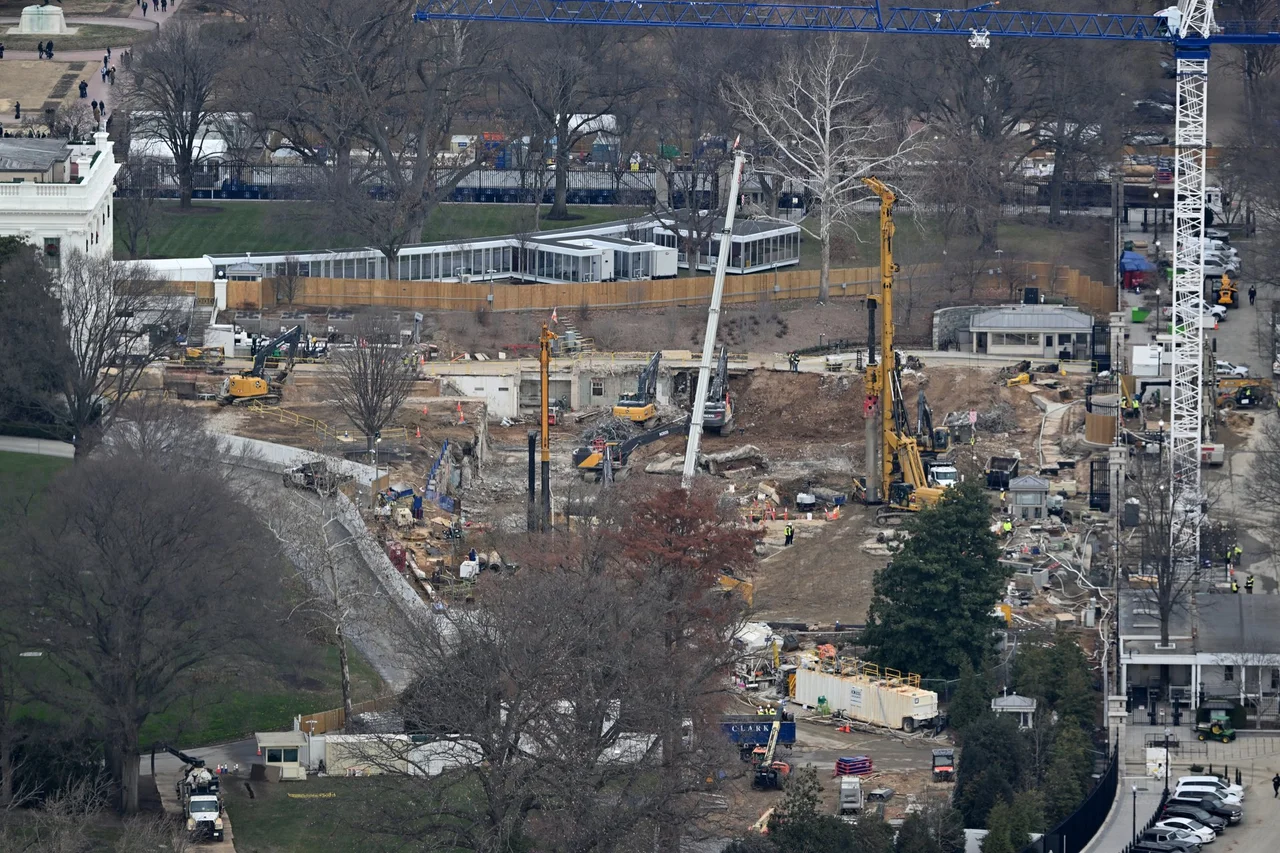

White House State Ballroom
On October 20, 2025, excavators began tearing down the East Wing of the White House - the 1942 addition that for decades housed the offices of the first lady and the entrance most visitors used. By the time the dust settled, the largest structural change to the White House complex since Harry Truman gutted the Executive Residence in 1949 was underway. In its place, the White House State Ballroom rose: 89,000 square feet of new construction, paid for almost entirely by private donors, designed first by McCrery Architects and then by Shalom Baranes after the first firm could not meet the deadlines. The project's price tag climbed from $200 million in August 2025 to $400 million by December, and a planned banquet hall of 22,000 square feet was promised to seat 999 guests - up from an initial estimate of 650.
The East Wing's Last Day
The East Wing was never the grand part of the White House. Franklin Roosevelt built it in 1942, partly to accommodate office space and partly to disguise the construction of the Presidential Emergency Operations Center buried beneath it. Over the decades it housed the office of the first lady, the social secretary, the calligraphers, and the public tour entrance. It was modest, low, and easy to walk past. None of that saved it on October 20, 2025, when demolition began. Two magnolia trees came down with the wing - one planted by First Lady Florence Harding in 1922 for her husband Warren, and another planted in 1942 for Roosevelt. The underground bunker beneath was dismantled too, with a new below-grade facility planned to replace it - a security cost the White House said would not appear in the publicly disclosed budget.
A Long-Held Idea
Donald Trump had wanted to add a ballroom to the White House since at least 2010, when he raised the idea with Barack Obama's senior advisor David Axelrod. The motivation was practical and aesthetic at once. State dinners traditionally crowded into the East Room of the Executive Residence, which seats 200, or spilled into tents erected on the South Lawn. Trump described the tents as not a pretty sight, which they sometimes were not. The ballroom was announced on July 31, 2025, with architect James McCrery II as the designer and Clark Construction leading the build. The first plans called for a structure architecturally similar to the rest of the mansion, with what Trump called a glass bridge connecting it to the residence. The interior was promised to be lavish, with chandeliers and ornate columns.
Permitting on the Fly
The National Capital Planning Commission has reviewed federal construction in Washington since 1952, and every modern White House addition has gone through it - voluntarily, since the White House itself is exempt from the National Historic Preservation Act. The Trump administration initially claimed a 1964 executive order let the president skip the review. After The Washington Post pointed out the legal requirement still applied, the administration said the commission would be involved at the appropriate time. Demolition and site preparation began before plans were submitted, with NCPC chair Will Scharf clarifying that review was only required for construction itself. The Trump administration agreed in mid-December to submit plans to the NCPC and the Commission of Fine Arts. The lawsuit seeking to pause the project was met with an argument that construction had to continue for classified national security reasons that could be shared with the judge but not the plaintiffs.
The Donor List
On October 22, 2025, the White House released a list of donors funding the project, though not the amounts each had contributed. The corporate roster read like the index of a Fortune 500 directory: Amazon, Apple, Google, Microsoft, Meta, Lockheed Martin, Comcast, Booz Allen Hamilton, Caterpillar, Coinbase, Palantir, Tether. The individual donors included Stephen Schwarzman of Blackstone, the Adelson Family Foundation, the Lutnick family, the Glazer family, the Winklevoss twins, and Trump himself. The New York Times later reported that several other donors - BlackRock, Nvidia, and Jeff Yass among them - had been omitted from the disclosed list despite donating, all of them with major business before the administration. Alphabet's $22 million contribution came as part of the settlement of a 2021 lawsuit Trump had filed against the company, blurring the line between donation and legal payment in a way ethics experts found troubling.
The Argument About a House
Public opinion ran sharply against the project. A YouGov poll on October 22 found 53 percent opposed to the East Wing demolition, with 24 percent in favor. A Washington Post-ABC News-Ipsos poll later that month found 56 percent opposed to the broader ballroom project. Former Secretary of State Hillary Clinton posted that the building wasn't his house, it was your house, and he was destroying it. Representative Jamie Raskin compared the demolition to the 1814 burning of Washington by the British. First Lady Melania Trump reportedly raised private concerns over the East Wing's removal. House Speaker Mike Johnson and other Republican leaders framed the project as the greatest improvement to the White House in the building's history. The fight underneath the construction tarps was, in the end, about whether the executive residence is the president's stage or the country's home, and how those two things ever stop overlapping.
From the Air
The White House State Ballroom is under construction at the location of the former East Wing, on the east side of the Executive Residence at 38.8976 N, 77.0357 W. The site sits inside the inner ring of the Washington Flight Restricted Zone, which prohibits general aviation traffic over the White House complex without explicit clearance. Reagan National (KDCA) is two miles south. From the air, the construction site - a 22,000-square-foot footprint of new foundation immediately east of the residence's east colonnade - is the most visible change to the White House complex since the Truman Balcony was added in 1948.
Nearby Stories
- Gunston Hall 1.1 km away
- 2023 Baltimore Shooting 4.9 km away
- Battle of Middleburg 6.6 km away
- Crownsville Hospital Center 10 km away
- Battle of Loudoun Heights 13 km away
- First Battle of Rappahannock Station 20 km away
- Howard County, Maryland 21 km away
- Harriet Tubman Underground Railroad 50 km away