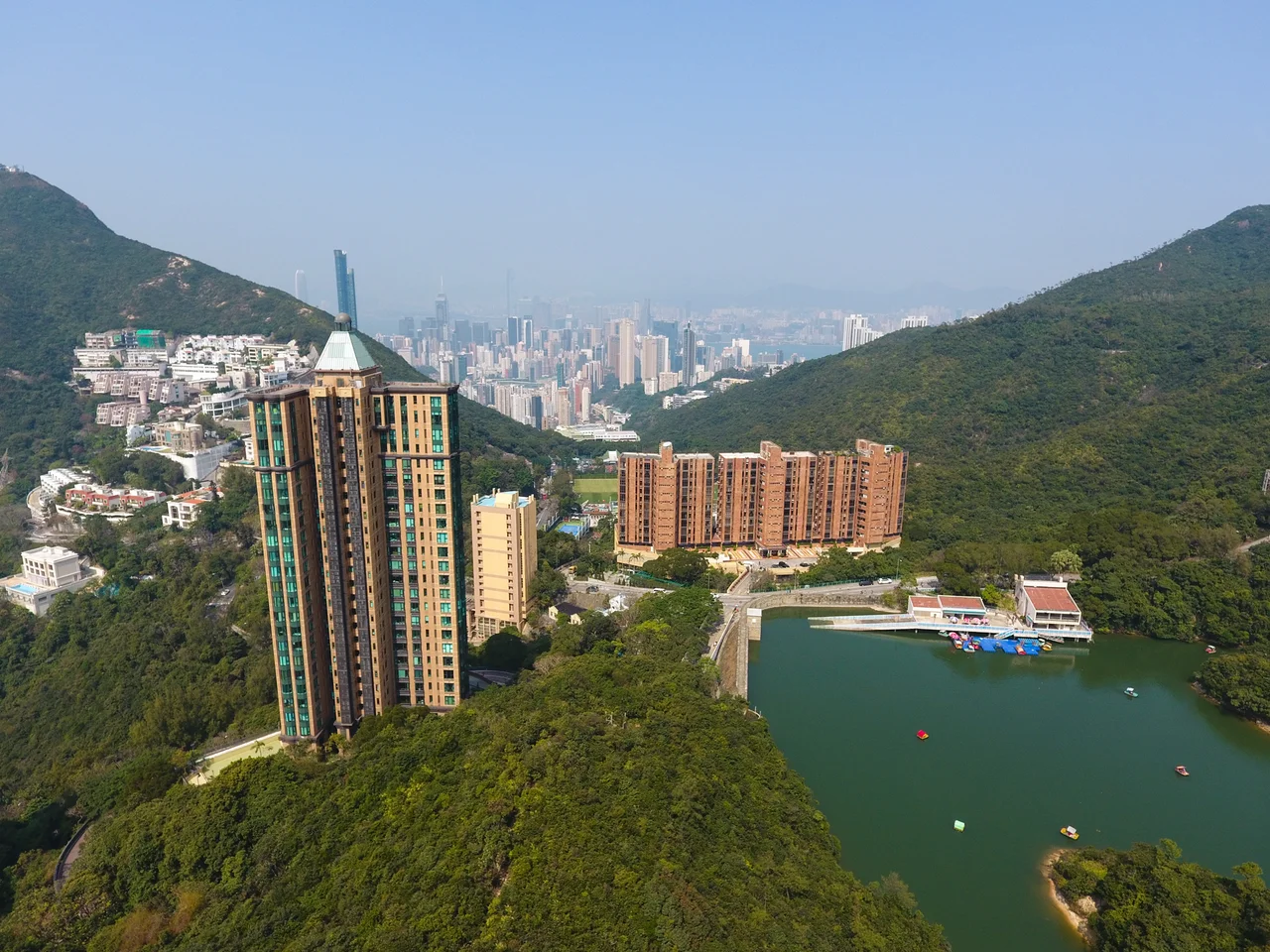

Wong Nai Chung Gap
Brigadier John K. Lawson's last radio call to Fortress HQ was brief. He told them he was going outside to fight it out. Then the line went silent. It was 19 December 1941, and the West Brigade Headquarters at Wong Nai Chung Gap — a narrow mountain saddle connecting the north and south of Hong Kong Island — had been completely surrounded. What followed was the bloodiest single day of the entire Battle of Hong Kong, a day that sealed the fate of a colony.
The Saddle Between Two Worlds
Five roads converge at Wong Nai Chung Gap, which in Cantonese means roughly 'yellow mud stream pass.' Squeezed between Mount Nicholson to the west and Jardine's Lookout to the east, this narrow saddle is the primary natural passage connecting the bustling urban north of Hong Kong Island to the quieter southern shores of Repulse Bay and Deep Water Bay. It was always a chokepoint — geographically inevitable, strategically unavoidable. The British army understood this long before 1941. Through the 1930s, engineers embedded bunkers along Wong Nai Chung Gap Road and built fortifications across Jardine's Lookout, threading defensive positions along the contour known as Sir Cecil's Ride. The gap was meant to be a barrier. In December 1941, it became a killing ground.
The Night the Japanese Crossed the Island
On 18 December 1941, Japanese forces landed on Hong Kong Island's northeast shore near what is now Taikoo Shing — then the site of Taikoo Dockyard. They pushed rapidly inland, advancing on multiple axes through North Point and up the slopes toward Wong Nai Chung Gap. Their route ran partly through Braemar Hill and along Sir Cecil's Ride itself, the very hiking trail the British had built as a defensive line. Other columns pressed through Wan Chai and up from Happy Valley. The defenders were a mixed force: soldiers of the Middlesex Regiment manning two pillboxes at the Jardine's Catchwater, Royal Scots engaged on Mount Nicholson, members of the Winnipeg Grenadiers and the Hong Kong Volunteer Defence Corps all fighting to hold the ground around the gap. Against a superior Japanese force that had already achieved momentum and surprise, they held through the night and into the next day.
The Last Stand
The West Brigade Headquarters at the gap was encircled before its staff could withdraw. The defenders — surrounded, pinned under heavy fire — fought with machine guns and held their positions far longer than any tactical calculus suggested was possible. Relief columns struggled to break through. One by one, the defenders fell; nearly every soldier there was either killed or wounded before the position was lost. Canadian Army Brigadier John K. Lawson, commanding the West Brigade, refused to leave. His last message, that he was going outside to fight it out, was not bravado — it was a statement of fact about a situation with no remaining options. He was killed in action. A handful of survivors managed to slip away. The wounded who could not move were taken prisoner.
The Cost of a Single Day
The fall of Wong Nai Chung Gap on 19 December was decisive. With the gap in Japanese hands, Hong Kong Island's defenders were split in two — the East Brigade and West Brigade severed from each other, unable to coordinate or reinforce. The Japanese held the position against every counterattack thrown at it. Six days later, on Christmas Day 1941, the colony surrendered. The Battle of Wong Nai Chung Gap represents the largest concentration of casualties on both sides in a single day during the entire Battle of Hong Kong. Exact numbers remain disputed across sources, but the human weight of the day is not: hundreds of soldiers died on that hillside in less than twenty-four hours — men from Canada, Britain, and Hong Kong itself, fighting for ground that could not be held but had to be defended nonetheless.
What Remains
Today the gap is a transit point more than a destination, its roads carrying traffic between Aberdeen Tunnel and the southern shore. Hikers on Sir Cecil's Ride still pass the concrete remains of the 1930s pillboxes, and the Hong Kong island terrain itself — the steep ravines, the dense hillside vegetation, the way the ridgeline funnels movement — makes the battle comprehensible in a way that maps do not. Several memorial plaques mark the area. The Winnipeg Grenadiers and the soldiers of the Middlesex Regiment, the Royal Scots, and the HKVDC are remembered here. Brigadier Lawson is buried at Sai Wan War Cemetery, one of more than 1,500 Commonwealth war dead interred on Hong Kong. The gap goes on carrying traffic north and south, as it always has.
From the Air
Wong Nai Chung Gap sits at approximately 22.2572°N, 114.192°E on Hong Kong Island, at an elevation of roughly 120 meters above sea level. From the air, the pass is identifiable as the low saddle between the ridgeline of Jardine's Lookout (which rises to about 433 meters) to the east and Mount Nicholson (439 meters) to the west. Happy Valley racecourse is clearly visible to the north. The nearest airport is Hong Kong International Airport (VHHH), located on Lantau Island approximately 30 km to the west. Approach from the west over Victoria Harbour at around 2,000 feet provides a clear view of the island's north face and the gap's position cutting through the central ridge.
Nearby Stories
- Lok Ma Chau Loop 2.3 km away
- Portas do Cerco 2.3 km away
- Kweilin Incident 17 km away
- Wanshan Archipelago Campaign 34 km away
- Nanxiong Formation 115 km away
- Battle of Nanpeng Island 148 km away
- Heyuan 169 km away
- Cape Maobitou 632 km away