
Wray Castle
A retired Liverpool surgeon, his wife's fortune, and a sudden fancy for battlements: from those three ingredients, Wray Castle materialised on the western shore of Windermere in 1840. James Dawson built no fortress against an enemy. He built a Victorian neo-gothic confection of turrets and crenellations because the Picturesque movement said the Lake District deserved nothing less, and because his wife's money allowed the gesture. Nearly two centuries later, the towers still rise above the trees, and the strange tale of the people who passed through them - a sixteen-year-old Beatrix Potter, a vicar with a world-changing idea, and 150 cadets learning to keep ships from sinking - has only grown more entangled with the landscape itself.
A Folly with a Conscience
The architecture was theatre, but the consequences were real. When Dawson died in 1875, the estate passed to his fifteen-year-old nephew, Edward Preston Rawnsley. Two years later, Edward's cousin Hardwicke Rawnsley arrived as vicar of the Wray Church that the Dawsons had built next to the castle. Hardwicke watched the railways creeping into the Lakes, watched developers eye the shoreline, and absorbed John Ruskin's warnings about what unrestrained Victorian progress could do to places of beauty. From that vicarage, Hardwicke Rawnsley helped conceive the National Trust - an organisation that could buy, hold, and protect land for everyone, forever. The idea did not stay in his head. It became the Trust in 1895, and over the next century it became custodian of much of the Lake District. The seed of all that grew within sight of Wray Castle's mock battlements.
The Sixteen-Year-Old Visitor
In the summer of 1882, a quiet, observant girl named Beatrix Potter arrived with her family for a holiday. She was sixteen. She painted watercolours of the library, walked the grounds, and met Hardwicke Rawnsley, whose passion for protecting the landscape took root in her own imagination. Potter would not buy the castle - she would buy something better. In 1905, with the royalties from The Tale of Peter Rabbit, she purchased Hill Top, a small farm a few miles south. She added tract after tract until, on her death in 1943, she bequeathed 4,000 acres and fourteen farms to the National Trust. The chain runs cleanly from a Liverpudlian surgeon's whim to Hardwicke Rawnsley's idea to a teenage girl's summer, then on to Peter Rabbit, and from Peter Rabbit to a permanently protected Lakeland.
The Castle That Learned to Save Lives at Sea
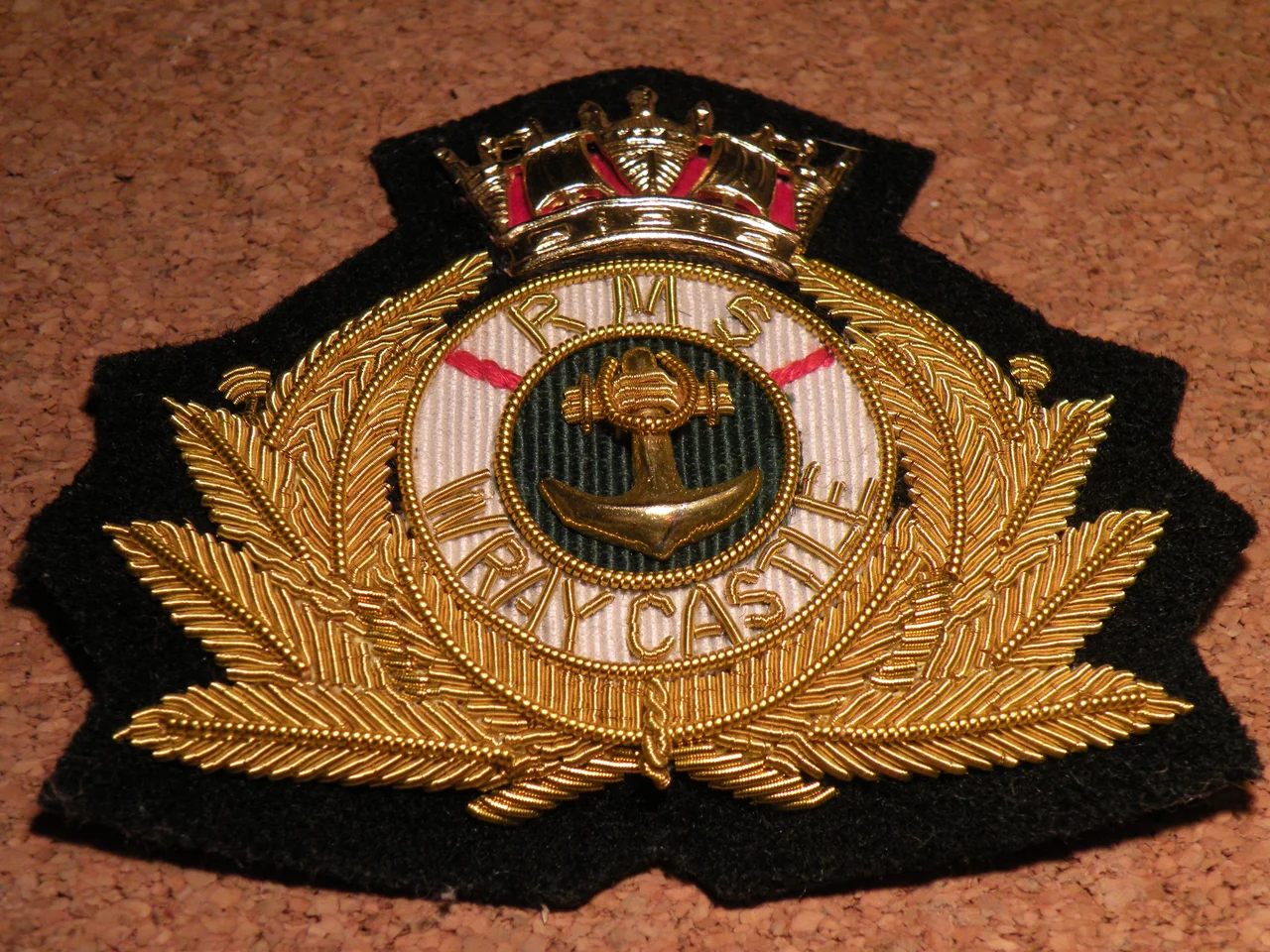
After the Barclays donated the castle to the Trust in 1929, the building struggled to find a purpose. It served briefly as a youth hostel. The Freshwater Biological Association set up offices here for two decades from 1931. Then, in 1958, the castle began its most unexpected chapter. It became RMS Wray Castle, a training college for Merchant Navy radio officers, where up to 150 cadets at a time lived inside the Victorian mock fortress while learning the radio regulations bound up in the phrase 'Safety of Life at Sea'. For forty years young men studied morse code and emergency procedures in halls designed to look medieval. The Global Maritime Distress and Safety System, fully required by 1999, ended the radio officer's job. The last left in 1995, and the college diversified before relocating in 2004.
Ships Bearing the Name
Two ocean-going vessels carried Wray Castle's name to deeper water than the calm surface of Windermere. The first, launched at Workington in March 1889, was a steel three-masted ship of 1,937 gross tons - one of the Castle Line built by Williamson's shipyard alongside Greystoke Castle, Lancaster Castle, Lowther Castle and Pendragon Castle. She survived a serious fire in her hold in 1906 and sailed for thirty-five years before wrecking off the islands of Coronel, Chile, in 1924. The second Wray Castle, a 4,253-ton steamship built by William Hamilton of Glasgow in 1938, had less luck. She was torpedoed and sunk off Freetown, West Africa, on 3 May 1941, her name slipping into the long ledger of Atlantic war losses.
Closed for Now
The castle is closed until 2027 for refurbishment. For the dozen years before that, visitors wandered through largely empty rooms - a Victorian neo-gothic shell that became, somehow, deeply child-friendly precisely because it lacked formal furnishing. Between March and October, Windermere Lake Cruises run a passenger boat from Ambleside and Brockhole to the castle's jetty, and the specimen trees in the grounds - Wellingtonia conifers, ginkgo, weeping lime, varieties of beech - remain open year-round. The shoreline path tells the same story the building does: a Victorian whim, an accidental cradle for the National Trust, and a place where the line between folly and serious purpose has always been delightfully blurred.
From the Air
Coordinates 54.4003 N, 2.9642 W. Wray Castle sits on the western shore of Windermere, England's longest lake, with its battlements rising above mature woodland. Best viewed from 2,000-3,500 ft AGL on calm days. Nearby airports include Carlisle Lake District (EGNC) to the north and Blackpool (EGNH) to the south. The Lake District fells often generate orographic cloud and turbulence; Windermere itself runs north-south as a clear linear navigation reference.
Nearby Stories
- Morecambe Bay 4.1 km away
- Caldbeck 8 km away
- Pendragon Castle 8.1 km away
- Egremont Castle 8.5 km away
- Upper Teesdale 13 km away
- Solway Firth 13 km away
- Malham Cove 21 km away
- Santon Railway Station 70 km away