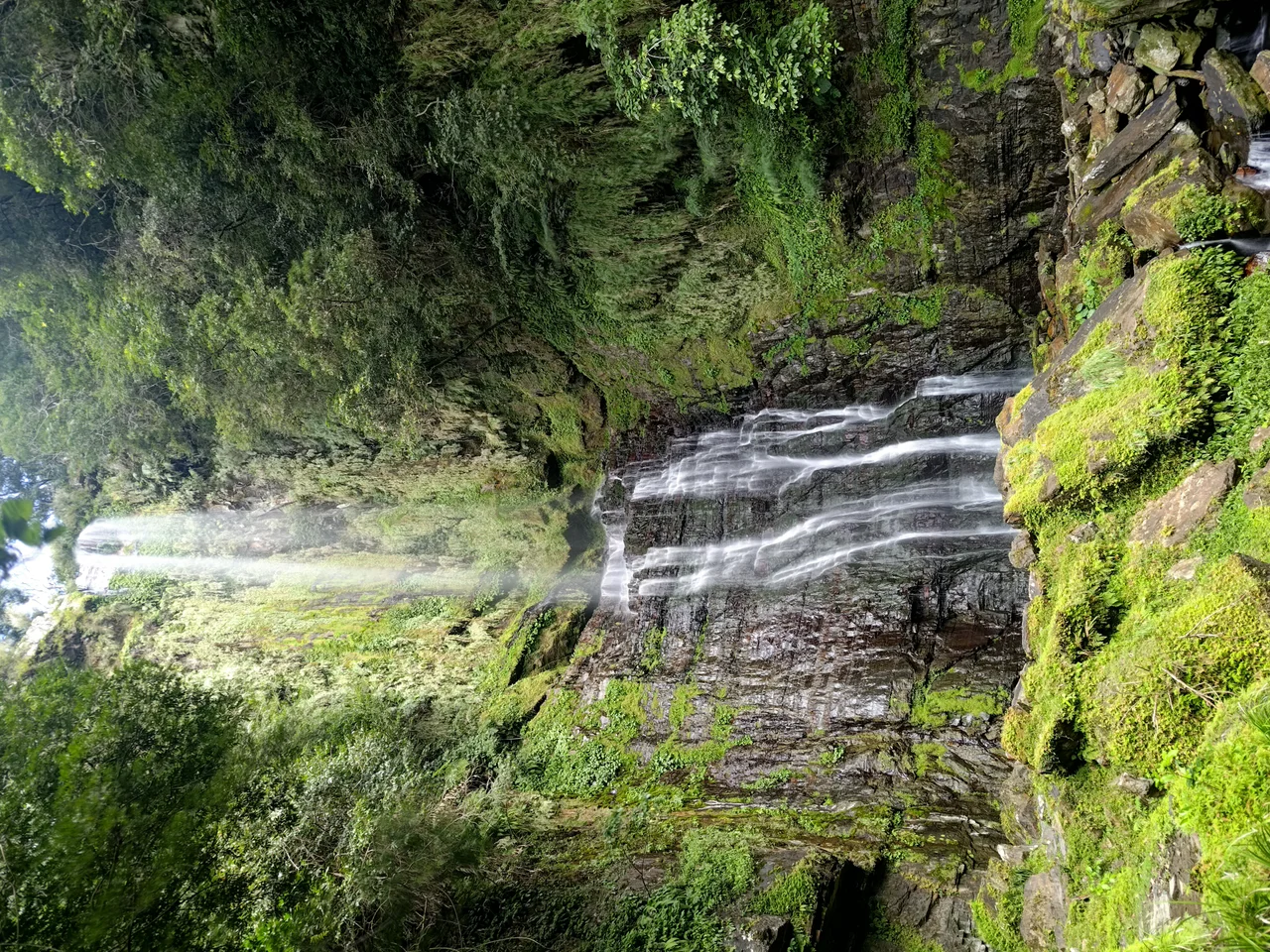

Wufengqi Waterfall
The people who named this place were watching theater. Somewhere in the history of Jiaoxi, someone looked up at the five mountain peaks rising behind the waterfalls and saw not geology but costume — the triangular battle flags that stream from the backs of generals in classical Chinese opera. The name stuck: Wufengqi, the Five Flags. The peaks still stand in their ragged row, and the waterfalls still drop through the chasm between them in three distinct leaps, the topmost rushing through a narrow gorge cut into the mountain, the lowest settling at the edge of the Wufengqi Scenic Area where the trail begins and children play in the mist.
Three Leaps, One Hundred Meters
The waterfall system descends in three tiers across a total drop of 100 meters — a figure that understates the visual drama because the tiers are not evenly distributed. The uppermost cascade is the most dramatic in character: the water accelerates through a narrow mountain chasm, forced into a concentrated column by the rock walls pressing close on either side. The sound in the gorge is substantial. Below it, the middle tier fans wider as the channel broadens, and a viewing pavilion positioned beside this section allows visitors to sit with the falls directly in their sightline, the forested mountains climbing on both sides. The lowest tier descends gently to the scenic area entrance, where the energy of the upper cascades has dissipated into a series of shallow runs over smooth rock.
The Mountains Behind the Water
The five peaks for which the waterfall takes its name are part of the foothills that mark the transition from the Lanyang Plain to the Central Mountain Range. They are not especially tall by Taiwan's standards — the island's interior peaks exceed 3,000 meters — but their placement and form create an unusual silhouette. Seen from the scenic area below, the sharp angles of the ridgeline do have something theatrical about them, particularly in morning light when mist fills the valleys between and the peaks emerge in isolated profile against a pale sky. The forest covering the slopes is subtropical broadleaf mixed with stands of bamboo, the kind of terrain that holds moisture through the dry season and drains loudly through creek channels when the typhoon rains arrive.
Within the Scenic Area
The Wufengqi Scenic Area around the waterfall base is organized to accommodate a range of visitors. The lower section contains a barbecue area and a play area for children, practical additions that have made the site a popular destination for Taiwanese families on weekends and holidays. Trails branch from the entrance toward the upper tiers for those willing to climb; the paths are well-maintained but gain elevation quickly, and the air becomes noticeably cooler and damper as you ascend toward the gorge. The Taiwan Tourist Shuttle runs a service from Jiaoxi Station of Taiwan Railway, making the falls accessible without a car — useful in a region where weekend traffic on the road from Jiaoxi can back up significantly during summer. The shuttle reduces that friction enough that the scenic area fills early on clear days.
The Falls in Context
Wufengqi sits within easy reach of Jiaoxi's hot-spring district, and most visitors combine the two in a single day: morning at the falls while the air is cool, afternoon soaking in the mineral waters of Tangwei Brook Park. The juxtaposition is more than geographic convenience. Both the waterfalls and the hot springs draw their character from the same mountains — the precipitation that feeds the cascades also percolates through the geothermal rock formations that warm Jiaoxi's groundwater. The northeast coast of Taiwan receives some of the highest annual rainfall in the island, driven by winter monsoon systems that arrive from the Pacific and drop their load against the first mountain wall they meet. In Wufengqi, that rainfall becomes spectacle: water that fell on the ridgeline above arrives at the base in three rushing stages, visible and audible from the moment you step off the shuttle.
From the Air
Wufengqi Waterfall sits at approximately 24.84°N, 121.75°E in the foothills above Jiaoxi, within the Wufengqi Scenic Area of Yilan County. From the air on approach to Taipei Songshan (RCSS), the waterfall itself is not easily visible, but the transition from the flat Lanyang Plain to the forested foothills is clear at 4,000–6,000 feet AGL — the waterfall gorge cuts into the first ridge west of Jiaoxi town. The Lanyang Plain spreads eastward toward the Pacific, with Turtle Island visible on the horizon in clear weather. Altitude 5,000–7,000 feet recommended for a view of the full mountain-to-coast transition. Nearest major airport: Taipei Songshan (RCSS), approximately 55 km northwest.
Nearby Stories
- Daxi Wude Hall 0.9 km away
- National Museum of Marine Science and Technology 1.8 km away
- Suao 3.6 km away
- Mount Dabajian 16 km away
- 2022 Chinese Military Exercises Around Taiwan 82 km away
- Sinking of MV Sewol 1068 km away
- Yellow Sea 1128 km away
- Sibuyan Island 1356 km away