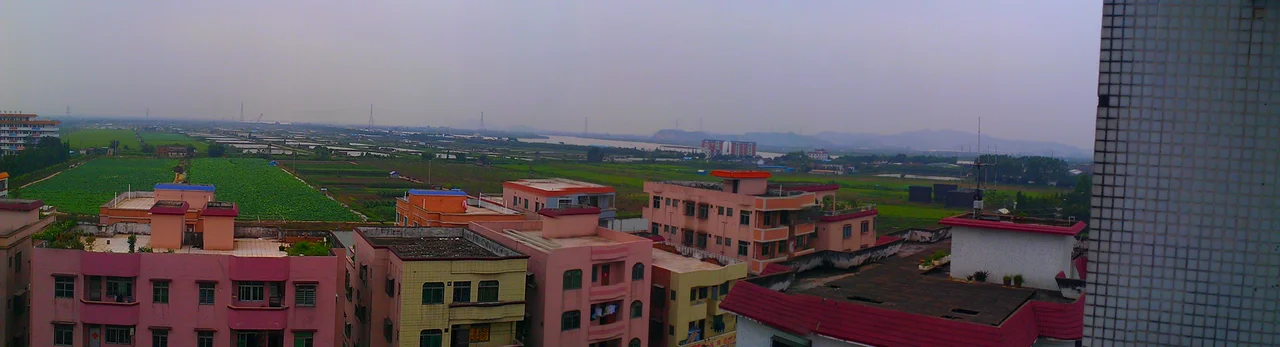

Xinhui, Jiangmen
Nine hundred years ago, the place where Xinhui now stands was still being assembled. The Tan River and the West River were doing the work, depositing silt at the southwestern margin of the Pearl River Delta, gradually filling what had been a shallow bay at the river mouth. Five thousand years ago, that bay was open water; its southeastern shore was a chain of islands. The rivers built the land that the people eventually settled, farmed, and left — and left again, generation after generation, for Hong Kong and the Americas and Southeast Asia. More than 600,000 people from Xinhui have emigrated over the past two centuries. The district they left behind kept producing rice, oranges, and one of the most distinctive flavoring ingredients in Cantonese cuisine.
The Peel That Built a Reputation
Chenpi — dried mandarin orange peel — is what Xinhui is known for in China. The process is simple and the timeline is not: the peel of locally grown mandarin oranges is dried and then aged, sometimes for years, before use. Xinhui chenpi carries a certification of geographical origin, meaning only peel produced in the district can carry the name. In Cantonese cooking, it contributes a complex citrus fragrance that fresh peel cannot replicate — earthy, slightly medicinal, aromatic in ways that deepen with age. Traditional Chinese medicine has used chenpi for centuries as a digestive aid.
The oranges grow in the alluvial soils the rivers built, which may partly account for the peel's distinctive character. Whatever the cause, the reputation is old and the market is large: Xinhui chenpi is exported throughout China and to overseas Chinese communities across the world, a small product carrying an outsized amount of local identity.
A Delta Built by Rivers
The geography of Xinhui is an ongoing geological argument between the Tan River and the West River. Both deposit sediment at their mouths; over millennia, those deposits built the present alluvial plain. The district sits at the southwestern edge of the Pearl River Delta, bordering the South China Sea and positioned close enough to Macao and Hong Kong to make trade and emigration natural rather than exceptional.
Yinzhou Lake and the Yamen Channel — 65 square kilometers of water with depths of 8 to 13 meters and gentle currents — have made port development viable. Tianma port, inside Yamenkou on Yinzhou Lake, has been designated a regional hub port for the western Pearl River Delta, with logistics and harbour industries developing in the surrounding area. The water that built the land is also shaping the district's economic future.
The Emigrants and the Diaspora
Xinhui is part of the Siyi (四邑) region, the cluster of counties that produced a disproportionate share of the overseas Chinese diaspora. Over the past two centuries, more than 600,000 people from the district migrated to Hong Kong or abroad, settling primarily in the Americas, Indonesia, Malaysia, and Singapore. The scale of this departure — from a district whose current population is around 909,000 — is remarkable. Nearly as many people left as now live here.
The emigration created communities abroad and, through remittances and return visits, transformed the communities left behind. Ancestral halls were maintained and sometimes expanded with overseas funding. Mount Chishi, the district's notable scenic area, draws both local visitors and diaspora returnees connecting to their family geography. The movement of people across oceans did not sever ties — it complicated and extended them.
Liang Qichao and the Weight of Hometown
Xinhui's most celebrated native son was Liang Qichao (1873–1929), the scholar, journalist, and reformist whom historians have called 'The Mind of Modern China.' His influence on Chinese intellectual life in the late Qing Dynasty and early Republic of China was vast — his writings on political reform, nationalism, and modernity helped shape how an entire generation of Chinese thinkers approached the question of what China should become. His son, Liang Sicheng, became the foundational figure of modern Chinese architecture, documenting ancient buildings before they were lost and designing new ones in dialogue with the tradition.
Beyond the Liang family, Xinhui has produced an extensive diaspora of prominent figures — politicians including Judy Chu, the first Chinese American woman elected to the U.S. Congress; entertainers such as Andy Lau and actor Lai Man-Wai, known as the father of Hong Kong cinema; and businesspeople who built some of the Pearl River Delta's major financial institutions. The list is long enough that the connection between Xinhui and the world feels less like coincidence than like the natural consequence of a place that has always been oriented outward.
From the Air
Xinhui lies at approximately 22.52°N, 113.03°E in the southwestern Pearl River Delta, Guangdong Province. From altitude, the confluence of the Tan and West Rivers is visible as a braided waterway system southwest of the main Jiangmen urban area. Yinzhou Lake and the Yamen Channel appear as a substantial body of water opening toward the South China Sea. The nearest major airport is Guangzhou Baiyun International (ZGGG), approximately 75 km to the northeast. Zhuhai Jinwan Airport (ZGSD) lies roughly 45 km to the southeast. Recommended viewing altitude: 2,500–4,000 m to resolve the delta waterway structure and the coastal margin where the Pearl River meets the South China Sea.
Nearby Stories
- Yamen, Guangdong 3.7 km away
- Zhuhai 5.4 km away
- Mount Xiqiao 10 km away
- Pearl River Delta 19 km away
- South China Mall 27 km away
- Battle of Nanpeng Island 92 km away
- Temple of the Five Lords 363 km away
- Erhai Lake 1288 km away