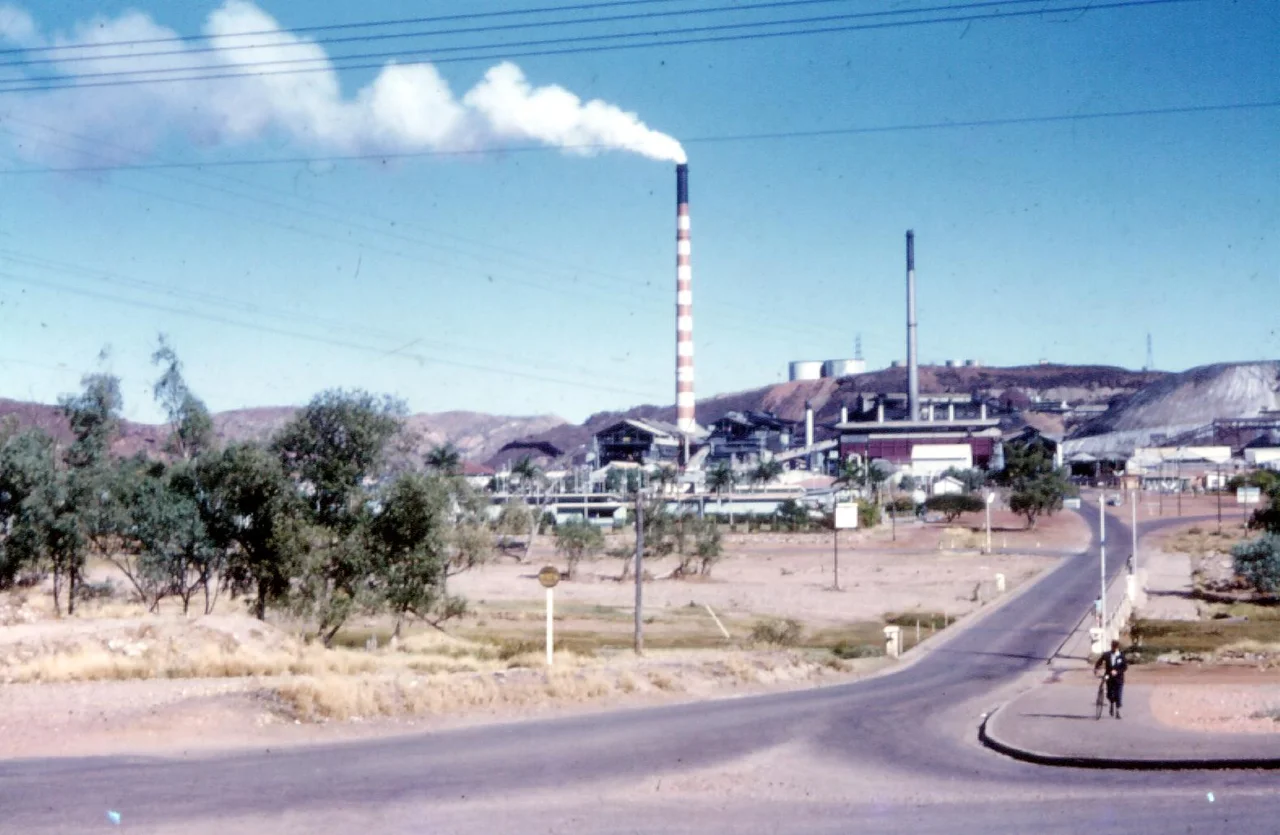

1964 Mount Isa Mines strike
He wore a red cap, and that was almost all most Australians knew of him at first. Pat Mackie - born Maurice Patrick Murphy in New Zealand in 1914, a man who had gone to sea as a teenager and spent fifteen years before the mast - had drifted at last to the copper, lead, silver and zinc city of Mount Isa. By the winter of 1964 he found himself, almost reluctantly, the most recognisable face of a workforce some four thousand strong, drawn from more than forty countries. The dispute that gripped this isolated outback city would run for thirty-two weeks and become one of the longest and most bitterly fought industrial battles in the nation's history.
A Company Town
To understand the dispute, you have to understand Mount Isa. This was a city built by and around a single enterprise. Mount Isa Mines - MIM - was the largest mining company in Australia, and in a town this remote it was also landlord, paymaster and the reason almost everyone was there at all. Much of a miner's earnings came not from a flat wage but from contract bonuses tied to how much ore came out of the ground. When those bonuses were threatened, families felt it directly in what they could put on the table. An earlier strike in 1961, sparked by legislation that menaced the bonus system, had ended in an uneasy truce after the state intervened. The grievances did not disappear. They waited.
Working to Wage
The trouble returned in August 1964, after the State Industrial Conciliation and Arbitration Commission rejected a proposal for a weekly pay rise of four pounds in place of higher bonuses. The miners responded not with an immediate walkout but with a slower weapon: they began to 'work to wage', doing only what their base pay strictly demanded and letting the lucrative contract output fall away. Production dropped. But the workforce was not of one mind. Leaders of the Australian Workers' Union, to which Mackie belonged, refused to widen the dispute beyond Mount Isa, wary of where it might lead. Mackie was accused of communism and expelled from the union; he and other militant unionists were dismissed by the company. The men on the ground were caught between an employer they were fighting and a union leadership they no longer trusted.
The State Steps In
As the deadlock hardened, the government of Premier Frank Nicklin reached for the powers of the state. On 10 December an order-in-council demanded that MIM employees return to contract work and expanded police authority to enforce it. Amended days later to permit the dismissal of those who would not comply, the order gave the company its opening: MIM fired 230 underground miners and locked out the rest. Then, on 27 January 1965, Nicklin declared a state of emergency. Police could now cordon off the city, enter homes without a warrant, and seize strike materials. For a community of working families, the sight of their own town ringed and searched was a shock. The measure drew such widespread disapproval that it was withdrawn after only four days.
The Long Unwinding
Disputes like this rarely end in a single dramatic moment. Through February and March of 1965 this one simply unwound, as enough miners drifted back to work for production to resume. Yet the months of hardship were not for nothing. Many of the workers' demands were eventually written into the MIM Award of June 1965 - a substantive gain bought at real cost to the families who had held out. Mackie, his red cap now famous, became a target of an angry federal government that searched for grounds to deport him; he stayed in Australia, and lived until 2009, dying at ninety-five. The story refused to fade. In 2007 it returned to the city as a stage musical, Red Cap, which premiered at the Mount Isa Civic Centre - the community telling its own hard history back to itself.
From the Air
Mount Isa sits at roughly 20.72 degrees south, 139.48 degrees east, an island of industry in the vast emptiness of northwest Queensland. From the air the city is unmistakable: the smelter stacks and headframes of the Mount Isa Mines lease rise from a grid of streets hemmed by red, rocky ridges, with the Leichhardt River threading through. Mount Isa Airport (ICAO YBMA, elevation 342 m / 1,121 ft) lies just west of the city centre with a single long runway. The nearest alternates are distant - this is country where the next town can be hundreds of kilometres away. Visibility is generally excellent through the dry season; watch for industrial haze near the smelter and for storm activity in the summer wet.
Nearby Stories
- Mary Kathleen, Queensland 16 km away
- Quamby 38 km away
- Mount Cuthbert Township and Smelter 71 km away
- Kuridala Township site 73 km away
- Moonah Creek Hanging Tree 82 km away
- Camooweal Caves National Park 82 km away
- Community Hall, Camooweal 113 km away
- Glenormiston Station 222 km away